Leadership’s Essence Part 2


“The very essence of leadership is that you have a vision. It’s got to be a vision you articulate clearly and forcefully on every occasion. You can’t blow an uncertain trumpet.”
– Theodore Hesburgh, Priest & President Emeritus, University of Notre Dame.

On the Geo-political stage I have been witness to two distinct trends.

In the last month , we have had two important elections in which close to quarter of the world’s population voted. The European Parliament elections and the Indian National elections. Differing Geographies, socio-economic stages of development and compulsions. So how did these differences manifest?
EuropeanParliament

Europe’s voting percentage dipped to 43; India’s went up to 67.

Europe seems awash with disillusionment and despair despite the support of some of the world’s most developed economies. In contrast, India sees green shoots of hope and possibilities in the face of more than 20% population struggling below the poverty line, high fiscal deficit and halting economic growth.

In Europe, support for the traditional and establishment parties have dwindled in favour of anti- EU radical groups. In India on the other hand, the votes have gravitated away from the extremists towards one of the main political parties.

A growing perception of a pan Europe crisis has led to the loss of faith in the competence and motives of the political leadership. Interestingly though, an equally high perception of an Indian development crisis seems to have led to renewed faith in the ability of the political leadership to sort out the mess.

What is it that makes the more socio-economically advantaged and aware folks in Europe react so much more negatively than their Indian counterparts?

I muse about the disparity of the reactions. I muse not to determine and assign cause for what might be going wrong or right. But to try and uncover what is it that really creates such disparity.

I come to the conclusion that it is all about how the situation occurs for folks. And the way the situation occurs actually goes a long way to determine the sense of well being folks carry irrespective of what their actual situation might be. This ‘occurring’ really is what leads people to act and articulate the way they end up doing. Simply put, if a situation occurs as threatening or detrimental to me, I act, behave and speak negatively, hunker down and avoid risks. On the other hand, when a situation occurs to me as holding opportunities and promise, I am positive, full of initiative and willing to take risks.

So what is it that can alter how a situation occurs for us? I believe this is where true leadership comes in. A leadership which creates an overarching vision of a Future. A created future that addresses the concerns of not only the Leader but all involved parties. A future into which everyone comes to live into. A future which allows everyone to act, speak and behave in the present in a way that is consistent with the future being envisioned and lived into. And this is when the magic happens. We begin to shift out of our directionless present day challenges and drudgery. Our mind and thoughts dwell less on these immediate perceived ‘negatives’ and more on the big picture vision we begin to hold of the future being created. Situations begin to occur more as opportunities that support our forward movement and less as energy sapping bottlenecks.
leadership_vision_smaller

As I think of the above, I am left wondering whether this could be the way forward in the increasingly complex and fast changing world we inhabit. A near universal access to information, knowledge and the resulting transparency has become a great leveler. The traditional Leadership’s power base of knowledge and information control is fast eroding. Could Leadership let go of its obsession with power and control and embrace the work of co-creating with others a future which is not going to happen anyway?

In Learning………………… Shakti Ghosal

The Audacity of Who I am


“High above the noise and fear mongering of critics and cynics softly speaks your true self.”
– Mollie Marti, Psychologist, Lawyer & Coach, USA

The other day, I watched the Bollywood movie Queen. In it Rani, a girl from Delhi, travels to Europe after being spurned by her fiancé. The movie then goes on to explore Rani’s ‘World view’ as dictated by her Indian middle class values and how that alters, as her biases and prejudices fall away, as she is confronted by radically different value systems and perspectives. A journey of self discovery in surroundings where she is no longer weighed down by others’ expectations and diktats. As she morphs, she confuses and pisses off many people including herself. Rani emerges from this crucible of experience as a more authentic human being. As she chooses to be ‘who she is for herself and for others’, she symbolises courage as well as resistance. Walking out of the theatre, I could not help but acknowledge how Rani’s awareness and acceptance of ‘who she is for herself and for others’ left her more empowered and in control of her destiny.

Kangana Ranaut in Queen

Who I am for myself and for others? How many of us are willing to make this query a daily practice as we loosen the constraints imposed by our world-view, let go of who we believe we should show up as and embrace who we really are?

What is it that makes me avoid being who I am for myself and for others? I can see this stemming from my desperation to be admired, liked and looking good. My life experiences have conditioned me to avoid being straightforward and veer towards being diplomatic if I perceive it is the latter which makes me look good. I have also been guilty of the corporate lie. On occasions I have stretched the truth about my company and its services, hidden what could have been embarrassing. On other occasions I have manipulated situations and people. All this to succeed, be admired, look good.

I muse. Have my efforts to gain admiration and look good empowered me to greater heights? Have I succeeded in engaging in my life from a place of worthiness? I remain increasingly unsure.

So if avoiding ‘who I am for myself and for others’ has not worked for me, how could I embrace it? As I think of this, I begin to see what being who I am for myself and for others could mean for me.
Who I am 1

It would mean the audacity to show up as the ‘imperfect me’ that I am and the willingness to be vulnerable.

It would mean the audacity to let my hair down and allow myself to truly belong with the folks I choose.

It would mean the audacity to be compassionate and loving even when I hold the fear of not being good enough.

It would mean the audacity to be authentic about my own inauthenticities.

Am I committed to being this audacious?

***

“Real isn’t how you are made,’ said the Skin Horse.’ It’s a thing that happens to you. When a child loves you for a long, long time, not just to play with, but REALLY loves you, then you become Real.’

‘Does it hurt?’ asked the Rabbit.

‘Sometimes,’ said the Skin Horse, for he was always truthful. ‘When you are Real you don’t mind being hurt.’

‘Does it happen all at once, like being wound up,’ he asked, ‘or bit by bit?’

‘It doesn’t happen all at once,’ said the Skin Horse. ‘You become. It takes a long time. That’s why it doesn’t happen often to people who break easily, or have sharp edges, or who have to be carefully kept. Generally, by the time you are Real, most of your hair has been loved off, and your eyes drop out and you get loose in the joints and very shabby. But these things don’t matter at all, because once you are Real you can’t be ugly, except to people who don’t understand.”

Excerpt from ‘The Velveteen Rabbit’ by Margery Williams

In Learning….. Shakti Ghosal

Is this all there is?


What all is out there

I cannot claim to recall what I first saw as I came into this world. But I do hold memories of the wonder I felt as a child as I looked up at the evening sky and the stars. Or as I lay on the grass for hours, watching an array of ants or beetles carrying morsels of food. As I think back to those times of wonderment, I can still sense the question at the core, “What all is out there?”

Growing up, seeing and trying things for the first time, leaving home and going to hostel, getting into a new job, place, assignment. Into the unknown every time. At all such junctures, I sensed support from that accompanying question, “What all is out there?”

Life seemed to accompany with surprises galore. As I walked the pathway of new decisions, new insights, new direction, new philosophies. And as I continued to negotiate life’s surprises, what remained with me was, “What all is out there?”

“What all is out there?” It was about embracing and trusting that first step. It was about seeing things for the first time. It was about that unquestioning and unconditional mindset to take it all in. It was about listening to the life and energy that surrounds. It was about feeling connected to all things. It was about that undeniable faith that the world gives.

Those were the days my friend
We thought they’d never end
We’d sing and dance forever and a day
We’d live the life we choose
We’d fight and never lose
For we were young and sure to have our way

– Mary Hopkins, 1968

But somewhere along the way, that childlike wonder, vision and instinct seemed to dim. What seeped in was disenchantment and boredom. A preoccupation with things that are artificial. The burden of living up to other’s expectations. The loss of the allure of things acquired and goals achieved. The ‘Wow!’ and the newness of the first time giving way to ‘Being there, Done that’ refrain. The question taking center stage in my mind was, “Is this all there is?”

Is this all there is

“Is this all there is?” I wonder how this has taken root within me. Is this a mindset shift that gives undue importance to my knowing rather than feeling? Is this the conditioning from my education and peers which extol knowledge and wisdom as must-have virtues and gives short shrift to emotion and intuition? Is this my refuge from the sheer inadequacy I feel in dealing with a complex world?

Even though I discipline myself to ‘count my blessings’ and think of all that I have achieved in terms of position, wealth and family, I sense an emptiness and a lack of fulfillment. A feeling of disorientation and loss. Why is this I wonder?

I also sense another change in me. I now think much more of how much time and opportunity I have left rather than how far I have come and what I have achieved. If only I could recapture that ‘sense of wonder’ from my childhood for this remaining time and opportunity I have. I know in my heart of hearts that this could be that unfailing antidote against all that boredom and disenchantment I feel. But how could I do this?

Authors Werner Erhard and Michael Jensen in ‘Four Ways of Being that Create the Foundations of A Great Life, Great Leadership and A Great Organization’ point to a way when they identify one of the foundations as, ‘Being committed to something bigger than oneself’. In the words of the authors, “This is being committed in a way that shapes one’s being and actions so that your ways of being and acting are in the service of realizing something beyond your personal concerns for yourself – beyond a direct personal payoff. As they are acted on, such commitments create something to which others can also be committed and have the sense that their lives are about something bigger than themselves. This is an important aspect of a great personal life, great leadership and a great organization”.

As I muse I realize that the way to handle “Is this all there is” is in finding and pursuing a Cause that ignites a passion in me. A cause bigger than myself, that which energises and lights me up from within. What may this Cause be for me I am left wondering.

***
A quote from George Bernard Shaw’s ‘Man and Superman’.

“This is the true joy in life, the being used for a purpose recognized by yourself as a mighty one; the being a force of nature instead of a feverish selfish little clod of ailments and grievances complaining that the world will not devote itself to making you happy.

I am of the opinion that my life belongs to the whole community and as long as I live, it is my privilege to do for it whatever I can.

I want to be thoroughly used up when I die, for the harder I work the more I live. I rejoice in life for its own sake. Life is no “brief candle” to me. It is a sort of splendid torch which I have got hold of for the moment, and I want to make it burn as brightly as possible before handing it on to future generations.”25
***

In learning……….. Shakti Ghosal

Acknowledgements:
1) Four Ways of Being that Create the Foundations of A Great Life, Great Leadership and A Great Organization– by Werner Erhard and Michael Jensen, a Harvard Business School research paper, Nov. 2013.

2) Man and Superman– by George Bernard Shaw, 1903

The ‘Being Human’ Organisation of the twenty-first century


‘It is amazing how much you can accomplish when it doesn’t matter who gets the credit.’ Unknown

The other day, a news item on Johnson & Johnson caught my attention. About the company accepting charges of bribery to promote its antipsychotic drug Risperdal to children and people with developmental disabilities and agreeing to pay USD 2.2 billion in criminal and civil fines. My thoughts go out to another disparate case closer home where a reputed business group stands charged of selling fake machinery parts as genuine, endangering people’s lives while making huge profits.

What is it that makes an organisation declare values to which it does not adhere to? What is it that makes multinational corporations like Johnson & Johnson spend millions to create a brand equity of “love and care” while bribing to ‘push’ a controversial drug onto people who need love and care the most?

I muse about my own self. As I think of who I am and what I do at work, I notice significant dichotomies. As an individual working in the corporate world for three decades, I see that I have conditioned myself to believe that the value systems which apply to me at the individual level no longer remain valid as soon as I wear my organisational hat. Be it in aspects of transparency, business ethics, environmental concerns and several other areas. Somehow, I have developed the underlying belief that these fall lower in priority than the core business objectives of top line and bottom line growth. I must confess that I have rarely questioned why it should be so.

What is it that has conditioned me so? I think of how organizations evolved in the last century. Of how they have remained focused on achieving growth and profit objectives alone. Of how Organisations have ‘learned’ ways to pass on the costs of their activities for others to pay. Of how this behaviour resulted in the 2008 global financial crisis when companies created bad debt and exported that all over the world.

As I wear the organisational hat, I can see the intrinsic conflicts that I face.

• Do I achieve success by maximising Shareholder wealth or do I take the path of social responsibility?
• Do I increase profits or do I take responsibility for an environment crying out for help?
• Do I indulge in rampant business expansion or do I ensure avoidance of exploitation?

tight-rope-walker-pink_pan_14115

In the 2003 award wining documentary film, ‘ The Corporation’, University of British Columbia professor and author Joel Bakan asks, ‘If a corporation is a person, what type of a person is it?’ The documentary goes on to show that most organisations comprise of network of conversations that are inconsistent, dissonant and cluttered. The conversations exhibit the qualities and attributes that, if the organisation were to be a person, it would be termed a psychopath. The induced organisational behaviour from such a conversational clutter ranges from “callous disregard for people’s feelings, incapability to maintain human relationships, deceiving for profit, inability to feel guilt and complete disregard for the safety of others.”

Clearly the world seems to be reaching an inflexion point. Jay Deragon, in a recent blog post titled ‘Being Human’ says, “It seems odd to think that business leaders are just now recognizing that their business results have a direct correlation to the organizations ability to think, act, speak and feel in human terms. Yet instead of measuring the organization’s human abilities, leaders still focus on measuring, thinking and chasing outcomes in financial terms.”

Consciousness has arisen that for sustainability there needs to be an alignment and acceptance of the core human values at the organisational level too. To me that is a wonderful shift and a significant evolutionary development.

So with such consciousness what could be the way forward?

creativity-training-eye

Authors Steve Zaffron and Dave Logan in their path breaking book, ‘The Three Laws of Performance’ point to a direction as they suggest the need for organisations to transform themselves into being “Self-led”. This ‘Self’ arises from all people and stakeholders participating in the organisation’s network of conversations. So how do we do that? By first shifting away from the belief that “we need to involve only those who need to be involved”. As I look inwards, I realize that this belief arises from my apprehension of a ‘loss of control’. But as I choose to allow external stakeholders into my network of conversations, I am able to shift them into a space where they feel they can contribute. A shift away from ‘we don’t trust you’ and towards ‘let’s all of us get involved in the success vision of our business’.

Can we see the need for us to contextualize our ‘organisation hat’ wearing persona in the society within which we are embedded and exist? Methinks every one of us needs to become an active player in this great initiative. For in this resides the opportunity to find the balance we seek in the world today.

In Learning………… Shakti Ghosal

Acknowledgements:

1)The Corporation– a documentary film written by Joel Bakan, and directed by Mark Achbar and Jennifer Abbott, 2003 : http://www.thecorporation.com

2)Being Human creates higher returns– a blog by Jay Deragon:
http://www.relationship-economy.com/2013/10/being-human-creates-higher- returns/

3)The Three Laws of Performance- Rewriting the Future of your Organisation and your life by Steve Zaffron and Dave Logan, Aug.2011: http://www.threelawsofperformance.com/

An Equal Music….


“…….no noise nor silence, but one equal music; 
no fears nor hopes, but one equal possession; 
no ends nor beginnings, but one equal eternity….”

                                           
   – John Donne, English Poet and Preacher, 17th Century

imagesCAMC30Z3
 

My earliest memories of Shanti kaku is of him slowly limping back home with a bag carrying some basic groceries.

 Since the time I could remember Shanti kaku had always been around, doing odd errands for all and sundry. He was the youngest of seven surviving children of my paternal grand parents. It was rumoured that his birth had been complicated because of a forceps delivery process gone horribly wrong. It led to him coming into the world challenged, both mentally and physically.

 Shanti kaku survived. Only to suffer the ignominy and arrows of being unequal, different, even retarded. I have sometimes wondered how this unfortunate uncle of mine made peace with these demons. Or did he really need to? Could it just be that what he saw of the world and people around him was normal to him, what he had experienced from the time he could remember? Without the consciousness of ‘what could have been’, he had nothing to compare his experience with, nothing to feel bad about.

  All the other aunts and uncles went to school, some then to college. My grand parents tried to send Shanti kaku to school but faced rejection. Not having the benefit of psychiatric support nor any special needs school in those days, there remained no other option but for Shanti kaku to  continue  his frugal education at home. Sitting, lying beside his mother, listening to her relating the grand tales of Ramayana and Mahabharata.

 Slowly but surely, Shanti kaku started to fathom what my grandmother really wanted. In his own special way, in a way quite different from his siblings who were growing up with their own dreams and destinies. He instinctively knew that what his mother desired, beyond most things, was to see him happy. Was this a primal connection driven back to the womb?

Time passed and brought change, as it inevitably does. Change in the situation of my father and the “normal” aunts and uncles who settled down into their own lives and families. Change in the feelings and attitude towards their youngest sibling which shifted from being “different” to being a “burden.” Come to think of it, burden is such an interesting word. A word loaded with different meanings allowing the user to at once demean the other person and highlight one’s own inability towards taking responsibility. What remained changeless was Shanti kaku’s situation and his connection to my grandmother. Shanti kaku remained what he was, where he was. As he continued to do the menial chores which he was asked to.

 It was my final school leaving year. In fact, it was during my Board examinations when my Grandmother, then in her eighties and staying with us, became seriously ill, destined not to recover. For sometime her health had been failing, that time honoured twinkle in her eyes fading. But as she lay dying, one could but hardly avoid noticing how she held on and lingered as her last remaining purpose in life, that “different” child, sat beside her.

 After all these decades, I can still recall that early morning when my grandmother passed away. Amongst all the sound of preparations to take the body for cremation and folks coming to pay their last respects, there remained that low pitched moan from the room of the deceased. It emanated from Shanti kaku as he alone held onto his mother’s hand.

It seemed disturbingly like music of a past trying to equal and come to terms with that of an uncertain future. Full of sadness, tiredness and the irrelevance of it all To my teenage mind however, obsessed as it was with success in examinations and the promise of a hopeful tomorrow, it evoked intolerance and impatience.

 Today, decades later, as I stand in that tomorrow I have created, and look back, what do I see? What I see are moments of happiness I have enjoyed, moments of energy as I followed my passion, moments of the relevance I have had in the world. Why then does the music of my actions and words search for its equal in a future that continues to be elusive? I wonder.


In Learning………………………                                                    Shakti Ghosal

Connectedness – My takeaway from Avatar


“….and unless we touch others, we’re out of touch with life.”
– Oliver Wendall Holmes, American physician & poet. 19th Century

6e91d48bad32277a5f6b56ca4e94bbdd81b17975def448dd3f73f4b6

Most of us remember the James Cameron directed 2009 epic Avatar as a technically brilliant Sci Fi extravaganza. But what fascinated me about the story was the vast neural connectivity between every living organism on that beautiful world of Pandora. A network which allowed the humanoid species called Na’vi to not only connect to every other flora and fauna on the planet but to an evolved and higher planetary consciousness called Eywa. Eywa apparently is all about deep connection , bonding and balance, termed in Na’vi language as tsaheylu, and this alone becomes responsible for the defeat of the otherwise technologically superior and better armed human army.

Sometime back I had mused on the influence of internet and social media connectivity and the shift it is bringing to our society in ‘A World of Tweeple’. A shift that is moving large swathes of humanity from traditional groupings of ethnicity, community and religion to individual ‘Me- Self’ connectivities that satisfy emotional and social needs. My crystal ball gazing showed up two paths. One leading to a frightening Matrix like future where wired to central intelligences, we access information at will in return for our innermost thoughts and beliefs on display for others to examine. The other path holding the promise of our individualism being empowered by the power of networks to achieve a utopian future.
20090921_social_connections
What is it about these visions of connectivity that fascinate so? Does such connectedness somehow, somewhere, signify an aspect of yearning, an area where we see a lack? I dwell upon this. I see myself connected to every life form through that double helix structure called DNA. I see my connections in the symbiotic relationship of the air, food and water that I take in. And I also see my connections in my social needs to bond and belong.

So what exactly is lacking?

I decide to do a reality check. What is it that makes us prefer Facebook friends to real ones? Could this be because deep down we remain diffident and uncertain about our ability to ‘connect with our hearts’, so essential to blossom a real friendship? Could this be because Facebook and such social media technologies allow us to calibrate and control how much, when and where we choose to share? Something which real friendships and connections could never tolerate. Could this be the reason that as technology gives us the means ‘to connect’ more and more, we see increasing evidence of disempowering disconnect all around? As we try and escape by shifting our connectivity to gadgets and technologies than to each other……….

I once again come round to the thinking that we have indeed become obsessed with a “Me- Self” mindset. And have chosen to forget all that had our forefathers had learnt to reach this stage of societal development. Aspect of being there for each other. Aspects of trust and empathy. The need to reboot our ‘operating system’ back to “Us –Selves” from the recently acquired “Me- Self”

So I come back to the question about what could we do to steer onto the alternative path promising that utopian future?

In a recent graduation address, Nipun Mehta, the 32 year old founder of CharityFocus.org and a recipient of the Jefferson Award for Public Service, speaks of three keys that helped him to return to a place of connection.

• Key number one ‘To Give’: Contrary to what the corporate world teaches, Nipun started with the hypothesis, “Maybe Greed is good but Generosity is better”. His experience with several projects has shown that (in his own words) ‘People consistently underestimate generosity, but human beings are internally wired to give.”

• Key number two ‘To Receive’: In Nipun’s words, “With any act of unconditional service, no matter how small, our biochemistry changes, our mind quietens, and we feel a sense of gratefulness. This inner transformation fundamentally shifts the direction of our lives.” It is in giving that we receive.

• Key number three ‘To Dance’: Contrary to what most people do, Nipun says that we should never try and track what is being given or received. Instead we need to let go and tune into the rhythm. The real reward of the give and take lies not in the value of what is being exchanged but the connection which flows underneath.

To Nipun Mehta’s three keys, I wish to add a fourth one.

• Key number four ‘To be Conscious’: As conscious beings, we are uniquely endowed with awareness and imagination. Aspects which allow us to connect to the Universe. As we do this, using vehicles like Science, Art and Religion, we are able to gain the unique understanding of the “spirit” that permeates and connects all things. Much like the connectivity in Avatar, it is this spiritual consciousness that becomes our ultimate connection to everything in the universe.

zen-of-connectedness-hands-frame

So, are we ready to give, to receive, to dance and to be conscious……… and to connect as we move through our lives?

“The cosmos is within us. We are made of star-stuff. We are a way for the universe to know itself.”
― Carl Sagan, 1990.

In Learning…………………… Shakti Ghosal

Acknowledgement: Miserable & Magical: A Graduation Speech for Paradoxical Times– by Nipun Mehta, May 27, 2013.

The Mask


I recall that delightful Jim Carrey starrer ‘The Mask’ of almost two decades back. In the movie, merely putting on the magical mask would at once transform the otherwise meek and submissive Stanley Ipkiss (Jim Carrey) into a brash, uninhibited and intractable guy with super-hero powers. Predictably the Mask was able to achieve all that his alter ego Ipkiss could only dream of.

The Mask

What if we could lay our hands on such a magical mask and make all our dreams come true?

As I think of this, I realise that I too have a mask which I wear. Where did this mask come from? I think back into my past to find an answer. Growing up, in school and at home, I was ‘taught’ to smoothen the jagged, impulsive edges of who I was, to conform to all that surrounded me. I quickly ‘learnt’ to keep my jaggedness and impulses under wraps for fear of being branded a rebel. This need to conform, to show up the way others wanted me to, brought the first layers of my mask.

At work, I remain conditioned to use the authority vested in me by my job title. Over the years I have ‘learnt’ to show up in set ways to demand respect and results from others. Day in, day out, this need to show up as someone larger than who I am, a know-all superior guy, seemingly in control, has made up more layers of my mask.

I see that the mask has served me to achieve outcomes. But as it has served, it has also hardened to become an intrinsic part of who I am. So intrinsic that today it is the mask which mostly ‘runs the show’, not the authentic me. I have become the Mask. That imposter strutting on the world stage, relegating the authentic me into the dark recesses.

What is it that compels me to wear the mask? What is it that makes me hide behind it thus? I see this emanating from my need to wield power, control outcomes, what I want to do. So I hide behind my mask, forgetting who I want to be. Yes, my “what I want to do’ has taken precedence over “who I want to be.”

Seeming and being

A voice asks. “You have had your way, done what you wanted to. Have your dreams come true?”
Pondering over this question, I can only whisper, “Not really…… I still search for that elusive pot of happiness and fulfillment.”
“What could be the way forward?” I ask.
‘What if you could redeem your true self from the role you have got conditioned to play? What if you could forget what you want to do? What if you could just be who you want to be?” says the departing voice.

But what would this take?

Am I prepared to embrace openness and be vulnerable?
Can I be non-judgemental?
Am I prepared to let go of my fear of rejection?
Am I willing to surrender?

Like Ipkiss, I decide to let go of the mask. As I negotiate this rarely trodden path to mask-freedom, I luxuriate in the myriad human connections, their love and sharing that approach the authentic me. I see now what a great trade-off this has been.

***

“Chronicler shook his head and Bast gave a frustrated sigh.”How about plays? Have you seen The Ghost and the Goosegirl or The Ha’penny King?

Chronicler frowned. “Is that the one where the king sells his crown to an orphan boy?”

Bast nodded. “And the boy becomes a better king than the original. The goosegirl dresses like a countess and everyone is stunned by her grace and charm.” He hesitated, struggling to find the words he wanted. “You see, there’s a fundamental connection between seeming and being. Every Fae child knows this, but you mortals never seem to see. We understand how dangerous a mask can be. We all become what we pretend to be.”

Extracted from ‘The Name of the Wind” from the Kingkiller Chronicle series by Patrick Rothfuss, 2007

In learning……………… Shakti Ghosal

Who would I be without my story?


“You are what exists before all stories. You are what remains when the story is understood.”
Byron Katie, American speaker & author of “The Work”

I muse about this Coaching question asked me.

So what is my story? As I think of this, I see its tentacles going into the past.

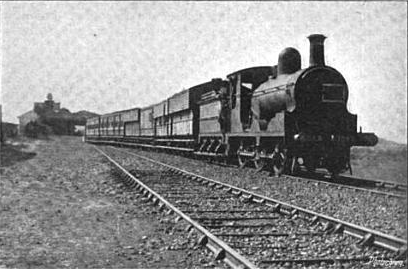
The year is 1911. A lowly placed accounts clerk of the British Accounts Service in India boards the Kalka Mail train from Calcutta with his family. He is shifting home to Delhi in accordance with the British colonial Government’s decision to shift the administrative capital of the Indian subcontinent there. He is following his work, the only thing he knows that sustains him and his family. He is my grandfather.

East_Indian_Railway_Mail

Fast forward fifty years and it is my father in the midst of a career in the Indian Audit and Accounts service. Now settled in Delhi, the capital of independent India. Content with a middle class lifestyle. So grooved in his office work that he feels insecure to take up an exciting consular opportunity in the US. He regrets it citing family constraints.

Fast forward another fifty years and it is I sitting at the desk in my office wondering what next. Having been on a sometimes exciting, sometimes lacklustre roller coaster ride through diverse business areas for three decades, I can claim fair knowledge of the nuts and bolts of corporate working. But like my grandfather and father, I see my work primarily as the means to provide a comfortable life to me and my family.

My story. The story in which working at an office desk equates to life comfort and sustenance. The story which I accept as me. And as I accept, I see it gaining power and dictating what I do. I see it protecting me in a ‘safe box’. As it allows me to peep through my perception coloured lenses and read meaning about the world at large. But as it protects, do I also see it confining and preventing me from setting forth, taking risks and achieving my true potential?

What is it that has embedded this ‘office work’ DNA in me thus? What is it that has made it such an integral part of my story? As I muse, I sense that in my office work DNA resides a gene harking back to the industrial revolution. A gene that through generations has altered my value system. And made me shift towards valuing business growth, productivity and profits over beauty, compassion, love and community ties. Over generations, the gene has also lured me away from simplicity and frugality and towards materialism. An attachment to materialistic possessions which has fuelled insecurity. And has manifested in my life through frantic work schedules, technology tying me down 24X7, scarcely any time to “stop by the woods” or “wander lonely as a cloud”.

So, who would I be without my story? Who would I be if I could shed the above DNA and gene? Would I have that glorious opportunity to start from a place where I am no longer confined and am free to define and implement what I think is important? What do I see?

I see myself slowing down, without the pressures of societal expectations of wealth and ownership. As I take personal responsibility to do that which is meaningful, creative and liberating to me.

I see myself effortlessly crossing those artificial barriers created by economic, social and racial compulsions.

I see in me the birth of a great willingness to learn. From all corners of the world. Unfettered and unhampered by beliefs of my education and experience.

Like the return of the Jedi, I see in me the comeback of the human heart. As I acknowledge intrinsic qualities like Empathy, Faith, Creativity and Interconnectedness and bring them centre stage.

I see how work would look like for me. Passion…. Art…… the pulse of the environment.

photo-0613

Who would I be without my stories?
Like a tree
Without the rustle of the leaves
Winter mind
Kind
Aligned
To the Inside
Inside the inside
A space so wide
It has no centre
Because it is centre

From Caitlin Frost’s Web log

In learning………………… Shakti Ghosal

Connecticut, Delhi and HO’OPONONO……..


What we feel and think and are is to a great extent determined by the state of our ductless glands and viscera. ~Aldous Huxley, English author, 20th century

Over the last month the media streams have remained clogged with two events. First,the horrific massacre of school children and teachers in Connecticut, USA. Second, the barbaric rape and “murder” of an Indian medical student in Delhi.

ConnecticutSchoolShooting110059--525x270

delhi_gangrape_protest_new_pti

As part of an increasingly aware and connected society, we remain quick to rationalise into the underlying reasons and ascribe blame. The flickering screens become full with debates and sermons as questions and suggestions fly thick and fast.

Why does the U.S. Government not take up with the National Rifle Association and amend the gun ownership laws?
• What makes the Indian police so insensitive and ill equipped to take care of women safety on the roads?
• If, as it now emerges, gunman Adam Lanza displayed worrisome and awkward behaviour, why did his mother not do something about it?
• What was the trigger for the gang of rapists to have conducted themselves in such a brutal and violent manner?

…and so on, the list goes on and on.

Delhi rape

We may sit in judgement and hold holier than thou perceptions. As we take time out to show our solidarity with the cause and impatience and distrust with the ‘powers that be’. Or we may choose to get involved with our hearts, indulge in emotional outpourings and feel we are doing our bit. Either way we do not take responsibility for what happened.

But could it be that as we come across such evil and darkness in the world, there lies a seed of responsibility within us? When we accept the status quo of injustice on the plea that this is how it has been? When we prefer to remain an onlooker to a crime perpetrated on someone else? When we spend our energy to protect our own cocoon only? When we expect the Government and the police to follow standards of morality and behaviour higher than our own?

My thoughts flit to Joe Vitale and his book “Zero Limits”. About therapist Dr.Hew Len and his handling of a ward of criminally insane patients. Dr. Len never saw patients but only reviewed their files. As he looked at the files, he would work on himself by repeating the following universal mantras.
• I am sorry.
• Please forgive me.
• I thank you
• I love you.

And as he worked and improved himself, the patients started to improve and heal!

Dr. Hew Len was following the concept of HO’OPONONO, a Hawaiian word dealing with “extreme responsibility” which requires the person to take total responsibility of his life including all people and situations coming into it. A ‘tough to swallow’ and bizarre concept on first sight!

hooponopono-hula-rye-optimiced

But as I muse on the need to take responsibility of anything that shows up in our life, absolutely everything, I start seeing a continuum. Between extreme responsibility and that of reconciliation and forgiveness. I also come face to face with my Karma in that I must be willing to experience myself what I have allowed to happen to others, either by my inaction or inability.

And today in this new millennium, as we sit on the explosive powder keg of increasing disparity, isolation of the ‘left behinds’ in fast changing societies and values and technology driven, rapid creation of awareness and beliefs, could HO’OPONONO show us the way forward?

In learning……… Shakti Ghosal

Acknowledgement: Zero Limits: The Secret Hawaiian System for Wealth, Health, Peace, and More by Joe Vitale & Ihaleakala Hew Len, Dec. 2008.

Where do we go from here?


Wonder if we look, inside our hearts, exactly what
We’d find
Or Maybe we could take a lot of pain away
Yeah
Or maybe we could heal the world today
Yeah
Or maybe, you know, something, I don’t, if you do then

Tell me    
Where do we go from here

                                                   Chris Rene, American Singer

A few weeks back I had watched the limited coverage of the national convention of the Chinese Communist Party. Rows and rows of party leaders listening and taking notes as a new leader Mr. Xi Jinping took over China’s leadership. With China’s flagging growth, Mr. Jinping is widely expected to provide his vision of the Chinese economic and living standards growth going forward.

The current UPA Government in India seems to be on its last legs and is frantically trying to reverse the ominous dip in GDP growth rates through desperate reform measures. While the jury is still out on the short-term impact of these “big ticket” reforms, it is obvious that no coalition or party can come back to power without a proven record of economic and consumption growth.

This story repeats in country after country in the developing world. Per capita growth, higher standards of living, endless availability of goods and services seems to be the universal mantra. The flickering images on the LCD panels, the endless sitcoms on myriad channels instigate us to go for that I phone 5. Or a fine dining experience. Or hanker for that newly launched car or luxury home. Our ability to consume, to pander to whims and fancies is seen as our success and growth.

But what happens when the two and a half billion folks from China and India come onto the field and want to play ball? What happens when the Chinese and Indians turn around to ask, “Hey you guys in the west, you followed your own American dream for more than a century. Now it’s our turn.”

Thomas Friedman did allude to this in his best seller ‘The World is Flat” but  said it in the context of Globalisation and a world view of a level playing field allowing everyone  an equal opportunity. Methinks however that the far more critical issue is the emerging stress on sustainability. The strain on our planet to continue to produce in pace with the exponentially rising consumption. To put it bluntly, mankind is well on course to strip this planet dry. Do see my earlier post We need a second planet by 2030” in which consequences of mindless growth and consumption have been discussed.

So where do we go from here?

We need a shift in perspective and mindset. The twentieth century dream of conspicuous consumption cannot remain a role model any longer. This needs to be revisited, reviewed, redefined. We need to be able to answer the following.

“What really is personal prosperity, what constitutes our success?”

“Does success necessarily have to come from ownership and self-aggrandizement?”

“Could our hunger for access to better products and services be satiated, not necessarily by owning, but by sharing?”

This of course is easier said than done. We remain conditioned to acquire and own for our psychological security and comfort. This harks back to days of yore when scarcity and competing for scarce resources was the norm. This mindset continues even though access and availability is on a different plane. In our mind, Owning signifies upward mobility and prestige, of having arrived in a brave new world of capitalism. While Sharing is looked down upon as the vestige of a failed experiment called socialism.

Clearly a tectonic shift in perspective is called for. In a different context in “Age of Discontinuity and the Chinese Shi”, I had brought up the aspect of the Shi mindset which eschews the heaviness of resource ownership. Could this be a perspective that may be needed today?

I think of this and wonder who could play a catalysing role. Political leaders? Opinion makers? Media? What could be the trigger for them to buy-in and play such a role?

The good news is that technology and engineering acumen exists to achieve the above shift. Through better public transportation, better residential spaces with higher density, superior services delivery and energy efficiency, better use of public spaces, better reuse of stuff which we tend to throw away etc.The other great opportunity is of more and more “have not” folks gaining access to products and services which till now have been out of their reach.

Could this be the moment when the best tenets of Capitalism and Socialism coalesce and synergise to open up the path to sustainability?

In Learning………                                        Shakti Ghosal

 Acknowledgement: The World is flat A brief history of the twenty-first century: Thomas Friedman, 2005.