Some years back, I had a Divisional head join the team.
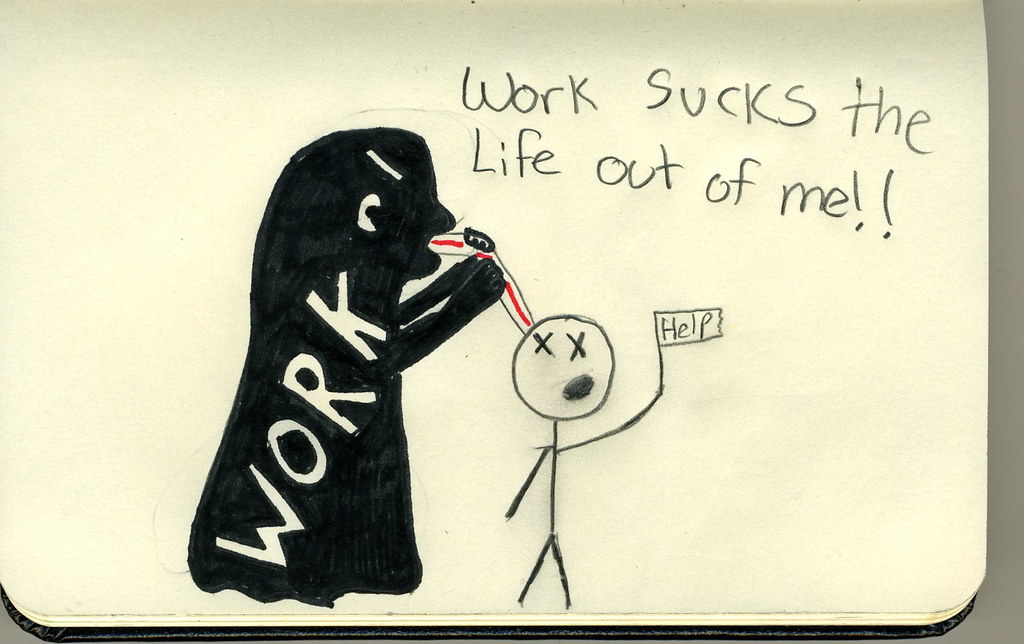
The guy had impressed the recruiting board with his talk of ‘track record’ and ‘ideas’ about how he planned to transform the business. When I got around to have a chat with him, he seemed to be all humility and spoke of his own self development through working and learning from me. But several subsequent events seemed to indicate that at the sniff of a challenge, his self-serving shield would go up, a lot of talk about blaming the environment and others in the team would emerge but not much action on the ground. In the meanwhile, the company kept losing competent and productive staff as well as customer accounts; his oft repeated declaration about ‘brickwalling’ them did not seem to be working.
To me it appeared that the Divisional Head did not know what he was working to develop; he was definitely not working on his own leadership. When I again had a chat with him, what came up were several blames. ‘That he had not bargained for the kind of work he was now being expected to do.’ ‘That I was failing to support him adequately.’ ‘That he was stuck with incompetent team members.’
In a nutshell, the job stank, I as the boss stank and the team stank! I did not have the heart to ask the guy that if the world all around stank, could it be that he himself was the problem?
How many of you have faced a similar situation at the workplace? If you have, have you wondered what one might need to do to transform the situation?
The world can shift when one shows up with authenticity and with humility.
Transformation:
When we see ourselves as the problem, we can be the solution too. We need to spend more time working on our own selves rather than trying to fix others.
Do we have the expectation that our team members should be the harbinger of good news and developments? We need to lower that expectation.
Empathy is a strong word; being empathetic is easier said than done. Nonetheless we need to practice putting ourselves in the shoes of others and seeing the world through their lens.
Gain the realization that others do not really humble us; we humble ourselves.
Show up as a servant leader. A leadership style that enables everyone in the organisation to feel empowered and thrive fearlessly as his / her authentic self.
Say ‘Thank you’ to three persons in a day. Look them in the eye and be specific. If someone is not around, send a thank you email or Whatsapp or make a call.
The reign of the dinosaurs had long ended. Snuffed out by an unlikely asteroid strike. A fifteen kilometers wide piece of Iridium laced rock had struck near present day Mexico, creating a ten times wide crater and unleashing lava, ashes, smoke and gigantic waves around the world.
Though the mass extinction event exterminated most of the flora and fauna on the planet, the continental drift and shifts continued unhampered for millions of years thereafter. The active planetary crust led to the Indian land mass smashing into the Eurasian land plate. The resulting crumpling and buckling at the collision point led to what came to be known as the Himalayas, a veritable abode of the Gods, the tallest mountain range in the world. An awesome creation standing testimony to Earth’s inner energies.
The permanent glaciers and ice formations led to glacial water bodies being formed. This is how the lake came into being. Situated at a height of 18,000 feet within the mighty Himalayan range, the lake acquired a mystical aura for all men and religions who passed by. The waters remained mostly frozen due to the height and the overwhelming presence of the Dongmar glacier which nestled it. Thirsty men and animals could not quench their thirst. And so it came to pass that a Guru was passing by when he too felt the mystical aura of the lake. He put his hand in the lake and Lo and behold! The water stopped freezing and became available for all to quench their thirst. This subduing of the Dongmar glacier’s frozen might by the Guru gave the lake the name of Gurudongmar. The second highest lake in the world with water that no longer froze.
**
The Man was indeed getting on in years.
As a child, he had been precocious and so had been nicknamed. ‘Buro’, an old man. He was now precisely that, replete with the mindset of the elderly. Over the years, he had acquired a liking for travelling and seeing the world. Age had dimmed the eyes somewhat, but not that inner passion to set forth and discover new places.
When the Man first heard about the wondrous lake of Gurudongmar, his heart urged him to travel. His brain though was more circumspect; it counselled, “My dear chap, are you crazy? You suffer from vertigo. What might happen when you go up all those torturously winding roads?” His friends too cautioned; they related dire tales of folks collapsing from lack of oxygen in a no-Man’s land with medical facilities hard to come by.
“But when a Man makes up his mind, he is not made for defeat. He can lose out, even destroyed, but not defeated.”
The tug of war between thoughts continued. But the die had been cast, the travel plans stood finalised. Came the day of travel and the Man set forth armed with some basic medications, a quiet resolve and some raucous misgivings. A flight, several car rides through mountainous roads into the Himalayan kingdom and the day of reckoning arrived.
“This was not the time to think of what was not there. It was the time to think of what one could do with what was there.”
Six in the morning and after nursing a cup of hot tea, the Man set forth for his rendezvous with the lake.
The slow wafting mist seemed in perfect harmony with the biting chill outside the moving car.
Passing through the last army check post, the vehicle climbed to the Kala Pathar, black stone viewpoint.
The fresh snow from the previous night lay in gay abandon. The white mist drifted upwards, a curtain rising up from the snow flakes and into the low hanging clouds.
As the old man stood watching the shifting views of the Kala Pathar blackness through the whiteness of the entwining gaps in the mist, it seemed like a ballet being performed. Was it the Universe sending him a message of hope?
“Every day is a new day. It is better to think it would be lucky. So when luck does come, one would be ready.”
The climb towards the lake had begun. It was not on roads cut out on the mountainsides which the man had been used to. It was on a rising terrain with no roads or markings to provide a direction. It was all down to the driver and the vehicle, their combined experience and strength to negotiate the path.
And then, all of a sudden, the heavens opened up. Sunbeams splayed and sliced all around. The climb had now reached above the level of the clouds and mist, a surreal moment. The old man nibbled on slivers of ginger; he had been advised so by some friends. A final swerving climb over barren rocks and the vehicle stopped on a mound from where the lake could be seen.
The stillness of the blue waters seemed to beckon. ‘Come, partake of my mysticism.’ The sun shone in all its splendour. Was it trying to discover that mystical aura with all those reflections? At the far end of the waters, part shrouded by rising mists, towered the snow laden glacier. As the old man stood transfixed by the wondrous surroundings, the tug of thoughts took over. Was this the place where divinity was born? What made the pristine barrenness so unworldly? Was it the glacier with its whiteness, or the water with its blueness?
A needle pricked the cheek. Then some more. Shaken out of his stupor, the man looked around. The hitherto gentle breeze had gained in strength. Crested by a whirlwind, tiny pebbles and dust particles chased each other in an ethereal dance. As the needles borne by the wind swayed through the onlookers, a soft murmur of protest could be heard. The old man slowly turned and moved back towards the waiting vehicle.
In Learning…….. Shakti Ghosal
Disclosure: The Old Man in the post is the author himself.
Acknowledgement : ‘The Old Man and the Sea’ by Ernest Hemingway
Do you remain dissatisfied and uncertain about how to face emerging situations and challenges in today’s fast-changing world?
Do you frequently get the sense that however hard you or your team are trying, there seems to be always someone ahead of you and winning?
As you resolve a problem or a challenge, do you get confronted by fresh ones?
Are you frequently unable to prioritize which problem to tackle first?
However much you strive, are you unable to see the big picture and align yourself and your team with that?
….. And on a more personal level:
Do you want to get that job or assignment that you have been trying?
Do you want to get that promotion and recognition you have been aspiring for?
If you have been plagued by one or more of the above questions, the Winning in a Disruptive Worldprogram might just be what you need to improve your winnability quotient in today’s world.
The fact is that our present world is constantly getting disrupted. By new technologies, new competitors, or other factors that can disrupt traditional business models. The disruptive world with its VUCA (Volatile, Uncertain, Complex, Ambiguous) characteristics allows us to reside in a significantly narrow band in the present with a hazy and uncertain future in front and the inability to take recourse of our past experience.
Conceived and developed based on workshops and programs conducted for leading organisations and Business Schools, the course showcases the major types of disruptions that are shaping the world. You, as the participant, would gain an insight into what leads to us getting disrupted. You would review the process followed by a probability-based mindset and the need to shift to a possibility-based mindset to be able to better handle disruptions. You would practice and gain proficiency in the five action steps for the needed shift by conducting in-depth Inquiry through a structured process.
Creation of a context by using hard trends in three areas.
Creation of the three lists.
‘Plug into the future’.
Relational assimilation through a triad of competencies.
Sometime back, in a Leadership workshop for Larsen & Toubro that I was conducting, one of the participants shared a challenge he was facing.
“Earlier I had been involved in direct sales of earthmoving equipment to institutional buyers. A year back I got promoted and was moved to product and market development. However even now a few of the clients continue to contact me on even small issues.”
“That only goes to show that they still have a lot of trust in your support to them, is it not?” I commented.
“True,” the participant agreed. “But it often leads to negativity and bad blood with my sales colleagues who think I am trying to throw my weight around and stepping on their toes.”
“So, what is stopping you from letting go and clearly informing your ex-clients suitably?” I asked.
“That is what I am finding difficult to do. I feel I might be letting my clients down” was the response.
“That surely is a good intention. But are you taking accountability of future sales to the client?” I asked.
Looking at me, the participant slowly shook his head to conveying that he was not.
***
Each one of us, in our career, would have faced a similar situation. The problem occurs because of the clash between our stated positive intention and the negative impact we are making. If we are not careful, we can get sucked into a black hole of spiraling negativity which ironically arises from an initial intention to help.
The authority being exercised in some manner (even with good intentions) without being accountable is really abuse. If we expect others to be accountable for the task at hand, and we get sucked in, we need to be equally accountable to them, even if hierarchically they are junior to us.
Simply put our impact and influence may move in contrary direction leading to minimal or nil positive outcome. We thus need to explore how these two may operate together in the same direction to maximise the positivity of the outcome. Think of a train being pulled by a set of double engines.
Jim Dougherty, CEO of a software company, writes in Harvard Business Review ( Dec 12, 2012 issue), “If you want to get an emotional connect with the people you are working with or with whom you have business relationships — you need to be willing to commit and be accountable to them , unsolicited and without direct hope of reward.”
Should you wish to move on the road to better influence and impact, I invite you to explore and answer these questions:
Are you willing to make personal investments in people?
Are you willing to share what you are learning?
Are you willing to empathise with the stresses and frustrations others feel?
Are you willing to work for a shared purpose, results and consequences?
What could you do to maximise the overall outcome from the influence and impact you make?
Sometime back, at a ‘Learning & Development’ elective course I was running at Indian Institute of Management Kashipur, one of the participants came to me for a discussion.
“ Sir, you have been emphasizing again and again about the need to have a lifelong Learning mindset. You have also been mentioning about the criticality of the L & D template to remain relevant during unpredictable and disruptive situations in terms of one’s problem solving ability and initiatives. Don’t you think these two aspects are contradictory to each other? “, he said.
This intrigued me. I asked, “How so? Could you clarify some more?”
The participant explained, “In my MBA program, we are learning concepts and tools which allow us to make sense of a business situation and solve problems. They have stood the test of time. But what you have been advocating is to seek completely new way of looking at things to solve problems in uncertain, fast changing environments. So whatever we are learning in our MBA Course would no longer work. To me, that is both scary and disheartening”.
“Well, It is YES and NO”, I replied. “ Your domain knowledge would always continue to play a role. It would be something like a searchlight which will show up a situation in a particular manner, highlighting certain aspects but hiding others. However, the L & D funnel which you would master in our course should allow you to do a Learning Needs analysis in terms of desired outcomes within a shifting environment and spot the needed L&D strategy. In other words, the superstructure that you would need to build on top of your domain expertise would be your new learning need tactics”.
***
We remain dis-satisfied and uncertain about how to face emerging situations and challenges. Be it on the professional front or may be in our personal life.
“Winning in a disruptive world” would mean succeeding in a business environment that is constantly changing and being disrupted. By new technologies, new competitors, or other factors that can disrupt traditional business models. So, what does one do to win?
The human mind loves continuity and certainty. These allow us to make sense of what we see as stuff we are familiar with. This is why we, our sense making brains, detest change and disruption. For the latter take us into uncertain and unfamiliar territory. We thus like to lull ourselves into believing we are living in a stable world, a world which we understand. We handle new and unfamiliar aspects by distorting and force fitting them into the mental model we hold of the world.
If you have seen the movie, Matrix. It is like living in a never changing, make believe world as the protagonist Neo was doing even though the real world was totally different with its own equations and challenges.
Neo’s Make Believe World…..
Neo’s real world….
So if we are to draw some lessons from the story of Neo in the matrix, ‘Winning in a disruptive world’ would require a mindset to embrace change and adapt quickly to new circumstances, as well as a focus on innovation, creativity, and agility.
I invite you to dwell on the following questions.
What are the questions we need to answer in the exploration ‘making sense’ stage of our Learning & Development cycle?
How do we align the outputs of the ‘making sense’ stage with our critical analysis of the emerging situation?
How do we carry out a decentering exercise between our domain expertise and the gaps thrown up by our critical analysis?
Sometime back, at a two-day Leadership Development program that I was running for Larsen and Toubro Ltd (a heavy engineering and multi-business conglomerate in India), a participant came to me during one of the breaks and said:
“All these techniques which we are learning seem to be of little value to me. I am faced with a different kind of problem. My boss has a strong controlling impulse. It is usually his way or the highway. It seems to me he believes this mindset is what has helped him reach his current position. So even if I try, there is never a win/win situation for my boss vis a vis me. What should I do?”
@ L & T Workshop
As I stood there listening to him, several thoughts came to mind. I asked him whether he was okay to delve into the issue some more.
We need to start exploring. We need to ask, ‘What is that which our ‘controlling boss’ would really like to control and change?’ And even more important, ‘What is that we ourselves are willing to let go?’ For ‘letting go’ could be the start of getting back in control.
Could we try and meet the ‘control freak’ half away down? For instance, certain relationships and one to one interactions could still be kept under our control. This realization itself can give us a sense of empowerment.
Could we ‘let go’ by avoiding reacting when we are being pushed to accept the controller’s point of view? Acknowledge what we have been told and then explain what we plan to do, why we have decided so and that we are willing to take full responsibility of the outcome.
The above exploration would allow us to create our action steps in the matter, thus elevating our own control of the situation.
‘Becoming a leader’ does not arise from knowing techniques or aping what we see great leaders do as they exercise leadership effectively in varied situations. Leadership and Performance is very little about what we know, it is almost all about how we see. ‘How we see’ comes from our ability to shift our perception through developing a contextual framework for our own selves.
Just before five in the morning. I put on the FM channel and the so very familiar words wafted around the room, quickly overpowering the low hum of the air conditioner sound.
That ethereal sound of the conch shell interspersed with the chorus.
(Salutations to You O Divine Mother, I Invoke You; Who is the daughter of the Mountain; By Whose presence the whole World is filled with Joy; For Whom the whole World is a Divine Play and Who is Praised by Nandi, I Invoke You O Devi Who Dwell on the Summit of the Vindhyas, the Best of the Mountains; Who give Joy to Lord Vishnu as His sister ….)
That once a year rendition in the voice of Biren Krishna Bhadra.
Aswiner sarada prate beje utheche alokomonjir,
Dharanir bohirakashi ontorhito meghomala
(In the month of Aswin, amidst the meanderings of autumn, resounds the light of the sun like anklets
As the clouds disappear from the skies above the world)
Listening to that Chandi path chants and the music in a half asleep, half wakeful state, has always been an intensely personal and endearing experience since my childhood.
I recall my father putting on the All India Radio station at dawn all those decades back, as we all huddled back under the blankets to sleep-awake through Mahishasur Mardini during those wonderful autumn laced mornings with that slight nip in the air. I have tried to continue that tradition.
This year as I lay on my bed listening to Mahishasur Mardini, I saw in my mind’s eye folks who had been part of me since childhood. My father, my father-in-law, other family members, friends. They were standing in two rows and smiling at me. I could sense the love and the warmth seep towards me through the smiles. I luxuriated in the enveloping feeling and closed my eyes. I woke up to find that it was but a dream. Al those who I saw looking and smiling at me were no longer part of my life today, having left for their heavenly abode.
Mahalaya is the day of making offerings to our departed forefathers. According to the Puranas, our patriarchal generations come closer to the living world at this time and this is when they need to be remembered and thanked in our prayers.
Did my dream have anything to do about my remembrance of all the departed souls and them reciprocating back?
The Pandemic has been with us now for more than one and a half years. A virulent new strain, the Delta variant, is the new weapon unleashed by the wily COVID 19 virus to negate all that the vaccines have been doing. Conspiracy theories abound. We look on helplessly through a tunnel with no apparent light visible at the other end yet.
The West and its much vaunted ideal of human freedom is on the backfoot. As US retreats, Afghanistan has once again proved to be the graveyard of Empires- earlier the British, then the USSR and now Pax Americana. The swiftness of the Taliban takeover has been shocking as they begin the task of taking the country back into the medieval ages.
More than 600 people inside a C 17 aircraft fleeing Kabul on the Indian Independence Day 15th Aug. 2021
Almost two decades back, US President Bush had declared, “Engendering democracy across the Middle East ‘must be a focus of American policy’ for decades to come”. Today democracy is sputtering like a flame about to go out, with the failure of the much-vaunted Arab Spring and the Middle East in a far worse situation than previously.
We are into an irreversible global warming era, possibly the most serious climate crisis faced by Mankind. July 2021 was the hottest month ever recorded on the planet. An extreme heat wave in Canada at a searing high of 49.6 deg. C. was a one-thousand-year weather event. Floods ripped through geographically distant countries like Germany and China. Drought stalked others. It is now being widely claimed in scientific circles that the Arctic would soon be devoid of ice with the resultant rise of sea water levels and low-lying areas going under.
The above are glimpses of a frightening and dystopian future we are headed into.
Now here is the other story.
In the last month alone, one billion people have been vaccinated against COVID 19. By the end of this year more than half the people on the planet would have received the vaccine. Truly a stupendous achievement in terms of swiftness of response and effectiveness.
The COVID-19 crisis has led to a veritable explosion of scientific progress in the tinkering of genetic information flow and the formulation of proteins, the ultimate nano machines. Trials are currently being done for protein-based vaccines for diseases ranging from Cancer to HIV.
As we speak, electricity generation from the clean sources of solar, wind, hydro and nuclear has outstripped that from ‘dirty’ coal. Closer home in India, the wind and solar generating capacity has exceeded the milestone of 100GW output. In more and more countries, low carbon economy valuations are rising rapidly. The reason is economic. The average cost of power generation from clean sources is now half that from fossil fuels.
As investors spot a rising opportunity, more money is getting committed to climate investment funds in a day than used to be raised in years a short time back. Three weeks ago, two global asset managers, TPG and Brookfield, closed a combined $12.4 billion in climate investment funds.
Reforestation and conservation funding is taking place in countries as disparate as Indonesia and Bolivia who are supporting equatorial rain forests to United states and Canada who are focusing on wetlands, grasslands and coastal areas and the regeneration of flora and fauna therein.
These are but a few stories of a Utopian future we seem to be headed into.
So which future, whether the Dystopian or the Utopian, would come true?
As Morpheus says to Neo in the Matrix:
“……This is your last chance. After this, there is no turning back. You take the blue pill—the story ends, you…. believe whatever you want to believe. You take the red pill……. and I show you how deep the rabbit hole goes. Remember: all I’m offering is the truth. Nothing more….”
Is our future really like the story of the blue and red pills and the need for us to make a choice of the path?
Or could it be that there is no choice after all? The two futures, dystopian and utopian, would always exist together, like the two sides of a coin. It would all come down to our world view and the context lens we choose to use. If our context was one of dystopia, we would see signals of collapse in every situation we look at. Similarly, if we were to deploy our utopian context, we would notice the signals of renewal and hope all around.
Our story, the shared and evolving narrative that it is, would always contain both dystopia and utopia, both collapse and renewal. It would depend on us which context lens we choose to deploy, which future we would wish to live into.
“What we do makes a difference, and we have to decide what kind of a difference we want to make.” Jane Goodall, English Primatologist & Anthropologist
Acknowledgement: The above piece is inspired by ‘Collapse, Renewal and Rope of History’ written by Angus Hervey, Future Crunch Journal, Aug. 24th 2021
“Clearly, the thing that’s transforming is not the technology — the technology is transforming you.” Jeanne W. Ross, MIT Sloan’s Center for Information Systems Research
Moolya Foundation is a non-profit organisation that aims to transform public affairs through digital leadership. The mission of Moolya Foundation is to expand the conversation surrounding public affairs and empower every citizen in the digital age.
Moolya Summer School 2021`— 6 weeks internship cum training program — aims to engage with budding policy enthusiasts and familiarise them with the principles of policy research and practical approaches to policymaking and analysis.
I was recently invited to deliver an online address on ‘Reimagining Leadership in the Digital era.’.
The Merriam Webster dictionary defines ‘Reimagining as ‘to form a new conception of, to recreate. What is Leadership? A great definition is ‘visualization of and moving towards a future that was not going to happen otherwise.
In the digital era, our world is increasingly granular- more number of players are entering every day & increasingly interdependent- more unknowable connections between them. Information availability & sharing is 24 X 7 binding us all together and creating a global awakening of expectations.
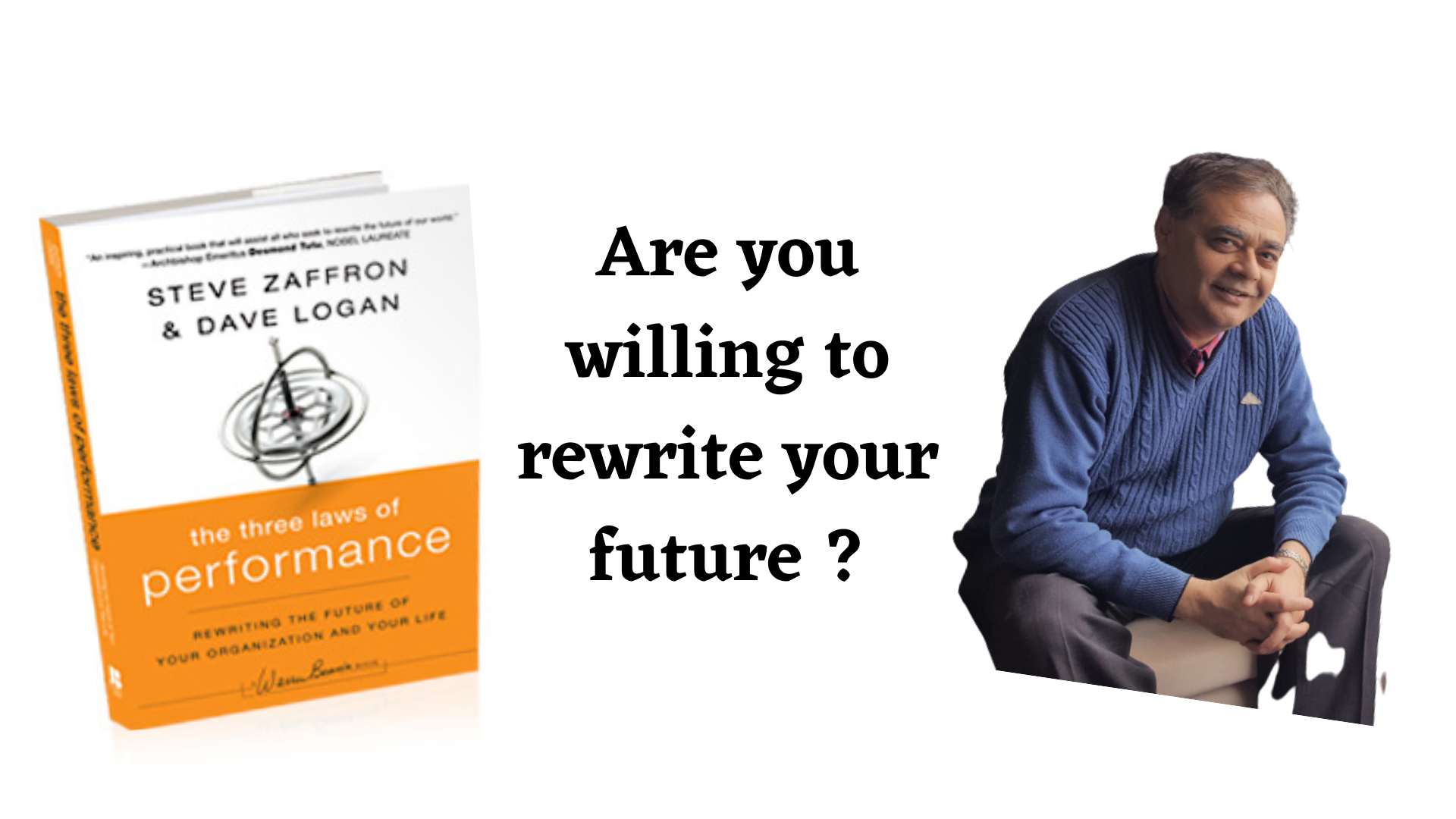
I had recently spoken about the 3 Laws of performance on the E- Bookery platform.
Are you willing to rewrite the future of your organization and Life? Watch this 30 minutes video to get a blueprint for achieving performance breakthroughs.
How can you shift from being disengaged to being proactive, from being resigned to become inspired, from being frustrated to becoming innovative?