Dream Barriers


“All men dream, but not equally. Those who dream by night in the dusty recesses of their minds wake in the day to find that it was vanity; but the dreamers of the day are dangerous men, for they may act their dream with open eyes, to make it possible.”

                                                                                          T. E. Lawrence, 1922

Have you had this kind of a dream? A dream about a friend sitting near a window at the corner coffee shop and reading a magazine article about YOU. What is he reading? In your dream, you do your best to look over his shoulders to see. But the harder you try and closer you get, the alphabets keep receding away. You never really are able to decipher as you try again and again. Always with no results. Have you woken up from such a dream…… with a sense of loss?

Dreams can be so compelling at times. Compelling and stuck at the same place. As Alice discovers in Through the Looking-Glass when the Red Queen tells her, “Now, here, you see, it takes all the running you can do, to keep in the same place.” So what is the purpose of dreams?  Do we use dreams to compensate for the under-developed parts of our waking life personality, as Carl Jung had theorised? Or are dreams merely a safety valve of our mind seeking clarity on the way forward?

I recall the movie Inception which operated in a three layered “dream within a dream” sequence. And the reason for protagonist Cobb to set up this situation was because he needed to break successive dream barriers to access deeper levels of victim Fischer’s mind and implant a specific thought. Cobb knew that implanting the thought into Fischer’s mind would bring clarity of purpose and the desired action and results. Inception made me reflect further. What prevents an enabling thought from entering the mind under normal circumstances? And why is it necessary to go down into deeper levels of the mind?

Which brings us to the aspect of dream barriers. As we dream with open eyes, we may not “see” these barriers coming up, shaping our thoughts and actions.

Dream:    If only I could get that CEO position.

Barrier:    I am not successful and good enough. I would be exposed.

***

Dream:    If only I could own that lovely villa on the beachside.

Barrier:    I may not be able to afford it. Also I really do not deserve it.

***

Dream:    If only I could handle my investment decisions wisely.

Barrier:    I do not have any skills or resources in that area.

***

Dream:    If only I could set up a successful business.

Barrier:    I don’t believe it is possible so why bother.

***

Dream:    If only I could give up my job and live the life of my dreams.

Barrier:    What will my family and friends think of me?

***

Do we see that most of the barriers are internal, all about me? Do we see that it all boils down to my beliefs? And these beliefs have been developing inside me from the time I was born, lying below the surface. And today, they are at the core of who I am, my thoughts, attitudes and behaviours. So every time, I dream up some desire, my lurker friend, the underlying belief, rears up to push me in the opposite direction, negating my resolve and ensuring my dream does not come true.

I am reminded of a workshop in which the instructor asked, “How many believe that it is possible to follow our dreams?” Most participants said, “Yes.” But when asked, “How many of you believe that you can make your dreams come true?”, only one hand went up. Do we see the gap between possibility and probability? This is the extent to which our beliefs can queer the pitch.

We need to be willing to tackle our limiting beliefs. Remember, it is these beliefs that create our thoughts and then actions. So like in the Inception movie above, could the trick be to delve deeper to examine our beliefs, let them go and in their place, implant positive, enabling thoughts into our ‘dreams’? And, what happens when we start developing a positive belief and thought structure? We improve our self esteem. We reduce our fear of failure. We have more courage to take responsibility of our actions.

So can we become Lawrence’s dreamer willing to act our dream and make it possible? And can we envision our dream with such clarity that we can read what is written about us in that magazine of the future? Are we willing to live our dreams……. and our future?

In Learning………..

Happiness and the Theory of Relativity


“Learn to let go. That is the key to happiness.”

                                                     –   Buddha

The other day, I chanced upon a report on the Happiness Index 2012 based on a global poll. What intrigued me were the results.

 On the top of the heap, as the happiest, are folks from Indonesia,India and Mexico. An Indonesia repeatedly ravaged by earthquakes and tsunami. An India struggling with one of the highest malnourished young population. And a Mexico racked by drug cartels and violence.

And at the bottom of the rung with low happiness levels are countries with some of the highest human development indices viz.Germany, Japan, France and Italy. The results do seem to fly in the face of our belief that happiness is a function of wealth, quality of life, health, education etc. And if this be not so, what really are we looking for when we seek happiness?

I get down to finding out what happiness is all about. Is it that warm fuzzy feeling that we get inside when we feel pleasure? Is it the lightheadedness on achieving that long cherished goal and recognition? Is it the contentment of our current situation, be it our family, work or surroundings? Or could it be the exhilaration offered by our material possessions?

As I reflect, I realise that we carry this hugely relative view regarding happiness. On one end of the scale we see it closely linked to pleasure. And so we aggressively seek it, doing everything in our powers to possess it. On the other end of the scale, we try to achieve happiness through “high thinking simple living” moral posturing which denigrates pleasure as something shallow and non-spiritual.

I drill and probe into this relativity surrounding happiness.

My thoughts veer towards the age old fable of the Buddha and the young woman Kisagotami. The story goes that when Kisagotami’s first born dies, her desperate attempts to seek out medicine.to revive the infant takes her to Buddha. Buddha, hearing her pleadings, tells the woman, “To make the medicine, I would need a handful of mustard seeds from a house where no child, husband, parent or servant has died.” As Kisagotami goes on her quest, she realises that hers is not a unique predicament. She leaves the body of her child  in the forest and returns. Buddha helps Kisagotami to “let go” of her perceived source of happiness- her child, to gain a higher view of happiness.

I see how I, like Kisagotami, instinctively position myself at the centre of my universe and hold on to all I have. So no matter what is happening out there, it comes down to how it will impact me. I notice this every time that inner voice complains, “Even though there is an economic downturn, why should I lose on my investments? Why does my child’s school not provide her the extra support? Why does it always happen to me?’ And so on…. I notice my self centric view and the need to hold on is really at the core of my perennial happiness hunting mission.

Me…. Mine….. Myself…..Acquire……. Protect.

Our instinctive happiness mantra. Words and thoughts close to our core. All contributing to our “me-first” perspective. Do we see the need to shift away and increase awareness of many other perspectives around us? As we make this shift, our “me first” point of reference loses ground. And this is when we enter into the world of relativity. Similar to what Einstein conceived a century back, this is a world where each of our reality is relative and all points of view subjective to the beholder. A world where the sheer act of noticing can change the outcome.

We cannot have happiness without unhappiness, pleasure without frustration. Just as we cannot have well being without catastrophe. All on a continuum, all relative to each other.  As we shine the light of this realisation on our “narcissistic self”, we see the relativity of our self concept and its reactions like anger, anxiety, doubt and grief, conditioned as we are to hold onto them. As we do this, our sense of solidity of the “self” collapses into a realm of relativeness.

So we come back to the question, “What is happiness?”  I believe it is an attitude floating in relativity. An attitude to accept pain and disappointment as part of pleasure. An attitude to move away from self obsession while being obsessed with our core values and commitments. An attitude to retain our faith as we face ridicule and hurt to that “me –first” self. An attitude to welcome the Good without being possessive along with   the Bad without being disappointed. The attitude to “let go” when it no longer serves us.

Could it just be that such an attitude gets fostered in an environment full of uncertainty and challenge? An environment which simply does not allow us to seek refuge in our individualistic cocoons. An environment which allows us to “let go.”

Could it just be why the Happiness Index 2012 has thrown up the kind of results it has?

In Learning………                                                                         Shakti Ghosal

Entropy and the Age of Consciousness


All life revolves.  The world is awaiting a great awakening, which will occur with
the dawning of the Age of Aquarius.  This great awakening will take place in the months and years to come and bring significant changes to our consciousness as human beings.

                                                                               The Age of Aquarius, Starts 21st Century

A couple of weeks back, I watched President Obama’s State of Union address. Erudite and all encompassing as always, the President stressed issues of China and outsourcing. But what I really heard from the most powerful man on the globe was insecurity and fear. Of the slipping away of competences and strengths and not knowing what to do. The other day as I watched the BBC debate at the World Economic forum in Davos, I once again sensed the underlying hesitation and concern.

The competence and knowledge advantage which the US and developed world enjoyed from the beginning of the industrial age is fast seeping away. Other nations and societies are catching up faster. And the genie of Globalisation is only accelerating this trend and making the world flatter (to use Thomas Friedman’s famous terminology).

So what are the reasons for such competence and knowledge loss? What can be done to stop the hemorrhaging of this life blood? My thoughts veer towards Entropy, a concept in the realms of Thermodynamics. Entropy is a tendency towards disorder and Science postulates that this can only increase over time. So any “order” peaks, be it in energy, competence or knowledge, can only dissipate, seep away. Ultimately leading to a steady state in which random and uniform soupiness exists all over, the highest level of Entropy.

I recall Isaac Asimov’s Last Question, a haunting science fiction tale of a future reality. Of a Universe slowing down and coming to an end due to Entropy. As the last of Mankind and the last VAC (a super computer) fail to answer that last question, “Can Entropy be reversed?” The story goes on to tell us that as Entropy rises to its final resting level, all individual knowledge coalesce and join into one universal consciousness.

I reflect on what we are experiencing in the world today. Is it the entropy effect on the competences and knowledge possessed by the developed world? Of the inevitable seeping loss to the rest of the world. What would the next turn of the screw bring? As we see Asia rising today, would we not see Africa rising tomorrow? And so on, till a flat world achieves steady state of uniform competence and knowledge levels all over.

But do we see what this seeped competence and knowledge is doing? It is raising the level of awareness all over. Awareness of social and political realities, awareness of heightened aspirations, awareness of the need to keep on improving and improvising. An awareness which is getting accentuated by rapidly evolving communication, networking and database access technologies. And with this heightened awareness has come the inevitability of consciousness.

So what do I envision going forward?

I see mankind fast reaching a new level of human consciousness. As more of us become consciousness- conscious, as our thinking DNAs get re-programmed, we would start seeing and dealing with the world in significantly different ways. Most of the challenges and conflicts of today’s world stem from our beliefs and fears residing in the depths of our sub-conscious. Be it through the manifestation of ego, false fronts or preconceived judgments. But as we gain in consciousness, we gain the intent to shine the spotlight on these hidden drivers of our thoughts and behaviour. And under the light, these beliefs and fears shrink away and lose the capacity to run our lives.

Can we visualise the exciting times we are getting into? As the world witnesses consciousness rising like a tide all over with knowledge flows and heightened awareness. As the human brain starts utilising more of its unconscious capacity. As our new consciousness allows us to “see” our path towards enlightenment. As we herald the dawn of a new age, an Age of Consciousness.

Will this Age of Consciousness be the ultimate evolutionary goal of Mankind?

We are beginning to understand that what exists at the essential core of matter is information and energy. I hope and believe that the Information Age is going to be the stepping-off point for the Age of Consciousness  

                                            Dr. Deepak Chopra- spiritual writer & speaker, 2007


***

I am left wondering about what could make the big picture happen and expedite the dawn of ‘The Age of Consciousness’.

• What is that critical mass of knowledge flow and dissemination which would lead to heightened awareness of the big picture?
• What could each one of us do to reach that level?

In Learning……..                                                                                       Shakti Ghosal

 Acknowledgements:

1) The World Is flat: A brief history of the twenty first century by Thomas L. Friedman, 2005.

2)      The Last Question by Isaac Asimov, 1956

Childhood’s End?


It is not easy to see how the more extreme forms of nationalism can long survive when men have seen the Earth in its true perspective as a single small globe against the stars.

                                                                                                               Arthur C. Clarke, 1951

It has been a year since what has come to be known as the ‘Arab Spring’ came into being. In this period it has rolled through much of the Arab world, scalped four long standing state heads and led to protests and uprisings all over. A plethora of analysis to explain “Why there? Who is behind? What now?” has kept pace.

Explanations have ranged from Facebook, Twitter instigated unrest to rupturing of socio-economic systems dominated by authoritarian regimes. From crony capitalism to delayed maturing of civil society. From exposure to western thoughts to the rising aspiration of an increasingly literate and assertive youth.

The other day I was chatting with Abdul Rashid, an Arab holding a secure and well paying job. And he offered an interesting perspective. He spoke of a father dominated family structure. Of how the father loves his child and takes care of all his basic needs. But in return, he expects unquestioning obedience. Of how, as the child grows up and tries to follow his passion, he gets restrained in case he does not follow traditions. Abdul posed a question, “What solution would you suggest in case the child has to contend with such restraint for the rest of his life?”

The above set me thinking. If the child is being loved and taken care of, why does he feel restrained? And what factors are feeding his perception of restraint? My thoughts veered to the opening sequence of the Arthur Clarke penned Childhood’s End inspired movie, “2001: A Space odyssey”. Of how a futuristic monolith and its flickering images guide a tribe of prehistoric ape men to become discontented with their existing situation and aspire for a better tomorrow. A fascinating story of the origins of Man…. and his discontentment.

And as I ponder about the Arab spring, what do I see? An equation of the Ruler and the Ruled spanning decades which worked till now. A relationship which dictated that the Ruler “father figure” would love and take care of his “Ruled children” through huge welfare systems and sops. In return the latter would keep their side of the bargain by not demanding for uncomfortable freedoms like self expression and self governance. Unfortunately the equation and the relationship it harboured seem to be breaking down.

So what really happened? I believe Globalisation has turned into today’s monolith to show and reinforce images of “What could be” to one and all on this planet. Folks whose lower levers of motivation viz, food, shelter and money needs have already been taken care of, can now see tantalising visions of self actualisation and self esteem. And so we have Abdul above, with a secure job and lifestyle, hankering to follow his “passion” of self determination and self expression.

Could this be the moment when the Arab spring child grows out of childhood to reclaim his destiny? As he seeks more ownership in Governance and policy making? As he joins the global mainstream and political consciousness?

In Learning…….                                                                             Shakti Ghosal

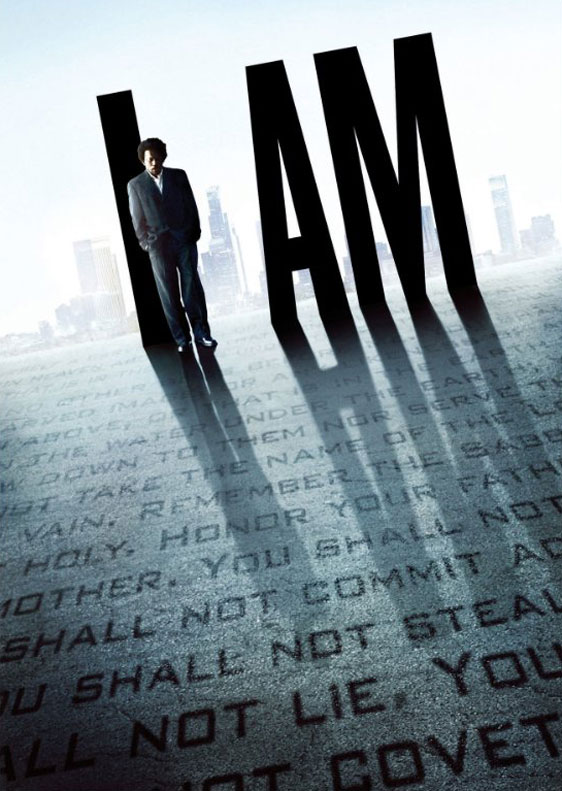
I AM…….


The words “I am” are potent words; be careful what you hitch them to.  The thing you’re claiming has a way of reaching back and claiming you. 

~A.L. Kitselman, American author, early 20th Century

Some days back, on the seventieth Birthday of the iconic Mohammed Ali, I watched some of the old grainy footages of another time, another place. Of a newly crowned world heavyweight champion declaring, “I am the Greatest!” Did these words come from a space of vanity and arrogance? Of projecting a ‘bigger than life’ aura as a shield against racism and perceived injustice? Or was it simply to frighten and unnerve the opposition?

In my childhood, my parents and teachers told me, “Do not fall prey to self arrogance, be humble. Shun personal greed, be generous in giving, be of service.” And there were enough morals like ‘thou shalt love thy neighbour as thyself’’ floating around to reinforce the belief in me that anything to do with ‘Me, mine, I am…etc” reeked of selfishness and a self serving attitude and thus needed to be hidden from view.

And as I have gone through life, I have had my share of successes. In areas of family, work, money. I have run these races and done better than many. And at times like these, as I have looked at the other faces, did I feel those twinges of guilt deep down? Was this the underlying belief rearing its head to derail me from further success?

It was only the other day that my moderator Leon led me to the TBOLITNFL website featuring “The Deuce Lutui Story”. This is a story of Coach Steve Hardison and his coaching relationship with footballer Deuce Lutui. TBOLITNFL means ‘The Best Offensive Linesman in the National Football League’ and this is what Deuce transforms into. Watching the site video is a moving experience and brings home the sheer power of ‘I AM….’

For Deuce Lutui ‘I AM….’ resonates with the infectious positivity of ‘Personal Internal Commitment.’ As Steve Hardison writes to Deuce in one of his E mails, “Your commitment is so profound and so deep and so powerful.  I believe that if we took a blood sample right now and put your blood under a microscope and looked at the individual blood cells you would see letters floating in your blood cells. Do you know what letters you would see in the blood cells?  These letters: TBOLITNFL :)”

I reflect.

‘I AM…’ is about ME. But does it only relate to my personal internal commitment? The ancient Vedas of India speak of Soham which means, “I AM…” Soham is a Universal mantra with its breath like vibrations creating a bridge between the individual’s senses, actions and his awareness. But at a more fundamental level, Soham also celebrates that deep underlying essence of Being. The Being that does not need to react, that just is and is part of the universal consciousness.

I see the connection.

“I AM…” is what I am committed to, what I am passionate about. It is about rewiring my long held beliefs, my internal sinews and muscles as I proclaim “I AM…” to the outside world.  But my senses and actions come from the space of Being. “I AM…” therefore is neither my arrogance nor my selfishness. “I AM…” is no longer a zero sum game in which my wins are at the cost of someone else. I make the transformational leap   allowing my personal commitments to be at peace with my values of humility, generosity and service to others. “I AM…” is my tryst with the universal consciousness.

I realise now that Mohammed Ali’s declaration so many decades back had more to do with his belief in himself and his personal internal commitment than the opposition or the outside world. AsLeonbeautifully sums it up, “Failure to commit to I AM… is high cost of low living”.

I am an inspirational leader of men.

I  AM…..

I am a loving and positive minded husband and father.

I AM…..

I am the best CEO and Executive Coach for this age of discontinuity.

I AM…

“When you truly want something, all the universe conspires in helping you to achieve it.”

                                                                                  Paulo Coelho ‘The Alchemist’, 1993


In learning…….                                                                        Shakti Ghosal


Acknowledgement:  http://www.tbolitnfl.com

We vs. Them


“One day our descendants will think it incredible that we paid so much attention to things like the amount of melanin in our skin or the shape of our eyes or our gender instead of the unique identities of each of us as complex human beings.” 

                                                                                               ~Franklin Thomas, 1964 AD

On the screen, I hear the father of slain Indian student Anuj Bidve speak, “The world is finished for us – that is all I can say,” Anuj, a post graduate student , had been shot in the head  by a man describing himself as “Psycho Stapleton” in Manchester in a mindless act of violence. Seeing the old parents forlornly trying to cope with the loss of their only child, an indescribable feeling of sadness engulfs me.

The incident is being described as a Race attack. One of the many similar attacks that have plagued newly arrived immigrants and students in the UK, US, Australia over the years. Many reasons are up for debate. Is this an anger against new residents getting access to “scarce” resources which otherwise was the prerogative of the old community? Are these attacks a sign of increasingly disaffected youth with limited work and employment opportunities? Are these problems temporary and would “go away” once the incoming folks integrate with the community at large? Was the victim at the wrong place at the wrong time? There is much talk regarding strategies needed to reduce such race attacks through community development and deterrent police measures.

As I reflect, I wonder if these underlying beliefs about race attacks are not merely chasing the symptoms rather than trying to unearth the core cause. And if this be so, would the strategies being talked of be really effective?

What makes a person, without provocation, brutally attack and kill another fellow human? Is this from a distorted self image, itself a product of a distorted belief and need system? Or is it due to an egoistic self- centricity, a product of a selfish and materialistic world? To my mind, these aspects are responsible for much of the created sufferings in the world. These become the arrogant starting points that separate us from others. These make us feel that others are a threat and that the world is a hostile place. We get forced into undesirable behaviour – reacting to others’ words or actions. We end up needlessly competing, being envious or judgmental and feeling threatened by others’ successes.

So what can we do? I believe the strategy needs to start from within. We need to look inside, increase our self awareness. It is this awareness that aligns us with our inner values and brings lightness and a sense of purpose. It is in this space that our ego starts subsiding. Freeing us from that endless loop of Desire and Dissatisfaction, Freeing us from that eternal hunt and chase mindset.

“What is tolerance?  It is the consequence of humanity.  We are all formed of frailty and error; let us pardon reciprocally each other’s folly – that is the first law of nature.”            

                                                                                                               –  Voltaire, 1764 AD

In Learning…………..                            Shakti Ghosal

Oh! To be still……..


The woods are lovely, dark, and deep,
But I have promises to keep,
And miles to go before I sleep,
And miles to go before I sleep.

                                                                   Robert Frost, 1923.


We hurtle faster and faster. To keep pace with a changing world, a morphing society. To keep up with the Joneses. All around us are triggers to keep us in action. Project deadlines at the workplace. To do lists stuck on the refrigerator door. Management seminars extolling the virtues of proactive action and business initiatives. Weekly coaching sessions empowering us to move towards the rainbow of purpose and goals.

As I watch the TV screen, I find more prejudices against inaction. As protests and deaths in the country continue unabated,Syria is warned of inaction by the Arab league, Americans say that they just cannot have any further inaction by Washington as health insurance costs skyrocket. In India, Anna Hazare and his team accuse the Government of inaction to introduce a strong anti-corruption legislation.

Awhile back, I had read about a little known but interesting incident of the Second World War in which afterFrance’s surrender to the German forces in June 1940, a large part of the French navy positioned elsewhere at Gibraltar remained frozen in inaction and refused to follow the Allies instructions. Till they were bombed and fired upon by the British navy!

So is inaction always bad? And why do we sometimes freeze up and halt all action as the French naval commander had done?  I ponder as I try to find some answers. If action signifies moving forward towards light and a better future, does it imply that inaction means something backward and worse? Unfortunately, in today’s materialistic and achievement oriented world and society, this is the belief that stands constantly reinforced. So as we love to show our own “bias for action”, we lump all inaction with lethargy and vacuousness.

But does action always imply moving forward? Does it always demand achievement of discernible goals?  Our perception, fed on a diet of instant gratification, equates action to goal achievement. But does this not detract from the importance of the action steps, the empowerment of the action journey? And does this not lead us to judge the other person by results rather than the path he follows?

And what about inaction? Does it always signify the stillness of the unborn, the slowing down of atoms, the dissipation of energy?  What if there indeed be intrinsic positivity in the stillness of no action? In the Chinese Tao philosophy, wei wu wei means “action without action”. As we observe, we reflect. As we comprehend, we try to make sense of it all. As we strategise, we commit our intentions. Do we realise that goal achievement and critical perspective shifts usually flow from such moments of contemplative inaction?

I believe much of the world’s misconceptions arise due to a lack of understanding of what action truly signifies. And the news stories above underscore this point. So how do we differentiate between the inaction of no action and the stillness of “making sense of it all”?

Simply put, inaction occurs from a fear of the unknown, of leaving our comfort zone. From remaining stuck due to our underlying beliefs (UBs). So the sooner we get down to confronting our fears, unpacking the baggage of our UBs and letting them go, that much faster we regain our airy fairy childhood state of unhampered curiosity and motion.

But when we stand still to ‘make sense of it all”, we do not really choose to move. We seek instead the solace of something still, something changeless, something which will anchor us from the slippery slopes of uncertainty. Like a sheet of still water reflecting back and providing reassurance of our own inherent changelessness. As we visualise the road forward with intention to act and bring in the change.

So, as the world around us moves in an ever maddening whirl, do we retain the conviction to find the balance between the still and restful “woods” of our inner reflections and the “promises to keep’ of our societal actions? And the wonderment and pleasure of the “miles to go” journey itself?

In Learning……………

                                                                                                                                                                  Shakti Ghosal

26.11 Mumbai and Harvard


 Recently, I chanced upon a report about Harvard Professor Rohit Deshpande’s research on what empowered the exceptional display of heroism by the Taj Mahal Palace Hotel staff during the 26/11 terrorist attacks inMumbai,Indiathree years back. Of incredible tales of hotel staff forming human shields to protect guests, some of them losing their own lives in the process.

Prof. Deshpande has found three HR practices relating to recruitment, training and staff recognition to which he ascribes the many uncommon acts of employee valour. But as I reflect on the report, I sense that the findings could be mere tip of the iceberg. Has the research truly been able to drill down to the reasons behind this clearly contradictory conception of human behaviour?

As I reflect some more, I wonder if it all comes down to how organisations think and act, how they relate to their employees. To most of us, an efficient organization is all about “command and control”, a heritage harking back to the industrial revolution. As organisations have continued to ramp up efficiencies, technology has taken centre stage with jobs getting more segmented and even expendable. Low qualification jobs have created disqualified humans. And the attendant social costs of a mentally dissatisfied and spiritually impoverished population are visible all over.

Other symptoms are there to see. Of organisations losing their life blood of core personnel and entrepreneurial energy.  As they try to meet future challenges by using a    “fix-it back to how it was” mindset. A mindset of a command and control Management which has become increasingly misaligned with today’s environment and technology evolution.

And how does all this look like at a macro level? The old economy “brick and mortar” structure which served us well over the last century in terms of standardisation, assembly line productivity, modular approach and cloned processes is in crisis. A crisis fuelled by uncertainty and unpredictability. Of an environment that is getting increasingly disconnected from the past, difficult to comprehend.

So I have this vision. A vision born of hope and positivity. Of organisations who believe in the strategy of the moment. Of a culture where creativity and flexibility replace detailed planning and control. Of the realisation that constant internal regeneration is necessary to keep up with rapid changes and discontinuity. Of managers with conviction that problems are but symptoms of needed change and not something that has “broken” and needs repair. Of leaders who know that things would never get back to the way they used to be but would change faster and faster.

So how can this vision be achieved? By dispensing with rigid job and task definitions and replacing these with strategic “positions” aligned to objectives and results. By empowering people to create their very own evolving job definition, pulsating with a changing environment. As gas fills up vacuum, as the cytoplasm fills up a living cell. And so no two job descriptions would be alike just as no two personnel are alike in terms of their thinking, values and beliefs they bring to the table.

So could this be the way we, the people, reclaim back the “heart of work” from clicking, repetitive technology? As we develop a messianic vision of our role and transform the organisational ethos to say that if one does not take initiatives, one simply does not have a job.

I believe in some unique way, the management of the Taj Mahal Hotel, Mumbai has been able to instill the above radical context of “work” into its employees. And have created a shared deep commitment to service and humanity. But has this been achieved through training and personnel development as the Harvard research opines? Or has it come from a moral energy at the core of the organisation consciousness? From a “caring and serving” value system flowing from the top and percolating through all levels? From sustaining a heritage that empowers people to “get out of their boxes” to creatively enrich, enlarge and connect?

No doubt, the world would be waiting to learn………………

In Learning……………………….

Shakti Ghosal

21st December 2012


If you can keep your head when all about you
Are losing theirs and blaming it on you;
If you can trust yourself when all men doubt you,
But make allowance for their doubting too:

……………………..

…………………………

…………………………….

If you can fill the unforgiving minute
With sixty seconds’ worth of distance run,
Yours is the Earth and everything that’s in it,
And—which is more—you’ll be a Man, my son.


                                                                                                        Rudyard Kipling, 1895


Awhile back, a friend while commenting on an earlier blog, remarked, “I simply cannot stop wondering if this indeed is the beginning of the end of ‘Kali yug’ that the Hindu sages predicted many millennia back! Or for that matter, the 2012 ‘end of the world’ that the Mayans predicted around the same time? Can we really dismiss the two geographically so very distant people foreseeing the same future as ‘mere’ coincidence?” This bringing together of Hindu and Mayan prophesies I had found intriguing and had also recalled Nostradamus’ prediction about the end of the world.

The thought came back the other day as I sat reading about the Large Hadron Collider (LHC), that 27 Km long particle accelerator clicking away deep below the Franco Swiss border. And the underlying concerns that “earth would be destroyed and the galaxy gobbled up by an ever increasing black hole” as the LHC ramps up its operations and reaches its maximum power levels. Yet one more doomsday prediction.

What is it that has tempted Mankind through the ages to speculate on this end of the world theme? Has it been Man’s imagination going ballistic based on various apocalyptic events the world has faced? Or is it some other flaw in mental makeup?

Which brings me to that age-old tug of war within ourselves. We seek knowledge and at the same time avoid it. Our primal instincts conditioned us to make sense of the world around us as else there was always that fear of “what we do not know”. So we fit all we know into that “comfort space” which we have created and close our minds to uncomfortable facts that do not fit.

The doomsayers’ inherent belief is that in case everything does not fit into their prescribed paradigm, the world becomes unfixable and therefore doomed.  Theirs is a mindset of seeing all things in black and white. A perspective that stems from the same closing of minds to facts that do not fit, an underlying belief that what we know is really all that is there to know.

The doomsayers refuse to “see” the positivity, hope and initiative that abound all around us. They ignore any mid path there might be that the world can indeed be “saved” from the holocaust which they has consigned it to in their minds.

We may ridicule the above mindset but do we realise that we carry a bit of the doomsayers belief in each one us? A belief that surfaces when we try and stick to our old ways and resist change. When we wallow in a sea of negativity as we move with the crowd. When we block ourselves from empowerment and positive intentions. When we decide to wear someone else’s coloured glasses rather than be guided by our own core values. When we decide to live by others’ dreams and aspirations, not our own.

So, can we regain the conviction of our own selves to seek positivity and embrace change to inherit the Earth as Kipling’s Man? Or do we want to regress back to when the doomsayers believed the Earth was flat , and we could fall over the edge if we set forth to seek the unknown?

In Learning……………………………………..                                                                                                                                                                  Shakti Ghosal

Democracy: The way ahead


Where the mind is without fear and the head is held high
Where knowledge is free
Where the world has not been broken up into fragments
By narrow domestic walls
Where words come out from the depth of truth
Where tireless striving stretches its arms towards perfection
Where the clear stream of reason has not lost its way
Into the dreary desert sand of dead habit
Where the mind is led forward by thee
Into ever-widening thought and action
Into that heaven of freedom, my Father, let my country awake.

Rabindranath Tagore
Gitanjali, 1912


I sit comfortably ensconced, watching disparate events in News Top 20.

From Arab spring incidents to the Euro zone crisis. From dissent against health care reforms in the USto sit-in dharnas against nuclear power plants inIndia. From strident social activism against corruption by Anna Hazare and his citizen group to Wall Street protests.

The kaleidoscope and colour of humanity, its endeavours and its challenges are so very dynamic, it never ceases to fascinate. But could there be a common thread through all this? Are these seemingly unconnected events but symptoms of some deeper unified malaise?

As I set about making sense of it all, I am confronted with myriad aspects. Those that range from democratic yearnings of the disenfranchised. To anger against increasing disparity.  To democracy itself struggling to sustain itself in the face of a fast changing twenty first century world.

But is Democracy the ultimate panacea to deliver quickly on all things desired for the new aspirants in the Arab world? And as the  fiscal deficits start biting, would the much vaunted democratic freedom of the  developed world  in fact allow it to climb down to the economic and social levels of the developing world? Or would democracy be hijacked by activist groups to further fuel unrests and force Governments to hold onto status quo which they can ill afford? Are we not seeing this happening in the recent political developments inGreece,Italyand elsewhere? I reflect on all such and other questions.

Thoughts flit through my mind. Could our challenges be stemming from a democratic deficit? The issues are many. First and foremost, is Democracy in a position to cope with technology empowered individualism of this century? How do we sustain democracy when people lose contact with their elected representatives? What can make-up for Governments’ loss of control and decision making in the face of Globalisation? And how can Governments come to terms with the increasingly powerful role that media can play?

I am no political pundit but nonetheless would risk offering the following “helicopter view” recipe.

  • Get back to the roots of Governance and face to face      interactions with people. Be it through panchayat empowerment, community      hall meetings or tribal jirgas.      We need to recognize one size or shape does not fit all.


  • Foster values to re-connect people to Democracy and      the political process. And how does one do that? By giving equal standing      to Citizen groups for proposing policy options and shaping dialogue. We      need to create those spaces which would allow people to get fearlessly involved      and know that their thoughts are respected.


  • Shift our perspective of Media from its perceived      “Government challenge” role to that of a democracy enabler facilitating      information availability and public involvement in policy making.


  • Inculcate attitude in the Government to actively      listen to and acknowledge the individual. The challenge is huge but encouraging      online communities may be a way forward.


At this point in History, a millennium beyond the Magna Carta, can we provide the next scallop by accepting the paradigm that Democracy continues to be a work in process?  Until we are able to awaken ourselves in Tagore’s “heaven of freedom… where the mind is without fear and the head is held high”?