Thinking from the Future Back: Lessons from Tesla and a Classroom at IIM Nagpur


WDW Elective course @ IIM Nagpur

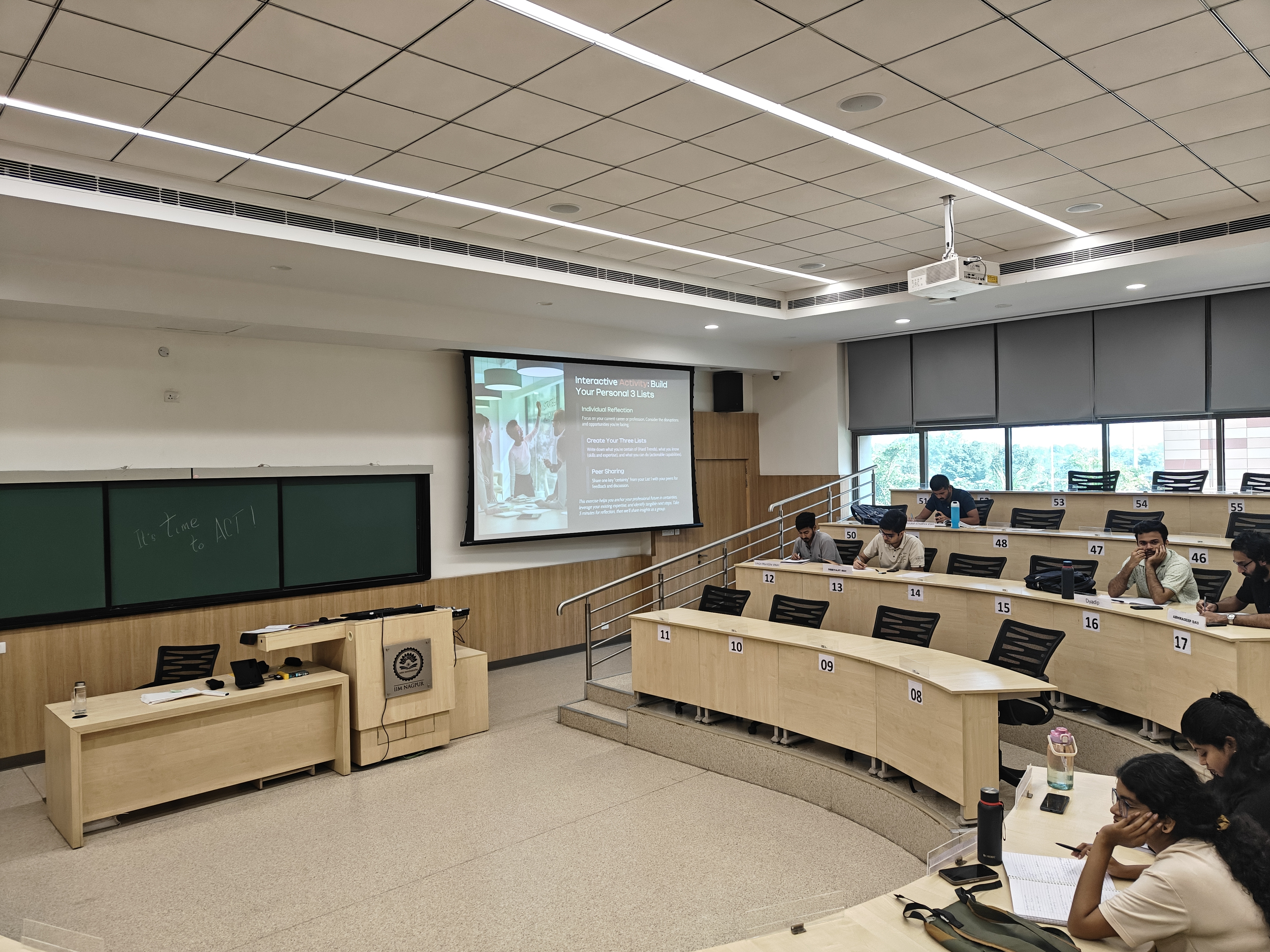
It was midway through my elective course “Winning in a Disruptive World” at IIM Nagpur  last month when a student raised a question that momentarily silenced the class.

“Professor,” he began, “Elon Musk and Tesla seem to have anticipated the future before anyone else — electric vehicles, reusable rockets, large-scale battery storage. How does someone think so far ahead and act with that kind of conviction when others are still debating the probability of success?”

It was an incisive question — and one that went to the heart of what our course was about: how to win, not just survive, in a world defined by disruption.


The Disruptive Context

Disruption today is not an occasional storm; it’s the climate we live in.
The rules of business are rewritten faster than most organizations — or individuals — can adapt.

In the course, we explored how the world has shifted from the VUCA paradigm — Volatile, Uncertain, Complex, Ambiguous — to what futurist Jamais Cascio calls BANIBrittle, Anxious, Non-linear, and Incomprehensible. In such a world, the question isn’t whether disruption will occur; it’s whether we are ready to anticipate and shape it.

That was precisely what Elon Musk and Tesla managed to do — not by reacting to disruption, but by engineering it.


Tesla and the Power of Future-Back Thinking

When traditional automakers analyzed the electric vehicle (EV) opportunity, they saw it through the lens of probability. Their forecasts said adoption would be slow. Battery costs were high. Charging networks were inadequate. The “safe” conclusion was that the world wasn’t ready.

Tesla took the opposite route. It didn’t ask, What’s probable today?
It asked, What’s possible tomorrow?

That question unlocked an entirely different trajectory.

Musk’s strategy exemplifies what I call Anticipatory Future-Back Thinking — a concept we explored in the later sessions of the course. It involves imagining the desired future state first — in this case, a world where sustainable energy mobility is the norm — and then working backward to identify what must be true today to make that future real.

Rather than extrapolating from today’s constraints, Tesla worked backward from a bold vision of tomorrow. That shift — from present-forward to future-back — is what differentiates disruptors from the disrupted.

Exploring Anticipatory future back thinking

Possibility vs. Probability: The Mindset Divide

When I turned back to my student’s question, I began with a simple observation.

“Most organizations,” I said, “plan from the present forward. They look at past data, run probability models, and make incremental improvements. That’s the Kodak way of thinking — safe, predictable, and ultimately self-limiting.”

In contrast, possibility thinkers — like Tesla — start from a future that doesn’t yet exist. They ask, What could be true if we dared to imagine differently?

Daniel Burrus, the futurist who first articulated the concept of Hard Trends, reminds us that the future is not entirely uncertain. Some aspects — technological evolution, demographic shifts, regulatory movements — are future facts. These are the certainties around which possibility thinking can safely operate.

Tesla built its strategy precisely on such hard trends:

  • The inevitability of climate change driving clean energy adoption
  • The advancement of battery technology and digital control systems
  • The regulatory momentum toward lower emissions

These were not probabilities; they were certainties in motion. Musk simply connected them into a coherent future vision — and then acted as if that future were already here.


From Disruption to Design

This is the essence of anticipatory leadership — not reacting to disruption, but designing it.

In my sessions, we discussed how the future-back approach allows leaders to create clarity where uncertainty dominates. It flips the conventional question from “What will happen to us?” to “What must we make happen?”

The difference is profound.

  • Present-forward leaders forecast the future.
  • Future-back leaders architect it.

McKinsey’s research on future-back strategy underscores that such leaders don’t rely on forecasts alone. They use scenario design to imagine multiple plausible futures and then work backward to identify strategic moves that remain resilient across them.

That’s what Tesla did: invest early in charging infrastructure, build direct-to-consumer distribution, and create software-driven vehicles that improve over time. Each move was part of a deliberate future architecture.


The Classroom Reflection

I recall telling my students that day:
“Elon Musk is not successful because he predicts the future; he’s successful because he constructs it backwards.*”

In the classroom, this insight tied together much of what we had explored:

  1. Hard Trends (what is certain) form the foundation.
  2. The Three Lists (what I’m certain of, what I know, what I can do) create clarity.
  3. Future-Back Thinking builds boldness.
  4. Relational Assimilation ensures stakeholder alignment.
  5. Resilience sustains momentum when the future resists you.

Each of these steps builds toward the mindset of a possibility architect — someone who doesn’t wait for disruption, but wields it as a tool.

As the discussion deepened, another student remarked, “So Tesla wasn’t just lucky — it was structurally anticipatory.

Exactly.

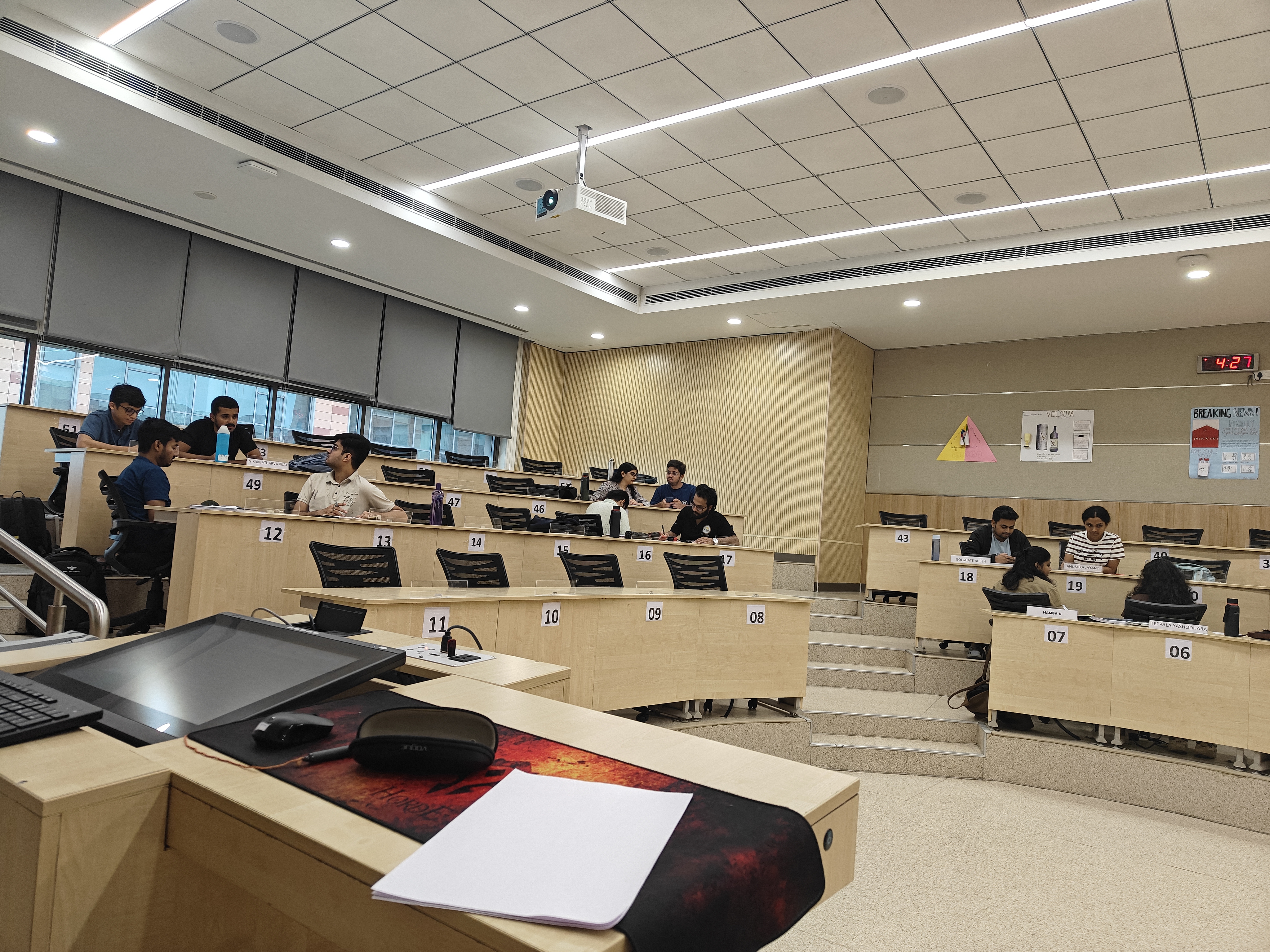
The Classroom reflection

Why This Matters Beyond Tesla

Every industry today — from energy and aviation to education and healthcare — faces its own “Tesla moment.”

In the energy sector, companies that waited for the probability of renewables to rise are now scrambling to catch up with those who invested early in solar and storage.
In education, universities that anticipated the AI wave and reimagined learning around it are moving ahead, while others debate policies.
Even in government policy, we see anticipatory thinking at work in projects like UPI and ONDC, where India intentionally designed positive disruption instead of waiting to be disrupted.

The principle is the same: the future belongs to those who can see differently, envision differently, and execute differently.


A Call to Future Architects

At the end of that class, I offered the students a reflection that I’ll share here too.

Winning in a disruptive world doesn’t mean outpacing change — it means aligning yourself with the inevitabilities of tomorrow and daring to act before others see them as obvious.

Elon Musk’s brilliance lies not in foresight alone, but in the courage to build on the certainties he could already see — however faintly — and to commit resources to them before anyone else believed.

For leaders and managers today, the lesson is clear:
Don’t ask, What’s probable?
Ask, What’s possible — and what must I do today to make it inevitable?


Closing Reflection

As we wrapped up the session that day, I noticed a quiet shift in the room.
The students weren’t merely intrigued by Tesla anymore — they were reflecting on their own “future-back” opportunities.

That, to me, was the real win.

Because when young leaders begin to think like architects of the future rather than survivors of disruption, they start embodying the very mindset our world now demands — one that balances imagination with foresight, vision with action, and optimism with resilience.

And perhaps, in some classroom somewhere, the next Tesla is already being imagined.

IIM Nagpur

#WinningInADisruptiveWorld #IIMNagpur #FutureBackThinking #Leadership #AnticipatoryThinking #Tesla #ElonMusk #DanielBurrus #McKinsey #Innovation #PossibilityMindset

Twilight or Dawn? America and the Paradox of Empire


Abstract

Empires are rarely undone by external invasion; they corrode from within. The American project, like Rome, Britain, and Persia before it, now faces the timeless paradox of imperial overreach: wealth without equity, dominance without renewal. This article situates America’s trajectory within the historical cycle of imperial rise and decline, drawing upon both philosophical reflection and historical precedent. The central question is whether the United States will recognize decline as an opportunity for renewal, or whether, blinded by illusions of permanence, it will follow the path of its predecessors into twilight.

**

Introduction: The Cycles of Empire

Over the last few months, especially as the American tariff challenge for the rest of the world heated up, two distinct narratives have emerged in the public space. The first dwells on the unfairness—indeed the shortsightedness—of U.S. tariff policy and how it is being differentially applied to target certain countries while sparing others. The second narrative takes a step back and enters the philosophical domain: What makes America act the way it does? The symptoms, they argue, are those of an empire in decline.

In this piece I attempt to make sense of the unfolding moment through a historical lens of past empires. From the Achaemenid Persians to the British Raj, empires rose not only on military might but on the promise of order and prosperity. Yet, as Gibbon observed in his monumental study of Rome, empires collapse when external expansion conceals internal fragility. ¹

Toynbee later refined this insight, suggesting that civilizations do not perish from conquest but from their failure to respond creatively to crises. ² America, with its wealth concentrated in elites and its politics increasingly polarized, today finds itself at a similar point of reckoning.

**

The Illusion of Permanence

Decline is often hastened by the presumption of permanence. The British Empire, enriched by its Indian possessions, clung to naval supremacy long after its economic foundations had weakened. The Qing dynasty, flush with silver inflows, remained blind to the destabilizing flood of opium that hollowed out its society. The Ottomans celebrated elaborate military ceremony even as their agrarian base stagnated. In each case, the empire was undone less by external enemies than by its inability to adapt.³

The United States mirrors these patterns. Its massive trade deficits, spiraling national debt, and persistent militarism signal not strength but imbalance. Each dollar allocated to foreign wars secures corporate gain more than civic renewal. Bridges crumble, schools falter, healthcare divides communities, and social trust erodes. Yet the spectacle of global dominance continues—an aircraft carrier here, a sanctions regime there—masking fragility at home. This, too, is the illusion of permanence.

Rome thought itself eternal, describing itself as the urbs aeterna, the eternal city. Britain assumed that the sun would never set on its empire. America today speaks of “exceptionalism” with the same conviction, believing its dominance to be destiny rather than circumstance. The danger lies in mistaking temporary advantage for permanent security.

**

The Anatomy of Overreach

The trajectory of great powers often follows a recognizable arc: expansion, consolidation, overreach, and decline. Paul Kennedy, in The Rise and Fall of the Great Powers, describes how military commitments abroad eventually outstrip economic capacity at home.³ For Rome, it was the expense of garrisoning distant frontiers. For Spain, the drain of endless wars in Europe. For Britain, the unsustainable costs of two world wars.

For the United States, overreach is visible in both economic and military forms. The U.S. spends more on defence than the next ten countries combined, maintaining hundreds of bases across the globe. Meanwhile, its domestic economy is marked by widening inequality, stagnant wages, and crumbling infrastructure. The paradox is stark: a nation capable of projecting power thousands of miles away struggles to repair its own highways or ensure equitable healthcare.

Tariff wars, trade imbalances, and fiscal deficits echo earlier imperial mistakes. Protectionist policies may secure short-term bargaining chips, but they also reveal a deeper anxiety: the fear that economic primacy is slipping away. History suggests that such reactive measures rarely restore strength; they merely postpone the reckoning.

**

Philosophy of Decline and Renewal

At its core, the phenomenon of empire offers a philosophical lesson in impermanence. Heraclitus, writing in the sixth century BCE, reminded us that “all things flow,” that permanence is an illusion.⁴ To mistake hegemony for destiny is to deny this truth.

Toynbee argued that the decisive moment for civilizations lies in their response to challenge: renewal through creativity or collapse through inertia.² Renewal requires humility, the willingness to recognize that decline is not failure but an opportunity for rebalance. For America, such renewal would mean abandoning the imperial reflex and returning to the foundations of civic life—justice, education, community, and sustainability.

True security lies not in endless war or technological spectacle but in balance: between wealth and justice, expansion and reflection, ambition and humility. Without such rebalancing, the American century risks being remembered as another brilliant but fleeting flame in history’s long night.

**

Lessons from History

The cycles of history caution against complacency. Rome endured for centuries, but its collapse was sudden when it came. The Qing dynasty appeared invulnerable until it unravelled within a few decades. The Soviet Union, projecting strength one year, disintegrated the next. Empires rarely decline in a linear, predictable fashion; instead, they erode silently until an external shock exposes their fragility.

For the United States, that shock could come from multiple directions: financial crisis, climate catastrophe, technological disruption, or internal political fracture. Already, polarization corrodes trust in institutions, while economic inequality breeds resentment. These fissures, if unaddressed, could accelerate decline.

Yet history also shows that renewal is possible. Japan, devastated by war, reinvented itself as an economic powerhouse. Post-imperial Britain, though diminished, adapted into a service economy and retained cultural influence. Even Rome, in its Byzantine continuation, transformed decline into resilience. America, too, could reimagine itself—not as empire, but as a republic recommitted to equity and balance.

**

Conclusion

The setting sun is not fate; it is metaphor. Empires end not because history commands it but because they fail to heed its rhythms. Whether America confronts its inner distortions or clings to the illusion of permanence will decide whether twilight yields dawn—or darkness.

The challenge, then, is not to deny decline but to interpret it rightly. If decline is seen as failure, America will cling to militarism, exceptionalism, and spectacle until resources are exhausted. But if decline is embraced as a chance for renewal, the American project may yet rediscover vitality—proving that twilight need not always lead to night. Sometimes, it can be the hour before a new dawn.

**

Notes

  1. Gibbon, Edward. The History of the Decline and Fall of the Roman Empire (1776–1789).
  2. Toynbee, Arnold. A Study of History. Oxford University Press, 1934–1961.
  3. Kennedy, Paul. The Rise and Fall of the Great Powers. Random House, 1987.
  4. Heraclitus. Fragments. c. 500 BCE.

In musing……..                                            Shakti Ghosal

Is your leadership changing to suit an AI World?


Artificial Intelligence (AI) is no longer a futuristic concept—it is here, and disrupting all that we are familiar with in terms of the way we work, make decisions, and interact. As Leaders and Managers, while we might agree with this, we might not have given much thought about how we ourselves might need to change, rethink our own roles and priorities. How we as leaders need to adapt to make the most of the shift at the workplace and business perspectives taking place?

So how do we go about Shifting the Leadership Mindset?

In 2018, Satya Nadella, CEO of Microsoft, shared an interesting insight: “The role of a leader is not to be the know-it-all, but to be the learn-it-all.” This could not be truer in an AI-driven world. Leaders who cling to old ways of working—making decisions based on experience alone or holding tightly to hierarchical structures—will struggle. Instead, they need to embrace a few key shifts in thinking. I am enumerating these here.

  • From Authority to Empowerment: Picture yourself, a seasoned marketing manager who has always relied on gut instinct to craft campaigns. Now, AI-driven analytics suggest alternative strategies. Instead of resisting, you encourage your team to experiment with AI insights, leading to a campaign that doubles engagement. According to MIT Sloan Management Review (2022), businesses that integrate AI into decision-making while maintaining human oversight see greater innovation and efficiency [1]. To be an effective leader today, you need to empower your teams to harness AI rather than dictating decisions.
  • From Gut Feeling to Data-Driven Decisions: Years ago, a retail CEO might have made inventory decisions based on past sales and intuition. But today, AI predicts customer demand with astonishing accuracy. McKinsey Global Institute (2023) highlights that companies leveraging AI for predictive decision-making can outperform competitors by up to 20% in operational efficiency [2]. Take Zara, for instance, which uses AI to analyze shopping trends and adjust production in real time. As a leader, you must learn to trust AI insights while still applying human judgment where it matters most.

( c ) From Stability to Agility: When the pandemic hit, Airbnb faced a crisis. Travel halted; bookings plummeted. Instead of panicking, leadership used AI-driven insights to pivot towards long-term rentals, adapting to new customer needs. The shift kept the company afloat. Deloitte Insights (2023) emphasizes that adaptability is a critical survival skill in AI-driven businesses [3]. In an AI world, you as a leader needs to develop adaptability as a survival skill.

The Changing Leadership Context

The rise of AI is reshaping not just how businesses operate, but also how leaders interact with teams and technology.

  1. Human-AI Collaboration: Imagine an investment firm where AI scans market trends and suggests portfolio adjustments. It does not replace human analysts—it enhances their work. According to Harvard Business Review (2021), companies that use AI for augmentation rather than automation see higher employee engagement and better decision outcomes [4] You as a leader need to foster a culture where AI is seen as a tool for augmentation, not as a threat.
  • A Workforce with Different Expectations: I know of a tech startup which has hired a mix of Gen Z employees who are eager to automate repetitive tasks and seasoned professionals who fear AI might make their skills obsolete.Gartner (2022) stresses the importance of AI literacy, stating that leaders must bridge this gap to create a future-ready workforce [5]. You as a leader need to bridge this gap by promoting AI literacy and ensuring every team member understands how AI enhances, rather than replaces, his / her role.
  • Ethical Leadership in AI Use: Amazon once developed an AI-driven recruitment tool that unknowingly favoured male candidates. When this bias was exposed, leadership had to step in and scrap the project. This highlights the importance of ethical oversight.World Economic Forum (2023) notes that responsible AI governance is one of the most pressing leadership challenges today, requiring fairness, transparency, and accountability [6]. In an AI world, you as a leader must ensure fairness, transparency, and accountability in AI applications.

So, what might be the key leadership qualities needed for an AI-Driven World?

  • Digital Fluency: Take Elon Musk—while not an AI engineer, he understands AI’s potential enough to integrate it into Tesla’s self-driving technology.Stanford AI Index (2024) reports that organizations with AI-savvy leadership are more likely to succeed in AI implementation [7].  You as a leaderdo not need to code AI algorithms, you should be able grasp how AI works.
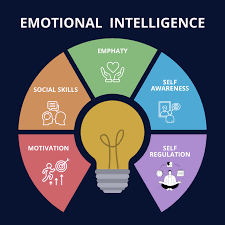
  • Emotional Intelligence: Consider Jacinda Ardern, whose empathetic leadership style resonates deeply in an increasingly digital world. AI can provide data, but only humans can provide understanding and connection.World Economic Forum (2020) highlights that empathy and communication will remain irreplaceable leadership traits in an AI-driven world [8]. As a leader, you need to always hold the perspective that, with AI handling repetitive tasks, the human touch becomes even more critical.
  •  Adaptability and Curiosity: In the 1990s, Jeff Bezos saw the internet’s potential and launched Amazon. Decades later, he embraced AI to power recommendation engines and logistics. As a leader, if you stay curious and embrace continuous learning, you will thrive in an AI-powered future.
  •  Vision and Strategic Thinking: Netflix uses AI to recommend content, but it’s the leadership that chooses to invest in original programming. As a leader, know that while AI offers insights, it is human vision that drives bold, strategic decisions.
  •  Inclusive Leadership: AI is only as good as the data it learns from. As a leader, you must ensure that diverse teams contribute to AI-driven decisions to prevent biases and improve outcomes.

Conclusion: Leadership in an AI-powered world is not about controlling technology—it’s about guiding people to make the best use of it. The leaders who will thrive are those who embrace AI, empower their teams, and balance technological advances with human insight. Just like any major transformation in history, success will not come from resisting change but from learning how to harness it.McKinsey (2023) suggests that successful AI-driven companies are those that invest not just in technology but in leadership transformation [9]. The future belongs to leaders who can blend AI-driven intelligence with human wisdom and vision.

What would you need to do to be such a leader?

In learning………………….                                                     Shakti Ghosal

References:

  1. MIT Sloan Management Review (2022), “Reshaping Business with Artificial Intelligence.”
  2. McKinsey Global Institute (2023), “The State of AI in 2023: Generative AI’s Breakout Year.”
  3. Deloitte Insights (2023), “AI & The Future of Work: The Leadership Imperative.”
  4. Harvard Business Review (2021), “Building the AI-Powered Organization.”
  5. Gartner (2022), “Top Strategic Technology Trends: AI Leadership.”
  6. World Economic Forum (2023), “AI Governance: Aligning AI with Ethical Standards.”
  7. Stanford AI Index (2024), “AI Adoption and Leadership Report.”
  8. World Economic Forum (2020), “Future of Jobs Report.”
  9. McKinsey Global Institute (2023), “Leadership in the Age of AI.”

What to do when the world stinks


Some years back, I had a Divisional head join the team.

The guy had impressed the recruiting board with his talk of ‘track record’ and ‘ideas’ about how he planned to transform the business. When I got around to have a chat with him, he seemed to be all humility and spoke of his own self development through working and learning from me. But several subsequent events seemed to indicate that at the sniff of a challenge, his self-serving shield would go up, a lot of talk about blaming the environment and others in the team would emerge but not much action on the ground. In the meanwhile, the company kept losing competent and productive staff as well as customer accounts; his oft repeated declaration about ‘brickwalling’ them did not seem to be working.

To me it appeared that the Divisional Head did not know what he was working to develop; he was definitely not working on his own leadership. When I again had a chat with him, what came up were several blames. ‘That he had not bargained for the kind of work he was now being expected to do.’ ‘That I was failing to support him adequately.’ ‘That he was stuck with incompetent team members.’

In a nutshell, the job stank, I as the boss stank and the team stank! I did not have the heart to ask the guy that if the world all around stank, could it be that he himself was the problem?

How many of you have faced a similar situation at the workplace? If you have, have you wondered what one might need to do to transform the situation?

The world can shift when one shows up with authenticity and with humility.

Transformation:

  • When we see ourselves as the problem, we can be the solution too. We need to spend more time working on our own selves rather than trying to fix others.
  • Do we have the expectation that our team members should be the harbinger of good news and developments? We need to lower that expectation.
  • Empathy is a strong word; being empathetic is easier said than done. Nonetheless we need to practice putting ourselves in the shoes of others and seeing the world through their lens.
  • Gain the realization that others do not really humble us; we humble ourselves.
  • Show up as a servant leader. A leadership style that enables everyone in the organisation to feel empowered and thrive fearlessly as his / her authentic self.
  • Say ‘Thank you’ to three persons in a day. Look them in the eye and be specific. If someone is not around, send a thank you email or Whatsapp or make a call.

In Learning……                                                                 Shakti Ghosal

How could you shift from Influence versus Impact to  influence and impact?


Larsen & Toubro Leadership Workshop

Sometime back, in a Leadership workshop for Larsen & Toubro that I was conducting, one of the participants shared a challenge he was facing.

 “Earlier I had been involved in direct sales of earthmoving equipment to institutional buyers. A year back I got promoted and was moved to product and market development. However even now a few of the clients continue to contact me on even small issues.”

“That only goes to show that they still have a lot of trust in your support to them, is it not?” I commented.

“True,” the participant agreed. “But it often leads to negativity and bad blood with my sales colleagues who think I am trying to throw my weight around and stepping on their toes.”

“So, what is stopping you from letting go and clearly informing your ex-clients suitably?” I asked.

“That is what I am finding difficult to do. I feel I might be letting my clients down” was the response.

“That surely is a good intention. But are you taking accountability of future sales to the client?” I asked.

Looking at me, the participant slowly shook his head to conveying that he was not.

***

Each one of us, in our career, would have faced a similar situation. The problem occurs because of the clash between our stated positive intention and the negative impact we are making. If we are not careful, we can get sucked into a black hole of spiraling negativity which ironically arises from an initial intention to help.

The authority being exercised in some manner (even with good intentions) without being accountable is really abuse. If we expect others to be accountable for the task at hand, and we get sucked in, we need to be equally accountable to them, even if hierarchically they are junior to us.

Simply put our impact and influence may move in contrary direction leading to minimal or nil positive outcome. We thus need to explore how these two may operate together in the same direction to maximise the positivity of the outcome. Think of a train being pulled by a set of double engines.

Jim Dougherty, CEO of a software company, writes in Harvard Business Review ( Dec 12, 2012 issue),  “If you want to get an emotional connect with the  people you are working with or with whom you have business relationships — you need to be willing to commit and be accountable to them , unsolicited and without direct hope of reward.”

Should you wish to move on the road to better influence and impact, I invite you to explore and answer these questions:

  • Are you willing to make personal investments in people?
  • Are you willing to share what you are learning?
  • Are you willing to empathise with the stresses and frustrations others feel?
  • Are you willing to work for a shared purpose, results and consequences?

What could you do to maximise the overall outcome from the influence and impact you make?

In Learning……………..                                             Shakti Ghosal

Sustainability and Globalisation


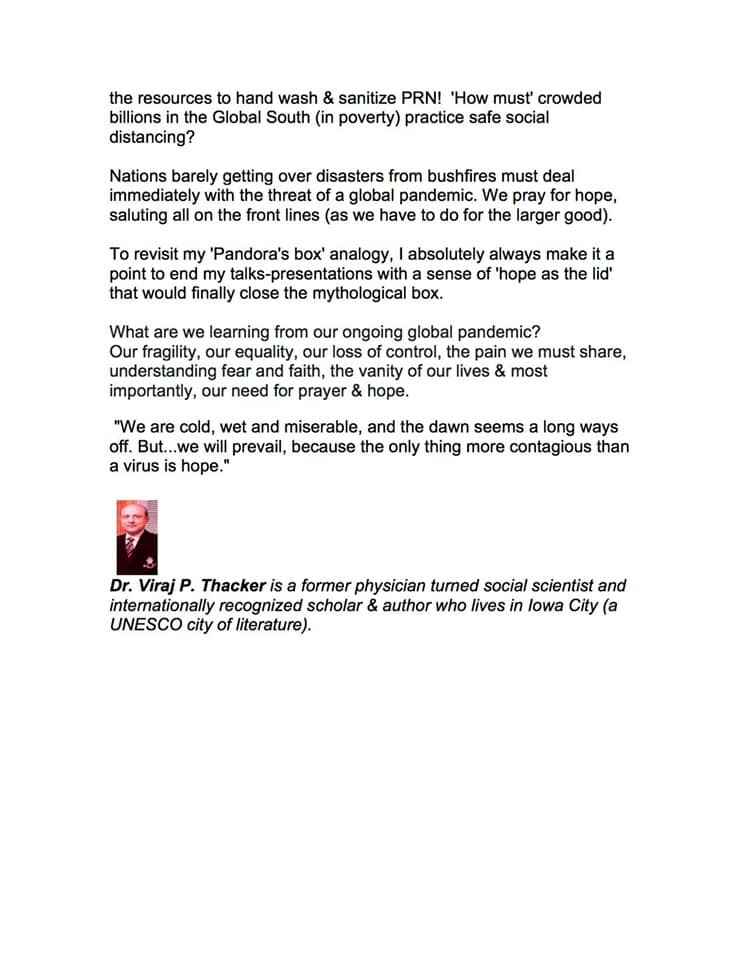
Dr. Viraj P. Thacker, the best-selling author of ‘The Myth of prosperity: Globalisation and the South’, has remained passionate about continuing his Late Mother’s work of a lifetime in the areas of Women & Children, the Environment, Sustainability & Social Justice. This has also led him to set up ‘Manushi for sustainable development’ of which he is the international executive director.

I am sharing a collage of the events associated with the above initiative as well as a thought-provoking article on Globalisation that he has published recently.

Environment, sustainability and Climate Change are areas I remain passionate about. My next book might just be in this area…..

#shaktighosal#sustainability#environment#climatechange#globalisation

A Virtual Convocation @ IIM Udaipur


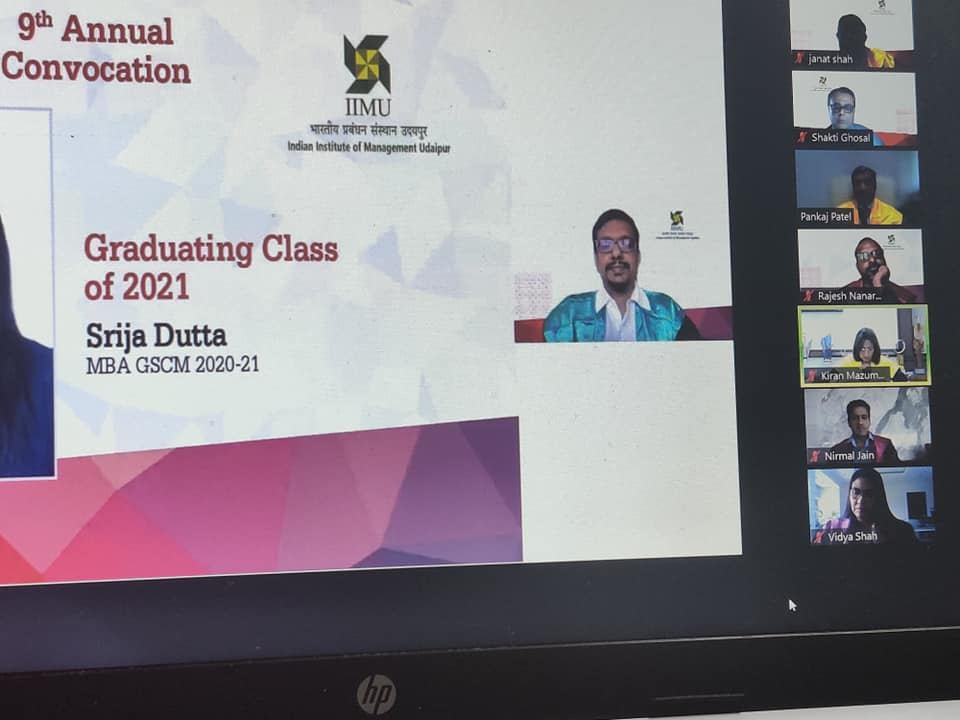
As a visiting Professor, I was invited to the Ninth Convocation ceremony of IIM Udaipur yesterday.

While I have attended convocations earlier, this was the first time I was attending one on a virtual platform.

I was pleasantly surprised by how well and seamlessly the ceremony took place with more than 250 participants.

Mrs. Kiran Mazumdar Shaw, Chairman & Managing Director of Biocon Ltd, as the chief guest, delivered an excellent convocation address on the huge business and start-up opportunities that the current pandemic continues to throw up.

The event reminded be of those immortal lines penned and sung by Bob Dylan, so many years back!

The Times They Are A Changing

Come gather ’round people
Wherever you roam
And admit that the waters
Around you have grown
And accept it that soon
You’ll be drenched to the bone
If your time to you is worth savin’
And you better start swimmin’
Or you’ll sink like a stone
For the times they are a-changin’

In Learning…….

Shakti Ghosal

The Reboot Toolbox


It was a simple idea that brought in the Reboot Toolbox. An idea about how to support our own-selves (as well as others) to remain relevant in a world with a new normal?

As part of the Reboot Toolbox initiative, a Webinar titled “Pandemic and how to plug-in to the future” has been showcased over the last couple of weeks to alumni associations, students and employees of Leading B Schools and organisations. The Webinar underlined the premise that different skill sets and way of looking at situations would be needed in the new normal. The webinar introduced to the participants practices using the 4 Action Stage initiatives framework and a Resilience Tool.

how to support our own-selves (as well as others) to remain relevant in a world with a new normal?

The Reboot Toolbox is about a vision to upgrade Leadership and Performance in a world with a new normal. A world in which Uncertainty and Volatility would be the norm. The Reboot Toolbox would strive to bring new thoughts and practices aligned to the new normal.

As part of the vision, I invite you to join the Cause. You could do that in the following manner.

(1) Engage in discussions on the forum.

(2) Contribute thoughts, articles and tools to support others in the journey.

(3) Spread the word about the Reboot Toolbox Webinars within your organisation as also to others. They come Free of Cost!

Should the Reboot Toolbox and its vision resonate for you, do reply back to me Offline on : shakti.ghosal@gmail.com

Stay well, stay safe!

In Learning……..

Shakti Ghosal

Does learning lead to performance?


“An organization’s ability to learn, and translate that learning into action rapidly is the ultimate competitive advantage.” 

— Jack Welch, former General Electric CEO

In today’s disruptive and hyper competitive world, the need for learning new skills and competences come in continuous waves.  Such learning becomes more and more transitory as the skills and competences get replaced by new requirements and technology. There is widespread realisation that it is this increased capacity and hunger for such learning that provides Leadership with its “last frontier of business advantage”.

Because of the disruptive and accelerating changes all around, the capacity for self driven learning within a‘learning organisation’ culture could be the key differentiator. In the book‘The Six Disciplines of Breakthrough Learning’ its authors outline a process which they claim would add significant value to businesses through creation of such a ‘Learning culture’.

The 6D process goes through these stages.

  • Define Business outcomes rather than falling into the trap of defining Learning outcomes.
  • Design the Complete Experience rather than merely a learning event.
  • Deliver for application, which essentially means the learning in itself should motivate its application.
  • Drive Learning transfer. Possibly the most critical stage. This is when ‘Can I?’ shifts to ‘Will I?’
  • Deploy performance support to overcome the resistance mindset to change as one gets down to ‘doing it the new way’.
  • Document results. Did it achieve the results? Was it worth it?

 As I read the book, I am left pondering about what is it that stops organisations from adopting and applying the six disciplines as outlined.

Is it :

  • The absence of a link between what is learnt to how it would support one to personally succeed and get recognised?
  • The law of fast forgetting  one’s new learning  as one gets back into the comfortable rut of old ways?
  • The failure to shift from ‘Can I?’ to ‘Will I?’And the underlying reason for that?
  • The plethora of disparate factors  about one’s own motivation,  existing workflows and processes, the work place culture, the political, economic and social aspects?

If indeed there exist such a large number of factors which come in the way of learning transfer,what could be done to optimise performance? In such a situation, how could we shift people from being disengaged to be innovative, how could we transform an organisation to imbibe a learning mindset and be a leading edge innovator?

To be able to do the above Leadership too needs to Learn. Learn how to use future based generative language to articulate a future which addresses the concerns of all the above disparate stakeholders. A future into which everyone concerned comes to live into with learning and actions in the present to make the future happen.

In learning……..

Shakti Ghosal

Acknowledgement: “THE SIX DISCIPLINES OF BREAKTHROUGH LEARNING” How to Turn Training and Development Into Business Results by Calhoun W. Wick, Roy V. H. Pollock, Andrew Mc K. Jefferson, and Richard D. Flanagan. Published by John Wiley &Sons Inc., Hobokern, New Jersey 2015.

The Turn of the Screw


“Change is hard because people overestimate the value of what they have—and underestimate the value of what they may gain by giving that up.”

by James Belasco and Ralph Stayer in Flight of the Buffalo,1994

Turn of the screw

China seems to be more and more in the news of late. Well I suppose with its clout as the second largest economic powerhouse in the world, that is hardly unusual. A couple of months back, the country unilaterally devalued its currency Yuan by about five percent to combat declining exports and economic slowdown. More recently the Chinese communist party at its annual conclave announced the end of the controversial ‘One child’ policy, allowing couples to have two children for the first time in thirty-five years. In an environment of economic slowdown, this underlines a heightened fear of loss of competitiveness to countries with better demography.

China degrowth

The Turn of the Screw…….

As Oil prices drop from above one hundred dollars to around forty dollars per barrel, the oil producing nation states in the Middle East led by Saudi Arabia seem to be stumbling, with fiscal deficit rapidly rising to unsustainable 20% of GDP levels. As these countries frantically dip into their reserves to balance the deficit, they fervently hope for oil prices to start climbing up again.

Oil and Gas

The Turn of the Screw……..

I suppose majority of the world believes, just as China and the Middle East hope for, that the economic and oil prices downturn are temporary and the ‘screw would turn back’. China would continue its rise, oil prices would climb back and all would be well with the world again.

My thoughts go back to that prescient article “Marketing Myopia” written by Professor Theodore Levitt of Harvard Business School more than half a century back. The central argument in that was “the history of every dead and dying ‘growth’ shows a self-deceiving cycle of bountiful expansion and undetected decay.” Professor Levitt goes on to say that with the ‘turn of the screw’ in terms of the environment, market and technology, there is always a small timeframe ‘window’ allowing an optimal match between these and an entity’s intrinsic competences. As the screw turns, that fit between such competences and the environment, market and technology starts getting lost. What is needed then is to rediscover and reinvent oneself in terms of ‘What business we are in?’ While Professor Levitt essentially wrote the article from an organisational and industry perspective, I see his concept much more universal and having relevance to nations and Global trends.

myopia

So how do I see the future trending?

For decades, manufacturing from the developed world has been migrating to China, attracted by low costs and productivity. But rising costs in China and development of sophisticated automation are tipping the scales back. Realizing the need to automate to remain competitive, China is implementing advanced robotics. It is constructing the first “Zero human labour” factory in Guangdong which would use a thousand robots to do the work of two thousand humans! But does this not run contrary to the effort to increase the Chinese work force by allowing a two child policy? And what happens to the Chinese manufacturing competitiveness as and when the US and Europe also employ similar robotics to manufacture? Allowing same costs but less the shipping time and transportation costs. Clearly, manufacturing is headed back to the consuming countries themselves. Once again a manifestation of the turn of the screw.

And what about the Middle East and its oil lifeline? For decades now, this region has been enjoying windfall profits from Oil and Gas and resorting to heavy subsidization of its citizenry. Says Meghan L. O’Sullivan, director of the Geopolitics of Energy project at Harvard Business school, “The expensive social contract existing between the Rulers and citizens in the gulf states will get more difficult, and eventually impossible to sustain if oil prices don’t recover”. (A few years back, during the days of the Arab Spring, I had deliberated on this ‘Social Contract’ aspect in my post, “Childhood’s End?”). The question that brooks an answer is when will the oil prices recover? More and more experts in the Energy sector are of the view that with improved energy efficiencies brought in by new technologies and the fracking industry waiting on the sidelines, there is no way oil prices can go up to earlier levels. This coupled with clean energy technologies like the Solar and Wind advancing exponentially means that the fossil fuel industry is headed the way of the dinosaurs. Yet another manifestation of the turn of the screw!

One might wonder that with such inevitable turn of the screw, what is the kind of leadership that would succeed in the world. As I think of this, I realise that such leadership needs to have the ability to envision and embrace a future unencumbered by the present- be it the technology, the geopolitics or the economics. A future which addresses core concerns rather than transitory symptoms. And a leadership which comes to live into such a future as it empowers others to deal with the socio-economic and other changes needed to realise that envisioned future. A future that was not going to happen anyways……….

In learning………….. Shakti Ghosal

Reference: Marketing Myopia by Theodore Levitt, HBR July-Aug 1960.