What if……..


If thought is the fabric from which reality is made, then faith and intention become the mechanisms by which we focus and project thought.

                                                                                                              – Anonymous

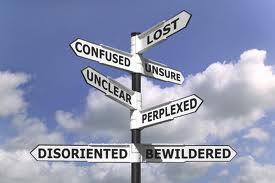
What if we were spirits, balls of energy?  What if prior to being born, we could choose the Men and Women who would conceive us and help us with our values and beliefs? What if we could meet up with all the other spirits who would also be born to play enabling roles in our future life? What if we could choose our destiny?

What if…..

Grounded back to our reality, we see “What if….” as the yearnings of a meandering soul. Or a delusionary dream that needs to be closeted in the attics of our minds. But what if we did carry a master blueprint containing all our yearnings somewhere in our DNAs? Or what if the dream did have moorings in our wakefulness?

I see two pathways. One arising out of faith and the other from our intention. Which path to follow becomes our choice.

Our faith leads us to the realms of spirituality .We conjecture that situations do not happen randomly nor people come into our lives by chance. As we move through this maze of situations and people, we can choose to see our life journey as a blueprint ordained by a higher purpose. With this choice comes the realisation that the reason we are here is to heal our beliefs, learn from them and not to master and forcibly change them. Such a perspective does allow us to make peace with areas of our life which we find confusing and out of control.

But were we to move on the pathway of intention, we can choose to see our life as something we create and are responsible for. This becomes the essence. As we step out with positive intentions to make a choice, we start understanding the underlying reasons why we fail to do so on many occasions.

I get reminded of that wonderful Arbinger Institute publication, “Leadership and Self Deception: Getting out of the box”. While the book focuses on leadership in the organisational context, its argument applies in our life situation too. The book states that people respond to “how we feel about them” and not because “how we treat them.” Let us halt here and absorb the import of what is being said. “Feeling inside” has far greater impact than “action outside.” The genuineness, or otherwise, of what our true feelings or thoughts are, seeps out irrespective how or what we show on the outside.

We “get into the box” as we allow our lives to be dominated by our insecurities and start projecting our failures on to others to try and protect ourselves from our own reality. This then becomes our strategy of self deception and “keeps us trapped inside the box”, away from the truth of our attitude towards others and its crippling impact on our relationships.

As an example, if you are in an abusive relationship, this could be due to your belief that you are unloved. If you believe you are unlovable, you will attract those ‘into the box” who can help you to demonstrate this belief because you have it, not because it is the truth. Abuse is one way that this belief can be played out.

But intention does allow us to choose to become the observer of our beliefs and changing them once they are no longer working for us. And as we change ourselves inside, what we attract on the outside also changes. And this becomes our pathway to move “out of the box.”

So, do we move on the faith path as we reconcile and make peace with our troubling beliefs and other aspects of life? Or do we follow our intentions as we face failure and turbulence in our efforts to implant new beliefs and a life change?

What if….. we could make this choice?

In Learning………                                                                                                  Shakti Ghosal

Acknowledgement:

* Leadership and Self-Deception: Getting Out of the Box – An Arbinger Institute publication, 2008.

Coming of the Second Wave


So you speak to me of sadness and the coming of the winter,
The fear that is within you now that seems to never end,
and the dreams that have escaped you and the hope that you’ve forgotten,
and you tell me that you need me now and you want to be my friend,
and you wonder where we’re going, where’s the rhyme and where’s the reason?

                                                                   John Denver, Rhymes and Reasons, 1969.


Is it not ironic that at times when we stand close to a momentous event, seeing it unfolding in all its HD brilliance, we tend to miss the wood for the trees in terms of its future impact? So it was when the Berlin wall came down; most folks saw it as the factual German reunification rather than the tectonic ideological change about Communism it portended. So it is with the Occupy Wall Street protests, mostly being seen as anger against job losses and lack of economic opportunities rather than something more structural.

As I look around, I see a march of seemingly unrelated trends and events.

  • Declining social and political trust arising out of a growing global inequality and a deepening fiscal crisis. This has lead to a crisis for pension, healthcare schemes etc. dependent on debt burdened states.
  • A heightened perceived insecurity in the developed world. For the first time in generations, people no longer believe their children will grow up to have a better standard of living.
  • More criminality. Be it cyber crimes, drug trafficking or acts of urban terrorism. Symptoms of rising youth unemployment and disenchantment.

During this year’s Davos meet of the World Economic forum, failures of the globalised market economy and an ‘uncertain future’ of Capitalism became the main issues. Ironic when you consider that over the years, Davos has become a byword for Globalisation.

I notice that Capitalism and Globalisation, those two economic pillars of the last few decades, appear to be losing flavour. So, is the world at some kind of an inflexion point?

I believe we have begun grappling with a massive socio-economic change. A change ushered in by programmable machines, networks and the World Wide Web. I had spoken of this in some detail in an earlier post. I say again that technology implementation is resulting in massive shifts at the work place as also how the very concept of work itself needs to be viewed. For the first time in history, technology, without human intervention, is adding economic value and wealth. So those getting in ahead of the game in terms of controlling technology are the new millionaires, displacing the aristocrats and industrialists of the last century. And these millions are being created thick and fast with hardly the need for additional employment generation. Not only is this fuelling a widening wealth gap and disparity, it is leaving more and more of the population behind, unemployed and dispossessed.

Small wonder therefore that a recently published global Wealth Report indicates that most of world’s richest people became richer through the recent economic downturn and into 2011. When in fact the average middle class family actually saw its income fall in real terms. According to Economist Paul Krugman. the current disparity gap in the USis the biggest since the 1920s. Clearly we have entered a landmark period of inequality where the gap is widening to unprecedented levels.

But do you know where the core irony of this whole situation lies? Well it happens to be our much vaunted economic models that not only failed to predict but also to come up with solutions to handle the inequality problem. Worse, if we were to go by economic theory, it is possible to show overall economic growth while significant part of the population is facing a recession or mired in poverty!

So if the predictive reliability of modern economics cannot be relied on, what do we as a society fall back upon? I sense fear as political leaderships all over brace themselves against increased social and political backlash of a growing global inequality. In the Occupy Wall Street protests. In the Arab Spring uprisings. In the resurgence of Marxism in the Indian tribal belts. In the eschewing of the rugged Thatcherism by the British Conservative party as it swing towards leftist policies.

There remain vestiges in our societal psyche of what happened a century back. The chasm between rich and poor opened up by the industrial revolution had been one of the main factors that led to the massive unrest in the first half of the twentieth century. Reaction to this had culminated in adoption of the Communism model in large parts of the world.

I believe we have once again reached that inflexion point where conditions are ripe for the coming of Socialism’s ‘Second Wave.’ I see this as a reaction to the perceived failure of the Capitalistic model and the kind of Globalisation and growth it has spawned. This Second Wave would need to show us ways of re-distributing the wealth created by that part of technology working without human intervention.

Would this be the way Inequality would give us our rhyme and our reason for the future?

In Learning…………..                                                                                        Shakti Ghosal

Not so elementary, my dear Watson!


“Knowledge comes by eyes always open and working hands; and there is no knowledge that is not power.”

                                                                                                        Ralph Waldo Emerson, 1862

 Awhile back, I had been intrigued to read about IBM’s artificial intelligence (AE) named Watson competing in the Quiz show Jeopardy and beating two of Jeopardy’s record holding champions at their own game! It made me realise the extent to which AE development has been able to close in on to the human mind in terms of sifting through and analysing information to reach a correct decision. IBM’s Watson has clearly graduated from the realm of data crunching to become a possessor of knowledge.

Since the dawn of civilisation, Man has sought knowledge. Knowledge to alleviate hardships, to control the environment, to predict outcomes. Knowledge became a source of power and this manifested itself throughout history. Be it through intrigue, technology or the Brahmin rituals. Through millennia and centuries, such a belief only got reinforced.

As individuals, we develop our knowledge by linking it to other knowledge bases. But our belief in our own knowledge is not for knowledge sake but the power we derive from it. Be it in our personal or professional lives. Our inner fears of loss of power or relevance make us resist any changes in our knowledge structure. Eve though deep down we do realise that like all else, there can be no permanence; change in one aspect can shift the entire knowledge structure and its relevance.

But knowledge to be useful has to move away from being mere information. Especially as we face an exponential overload of information. Raw, disjointed data streaming in from all over. And as we grapple with this information avalanche, we have no time to reflect, analyse and produce usable knowledge.

It was only in the last century that we witnessed a formal acknowledgement of what has come to be known as “knowledge work”. And in 1959, Peter Drucker coined “Knowledge worker” as someone who works primarily with information or one who develops and uses knowledge in the workplace.

So how do I see knowledge trending? As organisations have sailed into this century, business leaders have believed in the mantra of investing in technology and knowledge workers. But they also continue to hold the belief that for goals to be achieved there needs to be a control over the work activity and process flow. But this clashes with the loose and unstructured environment that the knowledge worker seeks.

And then there is the deeper issue of a radically changing workplace. As chip based machines take over structured and repetitive activities, the less skilled workers increasingly take on “knowledge worker-like” qualities. Be it book-keepers, clerks or factory floor workers. In essence, more and more workers are learning to manipulate and use knowledge in a decentralised and flat manner.

The twenty first century workplace demands knowledge through unhindered access to information not only within the organisation but by connecting to diverse, outside sources. But does this not run contrary to our age old belief that to retain power, we need to keep the individual in a silo, fed with only ‘need to know” information and expertise? Clearly a significant perspective shift is warranted in our business leaders to be able to accept a radically different information flow and power structure.

And this I would term as our knowledge quandary.

As workers, we need and demand more and more instant access to information from all over. As individuals, we have less and less time to mull over and process the veritable deluge of information coming at us. As leaders and managers, we like to retain power by restricting information and knowledge flows on a “need to know” basis. As we hold onto these power bases using outdated knowledge. And in the midst of all this, now queering the pitch is Watson and artificial intelligence coming centre stage. Truly a case worthy of Sherlock Holmes and he would have doubtlessly remarked, “Not so elementary, my dear Watson!”

And what do I envision going forward? Do I see the “power of knowledge’ pendulum swinging wildly between the individual and the corporation? As the former uses unfettered knowledge for empowerment? And as the latter fights to retain control through use of Watson to aggrandise and analyse information, convert to knowledge and take decisions? And what if Watson were to evolve and “learn” to the point that he cracks the last human stronghold of intuition and creativity?

In Learning……………..                                                                                  Shakti Ghosal

QE1, QE2, QE3……………..QEn.


” There’s no disaster that can’t become a blessing, and no blessing that can’t become a disaster.”  Richard Bach, author of Jonathan Livingston Seagull.

I have never failed to notice one common thread in most Hollywood disaster movies. Of a precursor to the main event whose significance is lost to all except the protagonist. And how, when the latter tries to convince the authorities about the impending cataclysm, he is ridiculed. Till it is too late.

So in Independence Day, when David Levinson discovers a signal within a signal which is counting down to the Doomsday attack of the aliens, most of Mankind prefers to think of the event as the path to Deliverance. And in Day after Tomorrow, when the paleoclimatologist Jack Hall presents clinching evidence on global warming at a United Nations conference, diplomats are unconvinced. Interestingly the audience, sitting on the seat edge comprehends the emerging situation with the main guy and one tends to leave the theatre wondering at the woodenness and ‘stuck in the groove’ mindset of the powers that be in the movie.

As I sat reading a piece on the global economic situation the other day, one aspect caught my attention.  Of how more and more Governments are raising funds against bonds. Enter the central bank ( Fed in the US, RBI in India) which buys back these bonds and credits the commercial banks through a single entry and hey presto! money has been created out of thin air. The much touted QE1 and QE2 in the US were such “money printing” initiatives. The banks sit on piles of cash which they would like to lend out. And the more such money sloshes about in the economy, the more it chases physical assets like real estate, gold etc. And before we know it, we are inside a bubble, a dangerous territory to be in.

I remain amazed at how nonchalantly the world has passed over the above real life disaster in the making. How Governments, like opium addicts, continue to indulge in QE3, QE4………. up to QEn, by which time we are sure to be overwhelmed by hyperinflation. And how the interest payments on the borrowings are becoming unbearable and sending whole economies into a vicious tailspin. What a huge problem China, with its three trillion dollar reserve in US treasury, is facing due to a looming bond crisis. Or how an aging population in developed economies are finding their pension systems increasingly under threat. As people watch in horror their life savings getting eroded to near nothing.

Keynes in his 1919 essay on Inflation quoted Lenin, the Communism ideologue, as saying, “The best way to destroy the capitalist system was to debauch the currency. By a continuing process of inflation, governments can confiscate, secretly and unobserved, an important part of the wealth of their citizens……………………………. As the inflation proceeds and the real value of the currency fluctuates wildly from month to month, all permanent relations between debtors and creditors, which form the ultimate foundation of capitalism, become so utterly disordered as to be almost meaningless; and the process of wealth-getting degenerates into a gamble and a lottery.” 

So like David Levinson and Jack Hall of our movies, did Lenin have the prescience of what would happen a hundred years later? Was he the one man who foresaw the self destruct capability of Capitalism nurtured economic forces gone wild?

In Learning…….                                                               Shakti Ghosal

Acknowledgement:  Keynes on Inflation. Excerpts from ‘The Economic Consequences of the Peace’ by John Maynard Keynes, 1919. http://www.pbs.org/wgbh/commandingheights/shared/minitext/ess_inflation.html

Clash of our pillar beliefs?


It is early days yet of the twenty first century. And while we look forward with hope to human development and new fangled wonders that the future would bring, we also remain rooted to our pillar beliefs which have stood us in good stead. So what are these beliefs?

Pillar belief one: Capitalism remains the panacea for economic development. Capitalism fosters and aligns with Man’s inherent nature to create and innovate for his own benefit.It thus spawns and rewards entrepreneurs. As economic activity expands, so does work and jobs. We hold the belief that Capitalism leads to pulling up of the lower economic strata by the shoe laces. Through more employment and “trickle down” distribution of wealth.

Pillar belief two: Technology facilitates economic development through higher productivity and process efficiency. History has shown that while in the short term, technology may take over repetitive work and jobs, it ends up creating more jobs requiring different and higher competences.

 Though mutually exclusive, both Capitalism and Technology collaborated towards job and wealth creations throughout human society. Until yesterday………..

So what has changed? For the first time in history, technology has evolved to a self sustaining state where it now is able to create wealth without creating jobs. At a subterranean level, technology is clicking and whirring away as it takes care of vast tracts of economic activity 24X7. So today, wealth creation may no longer be an issue but wealth distribution sure is.

Is this a malaise? If it is, symptoms of it are everywhere. As wealth gets created, it gets aggrandized by the CEOs and leaders who envision implementing of technology and cutting of jobs and costs. And so under the protective umbrella of capitalism, we are witness to those huge bonuses and golden parachutes for business honchos and top bankers while “We the 99%” need to make do with largely stagnant pay packets.

Do we realise that Capitalism, the Ayn Rand propagated 20th century pillar belief, possibly for the first time, is no longer “pulling up the lower economic strata by the shoe laces”? On the contrary, it is taking the refuge of technology to increase disparities between the Haves and Have-nots.

A clash of our long held beliefs?

So how do we ensure an equitable distribution of wealth? And how do we do this so that the intrinsic quality of life continues to improve, the initiative taking and creative abilities continue to flower? Frankly I do not profess to have an answer. But I can envision some broad directions and perspective shifts that may be needed.

Can we afford to be purists and let Capitalism and Technology be absolute? And what are these purist beliefs?

  • That “Governments need to adopt a laissez faire stance in economics and commerce”.
  • That “all subsidies need to be frowned upon”.
  • That “cloning of technology in different parts of the world is the fastest route to development”.

But as we start thinking of these, do we not spot inherent contradictions within each of these that could self destruct the entire system?

With the turning screw of time, synergies can turn contrarian as we have witnessed above. And as we shift our perspective away from what we have been conditioned to believe, what could remain the bedrock for anchoring our purpose? Could we achieve this by fostering core values? Values such as   Sharing, Caring, Truth, Service to others and Sustainability?

“Predatory capitalism created a complex industrial system and an advanced technology; it permitted a considerable extension of democratic practice and fostered certain liberal values, but within limits that are now being pressed and must be overcome. It is not a fit system for this century.”

NOAM CHOMSKY

                                                                                                                       **************

In   Learning……………..                                                                       Shakti Ghosal

26.11 Mumbai and Harvard


 Recently, I chanced upon a report about Harvard Professor Rohit Deshpande’s research on what empowered the exceptional display of heroism by the Taj Mahal Palace Hotel staff during the 26/11 terrorist attacks inMumbai,Indiathree years back. Of incredible tales of hotel staff forming human shields to protect guests, some of them losing their own lives in the process.

Prof. Deshpande has found three HR practices relating to recruitment, training and staff recognition to which he ascribes the many uncommon acts of employee valour. But as I reflect on the report, I sense that the findings could be mere tip of the iceberg. Has the research truly been able to drill down to the reasons behind this clearly contradictory conception of human behaviour?

As I reflect some more, I wonder if it all comes down to how organisations think and act, how they relate to their employees. To most of us, an efficient organization is all about “command and control”, a heritage harking back to the industrial revolution. As organisations have continued to ramp up efficiencies, technology has taken centre stage with jobs getting more segmented and even expendable. Low qualification jobs have created disqualified humans. And the attendant social costs of a mentally dissatisfied and spiritually impoverished population are visible all over.

Other symptoms are there to see. Of organisations losing their life blood of core personnel and entrepreneurial energy.  As they try to meet future challenges by using a    “fix-it back to how it was” mindset. A mindset of a command and control Management which has become increasingly misaligned with today’s environment and technology evolution.

And how does all this look like at a macro level? The old economy “brick and mortar” structure which served us well over the last century in terms of standardisation, assembly line productivity, modular approach and cloned processes is in crisis. A crisis fuelled by uncertainty and unpredictability. Of an environment that is getting increasingly disconnected from the past, difficult to comprehend.

So I have this vision. A vision born of hope and positivity. Of organisations who believe in the strategy of the moment. Of a culture where creativity and flexibility replace detailed planning and control. Of the realisation that constant internal regeneration is necessary to keep up with rapid changes and discontinuity. Of managers with conviction that problems are but symptoms of needed change and not something that has “broken” and needs repair. Of leaders who know that things would never get back to the way they used to be but would change faster and faster.

So how can this vision be achieved? By dispensing with rigid job and task definitions and replacing these with strategic “positions” aligned to objectives and results. By empowering people to create their very own evolving job definition, pulsating with a changing environment. As gas fills up vacuum, as the cytoplasm fills up a living cell. And so no two job descriptions would be alike just as no two personnel are alike in terms of their thinking, values and beliefs they bring to the table.

So could this be the way we, the people, reclaim back the “heart of work” from clicking, repetitive technology? As we develop a messianic vision of our role and transform the organisational ethos to say that if one does not take initiatives, one simply does not have a job.

I believe in some unique way, the management of the Taj Mahal Hotel, Mumbai has been able to instill the above radical context of “work” into its employees. And have created a shared deep commitment to service and humanity. But has this been achieved through training and personnel development as the Harvard research opines? Or has it come from a moral energy at the core of the organisation consciousness? From a “caring and serving” value system flowing from the top and percolating through all levels? From sustaining a heritage that empowers people to “get out of their boxes” to creatively enrich, enlarge and connect?

No doubt, the world would be waiting to learn………………

In Learning……………………….

Shakti Ghosal
Democracy: The way ahead


Where the mind is without fear and the head is held high
Where knowledge is free
Where the world has not been broken up into fragments
By narrow domestic walls
Where words come out from the depth of truth
Where tireless striving stretches its arms towards perfection
Where the clear stream of reason has not lost its way
Into the dreary desert sand of dead habit
Where the mind is led forward by thee
Into ever-widening thought and action
Into that heaven of freedom, my Father, let my country awake.

Rabindranath Tagore
Gitanjali, 1912


I sit comfortably ensconced, watching disparate events in News Top 20.

From Arab spring incidents to the Euro zone crisis. From dissent against health care reforms in the USto sit-in dharnas against nuclear power plants inIndia. From strident social activism against corruption by Anna Hazare and his citizen group to Wall Street protests.

The kaleidoscope and colour of humanity, its endeavours and its challenges are so very dynamic, it never ceases to fascinate. But could there be a common thread through all this? Are these seemingly unconnected events but symptoms of some deeper unified malaise?

As I set about making sense of it all, I am confronted with myriad aspects. Those that range from democratic yearnings of the disenfranchised. To anger against increasing disparity.  To democracy itself struggling to sustain itself in the face of a fast changing twenty first century world.

But is Democracy the ultimate panacea to deliver quickly on all things desired for the new aspirants in the Arab world? And as the  fiscal deficits start biting, would the much vaunted democratic freedom of the  developed world  in fact allow it to climb down to the economic and social levels of the developing world? Or would democracy be hijacked by activist groups to further fuel unrests and force Governments to hold onto status quo which they can ill afford? Are we not seeing this happening in the recent political developments inGreece,Italyand elsewhere? I reflect on all such and other questions.

Thoughts flit through my mind. Could our challenges be stemming from a democratic deficit? The issues are many. First and foremost, is Democracy in a position to cope with technology empowered individualism of this century? How do we sustain democracy when people lose contact with their elected representatives? What can make-up for Governments’ loss of control and decision making in the face of Globalisation? And how can Governments come to terms with the increasingly powerful role that media can play?

I am no political pundit but nonetheless would risk offering the following “helicopter view” recipe.

  • Get back to the roots of Governance and face to face      interactions with people. Be it through panchayat empowerment, community      hall meetings or tribal jirgas.      We need to recognize one size or shape does not fit all.


  • Foster values to re-connect people to Democracy and      the political process. And how does one do that? By giving equal standing      to Citizen groups for proposing policy options and shaping dialogue. We      need to create those spaces which would allow people to get fearlessly involved      and know that their thoughts are respected.


  • Shift our perspective of Media from its perceived      “Government challenge” role to that of a democracy enabler facilitating      information availability and public involvement in policy making.


  • Inculcate attitude in the Government to actively      listen to and acknowledge the individual. The challenge is huge but encouraging      online communities may be a way forward.


At this point in History, a millennium beyond the Magna Carta, can we provide the next scallop by accepting the paradigm that Democracy continues to be a work in process?  Until we are able to awaken ourselves in Tagore’s “heaven of freedom… where the mind is without fear and the head is held high”?


We need a second planet by 2030!


A Vedic Hymn to the Goddess Earth

                                                                                                                                                                             Atharva-Veda, XII,I

 Truth, greatness, universal order (rita), strength, consecration,creative fervour (tapas), spiritual exaltation (Brahman),the sacrifice, support the earth. May this earth, the mistress of that which was and shall be, prepare for us a broad domain!

 The earth that has heights, and slopes, and great plains, that supports the plants of manifold virtue, free from the pressure that comes from the midst of men, she shall spread out for us, and fit herself for us!

 The earth upon which the sea, and the rivers and the waters, upon which food and the tribes of men have arisen, upon which this breathing, moving life exists, shall afford us precedence ……….


The independent think tank,Global Footprint Network (GFN), insists that humanity is operating on an overdraft, having surpassed nature’s budget. According to its calculations,mankind would need a second planet to satisfy its hunger and dispose of the waste, as early as 2030.

I time travel back fifteen years to that weekend show of “Independence Day”, of that opening panorama of the low flying alien ship blotting the sun out, a technologically empowered species waiting to unleash, invade and take over our world and its resources. Are we also destined to venture out of our earth cradle on a similar mission?

As we welcome the seven billionth newborn into our midst this week, as our planet strains to host this level of humanity,many of us are left wondering whether doomsday predictions may yet come to haunt us. When Thomas Malthus forecast in the eighteenth century that our propensity to reproduce would outstrip our ability to sustain food and other resources,could it be that he was right after all and simply a few centuries ahead of the curve? While we might be able to stabilise the world population sometime in the  future, would the strain not become unbearable in the poverty stricken regions of Asia and Africa which face the fastest population growth?

Some of the red flags are already up. As Mathias Wackernagel of GFN says, “From food prices to the crippling effects of climate change, our economies are now confronting the reality of years of spending beyond our means”. Many may see this to be uncalled for scare-mongering and would repose faith in technology and Man’s creativity to provide the necessary scallop. Similar to the way Industrial and Green revolutions proved the Malthusian doomsayers wrong in the last two centuries.

But as I reflect on all of this,I wonder whether we are not missing the woods for the trees. Is this devouring of the planet’s bounty, from forests, fisheries, fresh water to minerals and oil,due to the population getting added?  Or is it more due to the ravenous greed of the existing one?

Is the “flattening of the world” as Thomas Friedman aptly puts it, bringing those additional billions of the developing world onto that level playing field? And what happens when these billions start aspiring for the materialism of the west, for that “great American dream”? Kamla Chowdhury, Professor, IIM Ahmedabad, in her Earth Charter theme provides an answer, “We live in a world which has an obsessive preoccupation with growth and unlimited confidence in new developments. We have pursued the philosophy of cancer which grows and expands on its host, eventually killing it. We are behaving like the cancer cell, killing earth by using it ruthlessly and unsustainably.”

So what is the way forward? To heal the earth, I believe we need to heal the individual. The post industrial era ushered in a societal belief of the supremacy of Science and Technology and these became the only approach to knowledge and power. In the process we have become rewired towards greed, aggrandizement and become spiritually contaminated.Methinks we need to regain the moral and ethical values to take a holistic view.

  • Perspective shift towards technologies and innovation with a human face.
  • Societal values and Economics that would cooperate with our world and its ecology rather than exploiting it.
  • Spiritual positivity and sustainability in our thinking and actions.

Can we empower ourselves to adopt a new paradigm for development based on the above values? That surely would be the biggest turning point in human history.

“The world has enough to fulfill all our needs but not our greed.”

Mahatma Gandhi

In Learning………………                                                                                                                                                  Shakti Ghosal

Acknowledgements:

  1. Global footprint Network : http://www.footprintnetwork.org/
  2. The World is flat A brief history of the  twenty-first century : Thomas L. Friedman
  3. The Earth Charter: Kamla Chowdhry.

Wall Street protests and beyond: winter of our discontent?


Now is the winter of our  discontent

Made glorious summer by this son of York;

                                                                                                                                         Richard the Third, Act 1, Scene 1


The Wall Street protests have now  gone viral to more than eighty locations globally. Different places, contrasting  paradigms but same underlying issues. The protests are focused on corporate greed, on rocketing wealth and income inequality, against booming bank profits  post Government bailouts, about average folks struggling to keep their heads  above water in a tanking economy. Banners read: “We are not merchandise in  bankers’ hands!” in Lisbon, “Why am I not  economically represented?” in Dublin. A mix of anger, frustration and disconnect are palpably on display.

As I watch the flickering images  on the news screen, my mind’s eye goes back to John Steinbeck’s “The Winter of Our Discontent”. It tells the story  of Ethan Allen, a former aristocrat, now fallen on hard times. As he struggles  to make two ends meet, he maintains high integrity and honesty. But family and  peer pressure makes him resent his lowly position, forces him to give up his  long cherished values and embark on a dangerous and corrupt path……

I ponder. Is the society at large similarly headed? Is this the twenty first century denouement of Capitalism? Or a clarion call for a deeper change inside each one of us?

To the detractors, Capitalism is a fundamentally flawed model with the sole focus on profiteering. Numbers take over from morality; we get obsessed with what is monetarily productive but socially destructive.

As Aristotle had said, “Man by nature is a social animal…………… and anyone who does not need to partake of society is either a beast or a God.” We have been genetically wired to share, care and give away but this runs counter to the capitalist theory of economic progress. We are thus getting re-wired to reward selfishness but punish altruism. So what are we morphing into- Aristotle’s Beast or his God?

Our sense of purpose and values get subsumed and even contradicted by those of our organisation. We get hijacked into believing that our life’s purpose is to be successful within the corporate world, achieve that beautiful house on the lakeside or aggrandize a stable of top end cars. Such externally imposed beliefs take centre stage and drown out our true values. Our thoughts and behaviour become hostage to these underlying beliefs and as we wallow in our self created materialistic cocoon, we can no longer “hear” our true inner self. We may have once held dear the value of “environmental sustainability” but may now have become reconciled with our organisation’s growth plans of iron ore mining requiring degradation of a virgin environment. In our youth, we may have believed in “equitability of society” but as CEOs, may be perfectly willing to maximize stakeholder returns by retrenching employees through automation and out-sourcing.

While a knee jerk reaction may suggest increasing taxes on Corporates and individuals, excessive taxation endangers initiatives and aspirations, the fountainheads of progress. Clearly a shift in our perspective is needed. Could we reward and support a culture of direct benefit flows to the immediate society and the environment? Can we create a great corporate culture with Purpose over Profit? Can we re-align corporate values more with our own individual ones? Can we light up the corporate sector with glorious values as under?

  • Express love and care
  • Service to others
  • Pursuit of truth
  • Quest for excellence and perfection
  • Improve the World

In the October 2011 McKinsey Quarterly report on “The second economy”, author W. Brian Arthur speaks of how the emerging digital economy is causing large sections of human jobs to disappear, never to reappear. How the future economic challenge would be to shift from producing prosperity to distributing prosperity, how it would become increasingly difficult to apportion future wealth through jobs.

As stakeholders, could we shift our perspective to accept corporate valuation based on non-profit values as above apart from profits? Do we have the conviction to change winter of our discontent to the glorious summer, upholding our core values of universal inclusiveness and fairness? Or would we choose to go along the path taken by John Steinbeck’s Ethan Allen?

“There is a power in love that our world has not discovered yet. Jesus discovered it centuries ago. Mahatma Gandhi of India discovered it a few years ago, but most men and most women never discover it……………. 

And this morning, I think of the fact that our world is in transition now. Our whole world is facing a revolution.”

Martin Luther King, Jr
.

 In learning…………                    Shakti Ghosal

The Ballad of Steve Jobs- What take-aways?


Steve Jobs is no more. An icon of our times passes on. Gigabytes of eulogies, outpourings and videos are all that remain to remind us of him.

As I sit on the keyboard, I wonder what is it that compels me to add my own tuppence about the Man. I did not know him personally. I have never met him. My only connections are two devices that I own- an IPod and an ITouch. But wait! There surely must be some other connection. I revisit the video of his Commencement Address at the Stanford University Graduation Ceremony delivered six years back. And I see myself clapping in front of the monitor as the last video frame fades out.

I set out to determine what really made the man. Not what I could draw inspiration from. But more a curiosity about what made Steve tick, what were those inner moorings that made him go on the path that he did.

To conform to the expectations of his foster parents (who had adopted him at birth), Steve went to college but dropped out soon after since as he himself put it, “I saw no value in it”. Clearly Steve’s values and associated beliefs lay elsewhere. Which brings us to our Lesson number One. That no matter how hard you try to achieve goals set by other people, you are bound to  under-perform or fail if they are not aligned with your passion, your own underlying beliefs.

Even after dropping out of college, Steve continued to attend classes where his interest and curiosity lay. It was then that he did a course in Calligraphy, something which his heart proposed rather than his mind. Steve goes on to tell us how years later, he could use this competence to build beautiful typography into the MAC computer.So Lesson number Two. Listening to your heart is listening to your inner values and beliefs. And this unleashes high energy, great feelings and ultimately terrific results. To use Steve’s expression, “…. when I look back in life, I can see unrelated dots connecting…” This is the power of positive beliefs.

Steve believed that getting fired from Apple, the company that he created, was the best thing that happened to him. The event allowed him to gain awareness of his own self on a much higher plane. It also allowed him a deeper understanding of two other aspects about himself.

One, having become a hugely successful entrepreneur at a young age, Steve developed damaging inner beliefs like, “My creative passion is essential for the organisation, I know best etc”. These led to the display of negative behaviours of arrogance, overbearing know-all attitudes etc. Clearly this was not conducive to organisational harmony and development. As Steve himself puts it, “sometimes life hits you on the head with a brick” to bring you back to your roots- your values and passion.

Second, his getting fired allowed him  to positively confront and overcome his self doubts of  “not being good enough”, to face  his fear of “ being perceived as a public failure” which almost made him “ run away from the valley”.

As he fought pancreatic cancer, Steve acknowledged that a constant awareness of death allowed him to powerfully clarify his priorities and make the big choices in life. As he remarked, “almost everything – all external expectations, all pride, all fear of embarrassment or failure – these things just fall away in the face of death, leaving only what is truly important. Remembering that you are going to die is the best way I know to avoid the trap of thinking you have something to lose. ”

What a fantastic shift in perspective! Such self awareness surely has the power to change our beliefs and thoughts and become a powerful driver of behaviour change harnessed for great forward motion and success. Are we willing to take the baton and move forward? Are we ready to re-unleash the requisite creative energy and passion for the NEXT- PIXAR? And this remains our final lesson number three.

As Steve remarked, “Stay hungry, stay foolish”.