Listening into the future


“Listening is the oldest and perhaps the most powerful tool of healing. It is often through the quality of our listening and not the wisdom of our words that we are able to effect the most profound changes on the people around us.”
Rachel Naomi Remen, American author, teacher and ‘Integrative medicine’ pioneer.

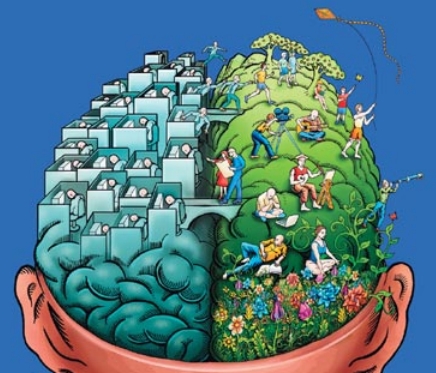
How many of us really give a thought to how we listen? Listening, for most of us, is something taken for granted. Just as seeing or breathing. But what if I were to tell you that there exists a special kind of listening that can create a new future, both for the speaker and the listener?

Consider the following.

You: “Are you planning to see a movie this weekend? I am looking for someone to go with”
Me : “Can’t say for sure. Maybe, maybe not.”
You: “Hmm! Okay, will you let me know once you make up your mind.”
Me : “ Sure, shall do.”

What would you say about the above conversation? Seems to be pretty straight forward and ordinary does it not. But if you look at it again, you would notice two aspects. First, the exchange has been about my hearing the words and then responding based on my interpretation of the same. Second, how the interpretation impacts what exists as concerns for me, allows me to agree or disagree.

Now, let’s consider another exchange.

You: “I do not agree with your handling of the situation. I feel that might create a bigger problem.”
Me: “I have tried to do the best I can. I believe what I did was the best under the circumstances.”
You: “Well, what you failed to do was consider other options which would have been better.”

Do you notice that in this hearing I have interpreted your words as judging me and have immediately reacted by justifying myself and my actions?

Like the other senses, hearing remains a meaning making activity. Essential to interpret what is happening out there and how it might conceivably impact us. Hearing remains essential to survive. We thus become adept and skilled in hearing and do it all the time. Hearing though is not listening.

So what is listening? It is an art and may not come easily to most of us. It is really about when we listen, we do so without interpretation, without judging it against what we know, what we believe, what we assume. If this leaves you wondering whether you have ever listened at all to anything, welcome to the gang! For this remains true for all of us.

listening image

So what is it that stops us from listening? As I dwell with this question, I come to a surprising realisation. Which is that I do not want to listen since I find it dangerous. I remain afraid that listening might force me to let go of my beliefs and biases, shatter some of the perspectives I hold dear, that I am accustomed to. So how do we remove this fear and apprehension that our listening might endanger our beliefs, shatter our long-held perspectives?

Well, we can make a start by practicing to ‘listen authentically’. We do this by being alert to any inauthenticity that we find creeping in. For example, while listening I might notice a need for me to look good or needing to be liked. Or an evaluation or judgment swirling in my mind about what the other person is saying. Noticing this in itself brings up that self awareness that I have listened inauthentically. It then allows me the opportunity and access to train myself to listen without that inauthenticity.

You might wonder, ‘But is it not critical for us to bring judgment and perceptions from past situations to be able to make meaning of what is being said? Why should we dispense all that just to listen authentically? And what is the advantage we would gain by doing that?’

So we get back to understanding the nuts and bolts of ‘listening authentically’. What we saw above was what we need to do at our (listener) end in terms of being non-judgmental and being alert to our inauthenticities creeping in. Now let us understand how ‘listening authentically’ manifests for the guy who is speaking. Well what it does is let the speaker say everything he has to say until he has nothing else to say about what he was saying.

And this is when the magic happens!

The speaker has the experience that he has actually been gotten. He and we may not realise it but our ‘listening’ has supported him to table all his concerns, his fears and allowed him to put all that behind him. The concerns, the fears from the past that had put him “on the rails” towards a future which was cluttered with and an extension of his own past. With the past clutter gone, a blank space has been created. A space waiting for a new future to be born. A future that was not going to happen otherwise.

The listener at the other end, shorn that he has chosen to be, of all judgments and interpretations, also finds himself no longer “on the rails” and no longer being held hostage by his own beliefs, biases, prejudices and taken-for-granted assumptions. Old resistances and blocks go and he too becomes part of the blank space. A space now open for new possibilities, new conversation and a new future.

Dear Reader, do you see how simply listening authentically transports both the speaker and the listener into a new space? A space which holds the key to releasing both sides from the bondages of the past? A space which allows both sides to write a new future? A future created which was not going to happen anyway?
Created future

Dear Reader, are you willing to make that commitment to listening to have the magic happen for you?

***
Ester asked why people are sad.

“That’s simple,” says the old man. “They are the prisoners of their personal history. Everyone believes that the main aim in life is to follow a plan. They never ask if that plan is theirs or if it was created by another person. They accumulate experiences, memories, things, other people’s ideas, and it is more than they can possibly cope with. And that is why they forget their dreams.”
-Paulo Coelho in ‘The Zahir’, 2006

In learning……. Shakti Ghosal

Varanasi……. and the differing Realities


“Enlightenment, and the death which comes before it, is the primary business of Varanasi.”
Tahir Shah, author – Sorcerer’s Apprentice, 1998

If you are born in India, as I was, Varanasi, that immortal city of Lord Shiva and his consort Sati, slowly but surely becomes a part of your psyche.
Varanasi - that eternal city
My first visit to Varanasi with my mother continues to hold vivid memories for me even today. In my teens then, it was possibly the first time when I faced the confusion of how the same ground situation occurred so differently to my mother compared to me.

What occurred to me as narrow serpentine alleys, overcrowded and difficult to breathe places showed up as a delectable array of holy shrines, temples and ashrams to my mother.

What occurred for me as slippery, dirty steps to be avoided at all costs lest I fall into a smelly cesspool, showed up as venerable ‘ghats’ of the holy Ganga river, promising salvation and nirvana to my mother.

What showed up for me as a city bursting at its seams with the old and the dying, sickness, leprosy and burning funeral pyres, seemed to show up as life’s final destination and a passport to heaven for my mother.

As is the norm, come sunrise, I accompanied my mother for the holy dip in the Ganges. When we reached the ghat, the place was already thronging with hundreds of people, some already in the flowing waters, others taking an oil massage as a prelude to the dip. A motley crowd of beggars, tea sellers, urchins, saffron clad ‘sadhus’ and devotees jockeyed for space and spiritual advantage.
Sadhu at Sunrise

varanasi_main
My mother urged me, “Come, take a dip. Doing it is so holy, it would cleanse you of all your past sins.”

Now that was no doubt tempting. I could recall sins a plenty that I had committed over the last few months itself. But what held me back was the sight of raw sewage belching into the river with a dull roar. Not to speak of what appeared to be floating dead bodies and the vultures above. I had also heard sordid tales of unclaimed bodies, which no one came to cremate, being tied to a rock and sunk to the river bottom. I had this scary vision of stepping onto a body and being possessed by an angry spirit thereafter. The net result was that I refused to take that holy dip, much to my mother’s chagrin and embarrassment.

Varanasi-Ganges-Trash-400x300

Whenever I have mused about that visit subsequently, I have wondered what was it that created the almost diametrically opposite reality about Varanasi for my mother and me.

Coming as she did from an overly traditional, semi agrarian Bengali household in suburban Calcutta and growing up in a joint family, my mother imbibed strong elements of religious and ritualistic ‘Dos and Don’ts’ apart from a conditioning to not question the collective view and mindset. I suspect this is what would have made her take to Varanasi and its ethos like a fish takes to the water. For Varanasi is all about the occurring of a collective mind. That collective mind which through centuries and millennia, has read the Gita, quoted the Upanishads and chanted the vedic mantras on those very ghats.

I on the other hand, born and living in a nuclear family and receiving a liberal education, had very little exposure to the traditions, rituals and collective beliefs coming down the ages. So where my mother could selectively ‘see and tune into’ the devotional hymns, the fragrance of the incense and purity of the saffron colour all around her, I was left struggling to come to terms with the sludge and the floating trash, the smell of feces, the sickness and the poverty on physical display.

Today, when I look back to that Varanasi visit, I can see how the differing realities of the city effected us. My mother’s occurring of reality brought her great bliss and fulfillment. My occurring on the other hand brought in trepidation and doubt. I begin to realise how both the realities were illusions, anchored as they were to how the situations occurred to each one of us.

Like the above, do we see how most conflicts in society and the world can be traced back to the aspect of reality illusion? An illusion which makes us erroneously conclude that what shows up for us as a result of our own world view and frames of references is in fact the only reality and we refuse to accept any differing perspectives. Merely holding the awareness that differing realities can and do occur for each of us, and this is but normal, can lead to significant lowering of conflicts…….

“Reality is merely an illusion, albeit a very persistent one.” Albert Einstein

In Learning…….. Shakti Ghosal

Mind Shift


“Whatever we are waiting for – peace of mind, contentment, grace, the inner awareness of simple abundance – it will surely come to us, but only when we are ready to receive it with an open and grateful heart.” ~Sarah Ban Breathnach, American author.

Everest

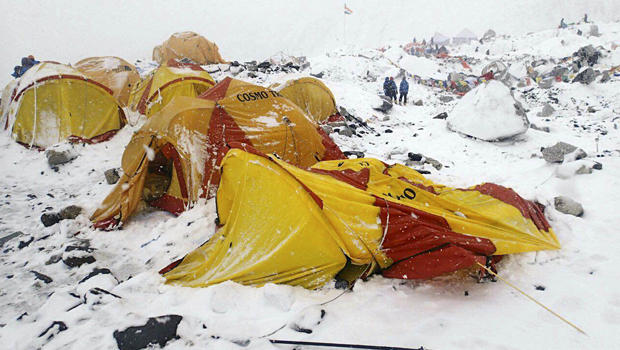
The morning of Saturday, 25th April dawned at the base camp of the Mount Everest expedition like any other. Just before noon, Sherpa Bahadur was attempting to establish contact with the expedition team up on the slope when he was non-plussed to see the snow covered ground shift and rise like a living apparition. The last thing he remembered was an ear-splitting sound and being swept away by the shifting ground under his feet.

nepal-earthquake-avalanche-ap855095418230
For days and weeks earlier, unknown to the Sherpa and his expedition mates, two pieces of the cracked Earth’s crust below, had been moving and pressing against each other, like they have been wont to do periodically for millions of years. The heat and the churning currents of the molten rocks underneath was leading to the crust crumbling and buckling with intense pressure points being created. Something had to give. And that is what happened on that fateful Saturday. As the pressure propelled the molten rocks below the crust to shift and move like a jumble of conveyor belts in disrepair, it manifested as a powerful earthquake of 7.9 magnitude on the Richter scale all over the Himalayan regions of Nepal and North India.

Witnesses later reported that the shifting avalanche began on Mount Kumori, a 7,000-meter high mountain just a few kilometers from Everest, gathered strength as it totally engulfed the base camp in the lower reaches of Everest.

For Sherpa Bahadur, a survivor of this immense natural tragedy, the shift of Earth’s tectonic plates led to a mind shift in terms of a change of focus and perception. What really mattered in terms of his relationships with his missing colleagues, the memories of all the great times they had had as they had planned for and painstakingly executed the expedition together came crowding into the mind. The pettiness of behaviours, the jealousies, the selfishness, all part of the way he had wound up being, seemed to recede. Standing amidst the destruction, carnage and sorrow, he found himself surprisingly engulfed by a peace of mind and an inner awareness of commitment.

Little did he realise it in that moment but Sherpa Bahadur had come through a Crucible event. A transformative experience that had given him an altered sense of identity and purpose. As he set about initiating efforts to rescue his missing team members, folks around him could not help but notice his strength of purpose and the nobility of his selflessness.

A crucible experience is a trial and test, a shifting of the ‘tectonic plates’ of our mind, opening us up to entirely new ways of being, of thinking and acting. As we do this, we can turn our life completely.

Steve Chandler, the author of “Shift your mind: shift the world”, says, ‘When the mind is open, it will shift. When that happens all of life becomes, momentarily, light as a feather. Light as a breeze. Beautiful! You go up to the next level of consciousness, and creativity, energy, vibration ó whatever you want, you’ve got it.’

So what is that mind shift Steve is talking about and what could one do to make it happen?

Well for a starter, we need to bring in a heightened awareness of our way of being. Only with such awareness can we hope to achieve some of the mind shifts given below.

MindShift

* A Gratitude Mind Shift: ‘Do you carry that nagging feeling that somehow you have less than the other guy? Could you shift your way of being to see all that you have as a blessing?’

* A Self-Creation Mind Shift: ‘Do you find yourself blaming others and the circumstances when faced with a problem? Could you shift your way of being to seek opportunities for self creation and development when confronted with pain or difficulties?’

* Being Cause in the matter Mind Shift: ‘Do you find yourself resisting or denying problems when they arise in your life? Could you shift your way of being to acknowledge that somehow, somewhere your choices and actions might have caused these?’

* A Self-Trust Mind Shift: ‘Do you find yourself doubting your own self and seeking answers from others? Could you shift your way of being to trust your own intuition and wisdom?’

* Being committed to something bigger than yourself mind shift: ‘Do you find yourself embroiled within your own self-serving pettiness and fears? Could you shift your way of being to embrace a cause bigger than yourself and choose to be fully alive and engaged to that?’

* An Initiative-Taking Mind Shift: ‘Do you find yourself waiting for someone else to take the lead? Could you shift your way of being to be the creator, the fire starter?’

* A Present Moment Mind Shift: ‘Do you see yourself being held back by your past? Could you shift your way of being to drop that story that is holding you back so that you could recreate yourself every day?’

That crucible experience that Sherpa Bahadur had on the lower slopes of Mount Everest on that fateful day was really about a very fundamental realization. Which is this. All that we perceive and take for granted, who we know our self to be, what we assume to be true about us, others and the world in general, is not the only reality. It is this realization that allows us to achieve heightened awareness and transform ‘the way we have wound up being’, allowing us to enter a new world. It is this realization that allows us to open our mind (and heart!) to the Shifts we have spoken of.

My invitation to you, dear reader, is this. Today, right now, pick one of the above Mind Shifts that most resonates with you. Gently place it inside your psyche and begin living it. Come on, give it a try! As you open your mind to embrace, you might be astonished with the results.

In Learning……… Shakti Ghosal

Post script: The post alludes to the recent devastating earthquake in Nepal. However Sherpa Bahadur is a fictional character and has no bearing to any living person. I however have no doubt that in reality there are innumerable individuals out there, who faced with a crucible experience arising out of the earthquake, have risen to the occasion with their untiring efforts. I offer this post as an acknowledgement and homage to all such brave and selfless individuals who have been working tirelessly on the ground to support the shattered communities.

Acknowledgements:

1) ‘Crucibles of Leadership’ by Warren G. Bennis & Robert J. Thomas, Harvard Business Review,
September 2002.
2) ‘Shift your Mind: Shift the World’ by Steve Chandler, Robert Reed publishers, February 2010.

My Context uses me.


“For me context is the key- from that comes the understanding of everything.”
– Kenneth Noland, American contemporary artist.

context-img4

Interestingly, my first acquaintance with ‘Context’ was from an experience with something which is opposite, that is ‘Out of Context’. I was in junior school when one of the girls in my class came running to the teacher and exclaimed loudly, “Miss! Miss! Dilip is saying he will kill someone!” When Dilip was called in for his explanation, it transpired that during lunch, he had remarked, “It is so hot. I feel like killing that person and sitting in his place in the air-conditioned school office.” Here was a case of a young mind taking some words out of context. The listener, listening to the specific set of words without the benefit of the context in which they were spoken, however derived a different meaning altogether.

As I go through life, the power of context continues to be revealed to me. I am witness to myriad claims and counterclaims in the realms of politics, media and entertainment in which politicians and celebrities, when confronted with some of their past utterances, resort to saying, “I never said that, I was quoted out of context”. Stating this, the individual is quick to articulate a context which completely shifts the meaning of what he /she had said.

The dictionary meaning of Context is ‘the circumstances that form the setting for an event, statement and idea, and in terms of which it can be fully understood and assessed’.Said another way, Context is something which interweaves into a situation to provide meaning. While we may not be conscious when we look at a situation, there is always a context that we hold that generates for us the sense that we make of what we see. A situation in a vacuum is apt to lose much of what it might mean or imply for us.

How a context can shape the way of being and actions of people is wonderfully portrayed in “The Life of Brian”, the 1979 British Comedy film. Tired of masquerading as a phony messiah, Brian tries to run away from the crowds following him and loses one of his shoes in the process. To the crowd however, the context is one of ‘every word and action of Brian is a point of doctrine’. The accidentally lost shoe of ‘Messiah’ Brian is held up as such. This is humour and satire at its best!

***

As I start distinguishing the contexts in my own life, I see a particular situation playing out repeatedly.

Whenever I notice someone, be it a family member, relative, office colleague etc. not doing it ‘my way’ or voicing disagreement about my way or style of functioning, I feel that the person is actually trying to prove me wrong , undermine me, not giving me the respect which I deserve etc.

I thus see all such situations from a context of ‘Disagreeing with me implies proving me wrong, undermining me, disrespecting me etc’.

As I hold this context, the situations occur for me negatively. This negative occurring impacts my mental state, emotions and thoughts as also the actions I contemplate. So how do I react? I tend to lose sight of the big picture. I justify myself by knit picking on the right or wrong ways of doing things from my perspective. I get down to micromanaging and in my anxiety to enforce, end up in confrontation, acrimony, blame game and what have you. So even though I started trying to get something done, I have really ended up fanning dissent, demotivation and unworkability.

I can see now how my context has been using me. How, time and again, it puts me on rails and makes me react in a predictable, disempowering manner. How my reaction gets based on how the situation, shaped and coloured by my context, shows up for me.

So if my context uses me thus, can I shift away from it to avoid my disempowerment and failure to get the job done?

I am left wondering about what kind of practices I need to adopt to shift away from disempowering contexts to empowering ones for myself……to be continued…….

In learning……… Shakti Ghosal

Leadership and Choice


“Leaders live by choice, not by accident.” Mark Gorman, author.

untitled
Choice. A simple, easygoing word which leads most of us to trivialize its importance. But nonetheless it holds enormous power in the exercise of Leadership as well as life in general.
***
In a recent Leadership course, I gained a powerful perspective from the following classroom experiment relating to ‘Choice’. The experiment required of us the following.

1. Identify what there is for you to do in your life that you feel obligated to do, or that you are doing based on a set of reasons for doing them, and write it down.
2. As an experiment, choose to do the thing it would be legitimate to say you are obligated to do (or have no “choice” about doing), and now write them down as what you are choosing to do. (“I choose to …”.)
3. Now check and see whether your experience of the item occurs for you (shows up for you) differently.

One aspect in my life that occurs to me as an obligation is, ‘Hang onto my current job, work profile and industry’.

I then experimented with rewriting the above aspect as a free choice of mine, which then became, ‘I choose to be in my current job, work profile and industry in an empowering, relevant and effective manner.’

I was taken aback by the remarkable shift in the way the situation occurred for me by the mere change in the language as above.

I could see that when I exercise ‘Choice’, it is intrinsically me, my inner convictions and I start ‘owning’ that choice; it occurs less burdensome. I start feeling heightened energy, passion and confidence. I can sense more possibilities and way forward opportunities apart from an intrinsic commitment to do the best I can.

Contrast this with when I used the language of obligation and the burden that brings in, constraining possibilities and pathways. I then see myself in a space of forcible acceptance, fearful of consequences. I go through the motions, rely on instructions to proceed, avoid risks etc. I see a drag and loss of energy.

I started seeing the power residing within the ‘language of Choice’.
***

I recall a couple of situations in which the way I perceived making a choice impacted both myself and others in a positive or negative way.

One time when I had to treat my family out to dinner, my wife and daughters left the choice of selecting the restaurant to me. Post dinner, my wife remarked that she had not enjoyed the Italian cuisine all that much and how she wished, I had chosen an Indian restaurant. I remember reacting back angrily as to what had stopped her from giving this preference earlier on. I then tried to justify my selection based on good word of mouth feedback of friends. Basically I ended up not taking responsibility of my own choice and putting the blame on my friends instead. To evade criticism of my choice, I had painted myself into a ‘victim’ corner.

Another time, my family left the choice of selecting which movie we should go to. After the movie, my wife and daughter were unanimous in rating the movie as terrible. On this occasion however, I stood firm as I declared, “Because of its philosophical insights, I wanted all of us to watch and learn from this movie.” Without really realizing it at that point in time, I showed up as having made a choice of my own free will and held the courage to take responsibility for it. As I articulated my choice in this manner, I felt empowered.

Do we realise that at its very essence, Leadership is a choice? Just as is living life. Everything about Leadership, as with life, begins with a choice. A choice which we make.
***

In literature, Leadership and decision making appear to be near synonymous. We tend to overlook the fact that any decision really comprises of a chain of small but significant choices. Even when we bring in our biases, perceptions and assumptions and rationalize and justify based on these, that is our choice too. Our choice, and the corresponding decision flowing out of that, further gets coloured and shaped (or shall I use the word forced?) by our positional, inter-personal or cultural compulsions. We remain largely unaware of this aspect, falsely believing that how the situation occurs for us is how it really is and that our reaction is correct and logical. We fail to see that we in fact have got onto rails and are unable to exercise any freedom relating to other possibilities available to us to deal with what is at hand. A far cry from effective leadership which is all about opening up choices and possibilities, not limiting them.
***

Richard J. Leider, the author of the international bestseller, ‘ The Power of Purpose’ writes that in twenty years of his interviewing elderly leaders aged over 65, he discovered something profound relating to ‘Choices’. To his question, “If you could live your life over again, what would you choose to do differently?”, he heard the articulation of three themes getting repeated over and over again.

“I would choose to be more reflective, take time to think because life passes so quickly and I was too busy doing to think adequately.”

• “I would choose to be more courageous, take more risks; I played it too close to the vest”.

• “I would choose to be clear, far earlier, on what my purpose was in life”.

In learning….. Shakti Ghosal

Acknowledgements:

1) “Being A Leader And The Effective Exercise Of Leadership: An Ontological / Phenomenological Model” by Werner Erhard, Independent & Michael Jensen, Jesse Isidor Straus Professor of Business Administration Emeritus, Harvard Business School.
2) “The Power of Purpose” by Richard J. Leider, May, 2010.

Whose Business are we really in?


Whose business are you in

“No one can give you freedom but you……”
―Byron Katie

My daughter was coming home for her Diwali vacation and had to catch an evening flight from Mumbai. Her cab got caught in an awful traffic jam a couple of kilometers from the airport. Almost an hour passed and the cab had barely moved a few meters. Visions of her missing her flight, not knowing what to do and not having a place to stay wrestled with each other in my mind. In a panic state, I started calling my daughter as well as the driver of the cab repeatedly. Little realizing that I was offering no support or suggestions, only communicating my panic to both of them. Making their situation worse, reducing their ability to think clearly and consider other options.
***
During a review, I found that a team handling a critical project with a deadline, had totally overlooked the time schedule of a specific activity. In the ensuing brain storming session, a plan was formulated whose proper execution would get the project through. My apprehension about whether the plan would be handled properly led me to try and micro-manage the team members at every step. But what this led to was resentment , loss of the team’s initiative taking and working together ability and members blaming each other.
***
I am a stickler for orderliness. Specially at home, I know where things are kept and stored. So when I see my wife and daughters taking out and using something, I expect that afterwards they would put it back where I believe it should be kept. Alas! This seems to be hardly their priority and so things taken from somewhere are kept back somewhere else. I intensely dislike this and therefore become more strident and possessive about how things need to be used and kept. I need hardly add that neither my wife nor daughters have been able to come to terms with this trait of mine.
***
As I look back at the above situations, I realise that in every case, my thoughts and the consequent behaviour and action, have led to more stress, both for me and others. I sense that in some way, my thoughts and consequently myself, are not willing to accept the reality of ‘What Is’. So what is the genesis of such thoughts and behaviour?

Byron Katie, American speaker and author, in her self enquiry method ‘The Work’, provides an interesting perspective and insight. She identifies three kinds of business in the Universe: Our own, other peoples’ and God’s. God’s business is really about the reality that exists. So when we are unwilling to accept such reality, we are really into God’s business. When we hold fear or expectations about other people, we are living into these other peoples’ business. As per Katie, every time we start mentally living in God’s or other peoples’ business, we are no longer in our own business. We separate from our own selves and this is what leads to the stress we experience.

In the words of Byron Katie:

“If you understand the three kinds of business enough to stay in your own business, it could free your life in a way that you can’t even imagine. The next time you’re feeling stress or discomfort, ask yourself whose business you’re in mentally, and you may burst out laughing. That question can bring you back to yourself. And you may come to see that you’ve never really been present, that you’ve been mentally living in other people’s business all your life. Just to notice that you’re in someone else’s business can bring you back to your own wonderful self”.

In Learning………… Shakti Ghosal

Acknowledgement: The Work of Byron Katie. http://www.byronkatie.com

My Already- Always listening


“Effective listeners remember that “words have no meaning – people have meaning.” The assignment of meaning to a term is an internal process; meaning comes from inside us. And although our experiences, knowledge and attitudes differ, we often misinterpret each other’s messages while under the illusion that a common understanding has been achieved.”
— Dr. Larry L. Barker, Author & Executive Coach

Already Always listening

I think of a few people engagements I have had in the recent past.

An office colleague comes in to discuss a problem that is likely to arise because of depressed business and enquiry levels from the Middle East markets. Our dependence on these markets has been high historically and remains crucial to meet our budgets. This upsets me. Time and again I had suggested that the division plans Sales trips to the region well in advance to renew our contacts with existing clients and meet new prospects. I sense this has not been done. A voice inside screams, “This guy is casual and lazy to plan in advance. He did not take my suggestions seriously and now when things have gone out of hand, he is running back to me with excuses. Why should I listen to him now?”

The other day, I hear that a market competitor has rolled out a series of innovative business initiatives in order to gain market stature and share. The CEO, known to me well, is a high school drop-out and has clawed up his way in the industry over the years. The inner voice returns, “There seems to be something wrong here. How on earth could this guy come up with such better initiatives than me when he has been so below me in scholastics? This is an affront and this guy, with such initiatives, is trying to undermine me.”

I am at this workshop and I meet an ex junior colleague who left our company some years back. I get to know that in the interim, he did his Masters and is now an Assistant Professor at a Business school. During his presentation, he waxes eloquent on Leadership and the need to envision a future that excites. While I cannot find fault with what he says, my earlier perception about him as a mere desk worker seems to stop me from embracing the concepts he speaks of. That voice inside whispers, “How could this guy, so much younger and less experienced than me, know more and teach me leadership concepts? Accepting and acknowledging what he says would put me down. I can’t do that! I need to think of how I could disagree with him.”

Do you see how that voice inside me is my Already- Always listening?

Do you see how my Already- Always listening has led me to have preconceived interpretations of what is being said even before it is said?

Do you see how such interpretations create judgments and opinions in me even before the other guy has opened his mouth?

Do you see how these judgments and opinions constrain and limit my listening, my thoughts, my actions and even the possibilities I am willing to consider?

It is as if I get onto rails which then allow me to think and act in only set ways. So when my colleague approached me to discuss what could be various options available to improve business from middle East markets, my reaction was to blame him for not having considered my earlier suggestions. In the second case, rather than critically reviewing the business initiatives of the competitor to learn and initiate effective response, my reaction was one of non-acceptance and making the competitor CEO ‘vanish’. And in the final case, rather than gaining insight from my ex-colleague’s presentation, I had closed my mind to much else except look for logic to make him wrong in my own perception.

Dear Reader, can you identify similar experiences in your life? If so, do you see how our Already-Always listening constrains and restricts us from achieving that big picture empowered way of being that we envision?

What is it that sustains such Already-Always listening and the related interpretations within us? This happens because almost all of us are not even aware of the distortion that exists between what is said to us and what we end up listening. Since we are not aware, we also cannot comprehend how our interpretations may be distorting our perceptions. So we end up assigning disparate causes to our relationship breakdowns and suboptimal performance but never the core issue of how our way of being and acting have being negatively impacted from the distortion that landed for us in our brains based on the Already-always listening and interpreting we did. We then try and ‘fix’ this false cause, which is really an effect, leading us to go through life trying to put out one fire after another.

Does this look or sound familiar?

So what could we do to distinguish and become aware of our Already-Always listening so that it loses its ability to run us and our lives?

In learning…………. Shakti Ghosal

Acknowledgement: “Being A Leader And The Effective Exercise Of Leadership:
An Ontological / Phenomenological Model” by Werner Erhard
, Independent & Michael Jensen, Jesse Isidor Straus Professor of Business Administration Emeritus, Harvard Business School.

My Life Sentence


“Everyone thinks of changing the world, but no one thinks of changing himself’.

Leo Tolstoy, Russian mystic & novelist. 1828-1910

jail_life sentence

At the age of ten, I had the first realization of what a gang was and what it could do to me. I do not recall how it started but one thing led to another and soon all my neighbourhood friends and playmates had ganged up against me. One evening, I had climbed up on the roof of our house with our servant as he was fixing the radio antenna. I saw my ex friends and playmates holding hands, dancing and skipping together and then with a shock, I heard their voices mocking, mimicking and making fun of me. In that moment I heard an inner voice saying, ‘There is something wrong here. There is something wrong with me.’

I remember telling myself, ‘I don’t belong’. I became a loner, did things on my own and showed up with a ‘I do not really care to belong’ persona to my erstwhile friends and the world. Even after a few weeks when all became well again and I was back with my friends, my self imposed life sentence ‘I don’t belong’ continued to reside inside me.

I time travel a few years ahead to when I am in my mid teens. I see myself having a great time with a bunch of friends at school. Sharing books and comics, watching movies and developing views of the world together. Being cool was all about hanging out together; classes and the need to master what was being taught took a back seat. I justified to myself, ‘I am smart and I can always make up my studies before the exams’. So it came as a shock when my final examination grades plummeted. That inner voice returned, ‘There is something wrong here. There is something wrong with me.’

I recall my father telling me, “You have become a mediocre. Mediocre people do not succeed in life”. In that moment of humiliation and self-doubt, I said to myself, ‘Life success depends on scholastic success.’ As this got ingrained in me as a life sentence, I got back to being a loner and focusing on scholastics. Over the years, as I went on to achieve one scholastic peak after another, to the outside world I was smart and successful. But somewhere inside, those vestiges of childhood humiliation and self doubt remained and my view of the world and behaviour towards other people continued to be guided by ‘Life success depends on scholastic success.’

Today as I think of myself, I sense how the life sentences I had imposed on myself during moments of shock and bewilderment those many years back, have so become part of who I am. It is as if there are several ‘me’s enacting different roles here. There is the judge ‘me’ along with the jury ‘me’ who have sentenced the accused ‘me’ to live out my life in a cell. A cell whose walls, ceilings and floor are composed of my own life sentences. Like inmates of an actual prison, I have devised my own winning and self-serving formulas to cope with the constraints of my prison life. Ironically though and unlike the actual prison inmates who try to get out into the free world, I don’t see the need to do so as my life sentence created prison bars have so become part of my persona and who I am.

And so I continue to go through Life carrying my life sentences. In many situations, I cope and come out the winner In others I feel like a ‘thrown dice’, caught up in unfolding events, clinging onto the ways from my past but yet failing to call the shots. I am left wondering who or what is leading my life.

Can I presume you, dear reader, also feel the same?

So how could we build our lives around our ‘real’ self, free of our life sentences and the persona we have created to cope? In their path breaking book, ‘The Three Laws of Performance’, authors Steve Zaffron and Dave Logan deep dive into this aspect. They point to a way of overturning our life sentences to free ourselves of these.

We need to start by showing compassion to that little guy within each of us who has been carrying the burden of the life sentences all these years. That guy who did his best to cope with life and produce results by trying to make up for what we have perceived as wrong with us. By hiding from others, even from our own selves. By conditioning ourselves to be different from who we think we are.

The authors then recommend that we create a crisis of authenticity within ourselves. A crisis of the real ‘we’ against the persona created by our life sentence. To create such a crisis ‘we need to locate where our foot has got nailed to the floor’. We do this by engaging ourselves with the following queries:

•Where in your life is something not working or not working as well as you want?
•In what areas of your life do you feel a loss of power, freedom, fulfillment or self expression?
•In those areas of life you just identified, how are you being inauthentic- what are you pretending, avoiding, not taking responsibility for?
•What can you see has been the impact, the limitations, of your having been inauthentic in those areas?

Dear Reader, are you ready to overturn your life sentence?

***

Two Wolves – A Cherokee Parable

2 wolves
An old Cherokee chief was teaching his grandson about life…

“A fight is going on inside me,” he said to the boy. “It is a terrible fight and it is between two wolves.

“One is evil – he is anger, envy, sorrow, regret, greed, arrogance, self-pity, guilt, resentment, inferiority, lies, false pride, superiority, self-doubt, and ego.

“The other is good – he is joy, peace, love, hope, serenity, humility, kindness,
benevolence, empathy, generosity, truth, compassion, and faith.

“This same fight is going on inside you – and inside every other person, too.”

The grandson thought about it for a minute and then asked his grandfather,
“Which wolf will win?”

The old chief simply replied, “The one you feed…”

***

In Learning…….. Shakti Ghosal

Acknowledgement: The Three Laws of Performance: Rewriting the future of your organisation and your life by Steve Zaffron & Dave Logan, 2011. Chapter 6, Pages 143-168.

Entropy and the Age of Consciousness- Revisited


Few Days back, President Barrack Obama , when asked about his plan and perspective about how to deal with the ISIS militancy engulfing Iraq and Syria, said, “I don’t want to put the cart before the horse: we don’t have a strategy yet.” Was this response coming from a rising reluctance by the US to get involved in rest of the world matters? Or was it from a lack of confidence in one’s own ability to deal with newly emerging geo-political crises?

As I look around , I see other stress points and fissures opening up in the globe. The Crimean conflict in Ukraine. The on-going Palestine imbroglio. The Indo Pakistan stand-off on Kashmir. The emerging China Japan flexing of muscles. And so on….

What is it that leads to such stresses and conflicts in the world in this twenty-first century with its immeasurably higher globalization and information flows compared to the last? What could be that big picture vision that could lead mankind to a way-forward path?

My thoughts go to a piece I had posted two and a half years back. As I re-read it, I realise its perfect relevance to what is happening today. I am re-posting it here and at the end I have put forth some questions that come up for me at this point in time. So folks read on…..

***

All life revolves.  The world is awaiting a great awakening, which will occur with
the dawning of the Age of Aquarius.  This great awakening will take place in the months and years to come and bring significant changes to our consciousness as human beings.

                                                                      The Age of Aquarius, Starts 21st Century

A couple of weeks back, I watched President Obama’s State of Union address. Erudite and all encompassing as always, the President stressed issues of China and outsourcing. But what I really heard from the most powerful man on the globe was insecurity and fear. Of the slipping away of competences and strengths and not knowing what to do. The other day as I watched the BBC debate at the World Economic forum in Davos, I once again sensed the underlying hesitation and concern.

The competence and knowledge advantage which the US and developed world enjoyed from the beginning of the industrial age is fast seeping away. Other nations and societies are catching up faster. And the genie of Globalisation is only accelerating this trend and making the world flatter (to use Thomas Friedman’s famous terminology).

So what are the reasons for such competence and knowledge loss? What can be done to stop the hemorrhaging of this life blood? My thoughts veer towards Entropy, a concept in the realms of Thermodynamics. Entropy is a tendency towards disorder and Science postulates that this can only increase over time. So any “order” peaks, be it in energy, competence or knowledge, can only dissipate, seep away. Ultimately leading to a steady state in which random and uniform soupiness exists all over, the highest level of Entropy.

I recall Isaac Asimov’s Last Question, a haunting science fiction tale of a future reality. Of a Universe slowing down and coming to an end due to Entropy. As the last of Mankind and the last VAC (a super computer) fail to answer that last question, “Can Entropy be reversed?” The story goes on to tell us that as Entropy rises to its final resting level, all individual knowledge coalesce and join into one universal consciousness.

I reflect on what we are experiencing in the world today. Is it the entropy effect on the competences and knowledge possessed by the developed world? Of the inevitable seeping loss to the rest of the world. What would the next turn of the screw bring? As we see Asia rising today, would we not see Africa rising tomorrow? And so on, till a flat world achieves steady state of uniform competence and knowledge levels all over.

But do we see what this seeped competence and knowledge is doing? It is raising the level of awareness all over. Awareness of social and political realities, awareness of heightened aspirations, awareness of the need to keep on improving and improvising. An awareness which is getting accentuated by rapidly evolving communication, networking and database access technologies. And with this heightened awareness has come the inevitability of consciousness.

So what do I envision going forward?

I see mankind fast reaching a new level of human consciousness. As more of us become consciousness- conscious, as our thinking DNAs get re-programmed, we would start seeing and dealing with the world in significantly different ways. Most of the challenges and conflicts of today’s world stem from our beliefs and fears residing in the depths of our sub-conscious. Be it through the manifestation of ego, false fronts or preconceived judgments. But as we gain in consciousness, we gain the intent to shine the spotlight on these hidden drivers of our thoughts and behaviour. And under the light, these beliefs and fears shrink away and lose the capacity to run our lives.

Can we visualise the exciting times we are getting into? As the world witnesses consciousness rising like a tide all over with knowledge flows and heightened awareness. As the human brain starts utilising more of its unconscious capacity. As our new consciousness allows us to “see” our path towards enlightenment. As we herald the dawn of a new age, an Age of Consciousness.

Will this Age of Consciousness be the ultimate evolutionary goal of Mankind?

We are beginning to understand that what exists at the essential core of matter is information and energy. I hope and believe that the Information Age is going to be the stepping-off point for the Age of Consciousness  

                                            Dr. Deepak Chopra- spiritual writer & speaker, 2007


***

I am left wondering about what could make the big picture happen and expedite the dawn of ‘The Age of Consciousness’.

• What is that critical mass of knowledge flow and dissemination which would lead to heightened awareness of the big picture?
• What could each one of us do to reach that level?

In Learning……..                                                                                       Shakti Ghosal

 Acknowledgements:

1) The World Is flat: A brief history of the twenty first century by Thomas L. Friedman, 2005.

2)      The Last Question by Isaac Asimov, 1956

I = My Word


You may choose your words like a connoisseur, And polish it up with art, But the word that sways, and stirs, and stays, Is the word that comes from the heart.

Ella Wheeler Wilcox, American author and poetess, 19th century

I recall the 1970s supernatural classic, ‘The Exorcist’ in which the possessed Regan, when asked “Who are you?” replies in a demonic voice, “Nowonmai”. Initially thought to be something in a foreign dialect, the reply is later deciphered to be, ‘I am no one’, when read backwards.

Regan in The Exorcist

What is it that makes us ask the question, “Who are you?” It seems to support us to create a fix about the other person. About his characteristics, about his viewpoint, about his intentions. We try to determine the authentic self in the person which then allows us to engage with him powerfully.

At the other end, the enquiry ‘Who am I’ allows us to present a perspective of ourselves which we feel offers the best chance for engagement and success. Said another way, we show up, not as our authentic self, but in the best manner possible to get the job done. Clearly, over time, our ‘Who am I’ face does become a talent for deception.

It is in the attempted matching between the “Who are you” gained perspective and “Who am I” put on mask that the effectiveness of engagement and relationship between two individuals lies.
untitled
Who am I? I remember those times as a child when having nothing better to do, I would stare into the mirror and wonder, “How is that me?” Am I me because of the name which my parents christened me with? Or because of how I look? Or because of how I think, speak, act? Or because of how I behave with others? After all these decades today, when I think back to those questions, I yet remain uncertain of the answers.

Who am I? Why do I experience this sense of self? Is it a natural function of my mind? Or is it some spiritual awareness that keeps tugging at me? The fact remains that with every passing day, I keep changing. Every day I change into the person I become in the moment. As I sift through photographs and memories, I am confronted with the realisation that I am a person who is significantly different from the person I had been at an earlier time. Both physically and mentally, I see myself changing, adding, subtracting, becoming …..Me.

But if I am always changing, adding, subtracting, becoming, where does the assurance of ‘Who am I’ lie? For is this assurance not critical to my engagement and effectiveness in the world? As I muse on this, my thoughts shift to a webinar series titled ‘Integrity: Without it nothing works’ which I participated in recently. In it, author Mike Jensen concludes that the foundation for being a high performance individual is to declare “Who I am is my word”. He goes on to say that within his own organisation, a perspective shift to ‘I am my word’ amongst employees led to a 300% improvement in performance with no additional inputs.

As per Mike, since I am my word, I become whole and complete only when my word is whole and complete. And how does my word become whole and complete? This happens when I honour my word. I can do this in two ways. First by doing what I said and in case I am unable to do so, I inform about this to all the people counting on me and be willing to clean up any mess that might get created.
Broken_Promises_by_HerrFous

Why does honouring my word become important? Because it makes my word, and thereby me the person, whole and complete. This is what goes a long way to improve the potential of my performance. To understand this some more, let us look at the example of a car. For optimum performance, it needs to have been designed right, all its components need to be in place and functioning and you, the owner, drive it correctly. Should any of these aspects be missing or not right, the car would malfunction, become unreliable and essentially would lack integrity. So it is true with me (or you). When my word and therefore I, am whole and complete and therefore in Integrity, I radiate an empowered and trustworthy persona and my actions get perceived as reliable and consistent. This then becomes the core of ‘Who I am’ which does not change even when I change physically and mentally. The power of “I AM equal to MY WORD” lies in this. As my word gets perceived as that changeless anchor I am to which everyone around me can tie their knots of trust and faith to.
integrity
As I muse of all the difficult-to-handle aspects ranging from self deception about not honouring my word ‘ Do I really need to if no one is looking’ to fear of acknowledging that I would not be able to keep my word ‘How on earth would I clean all the mess that would ensue’, I realise the best place to start is to give my word to myself that I would be my word.

In Learning…….. Shakti Ghosal

Acknowledgement :‘Integrity: Without it nothing works’. Harvard Negotiation, Organisation and Market Research Paper No. 10-042 by Michael C. Jensen,Jessie Isidor Straus Professor Emeritus, Harvard Business School, April 3, 2014.