
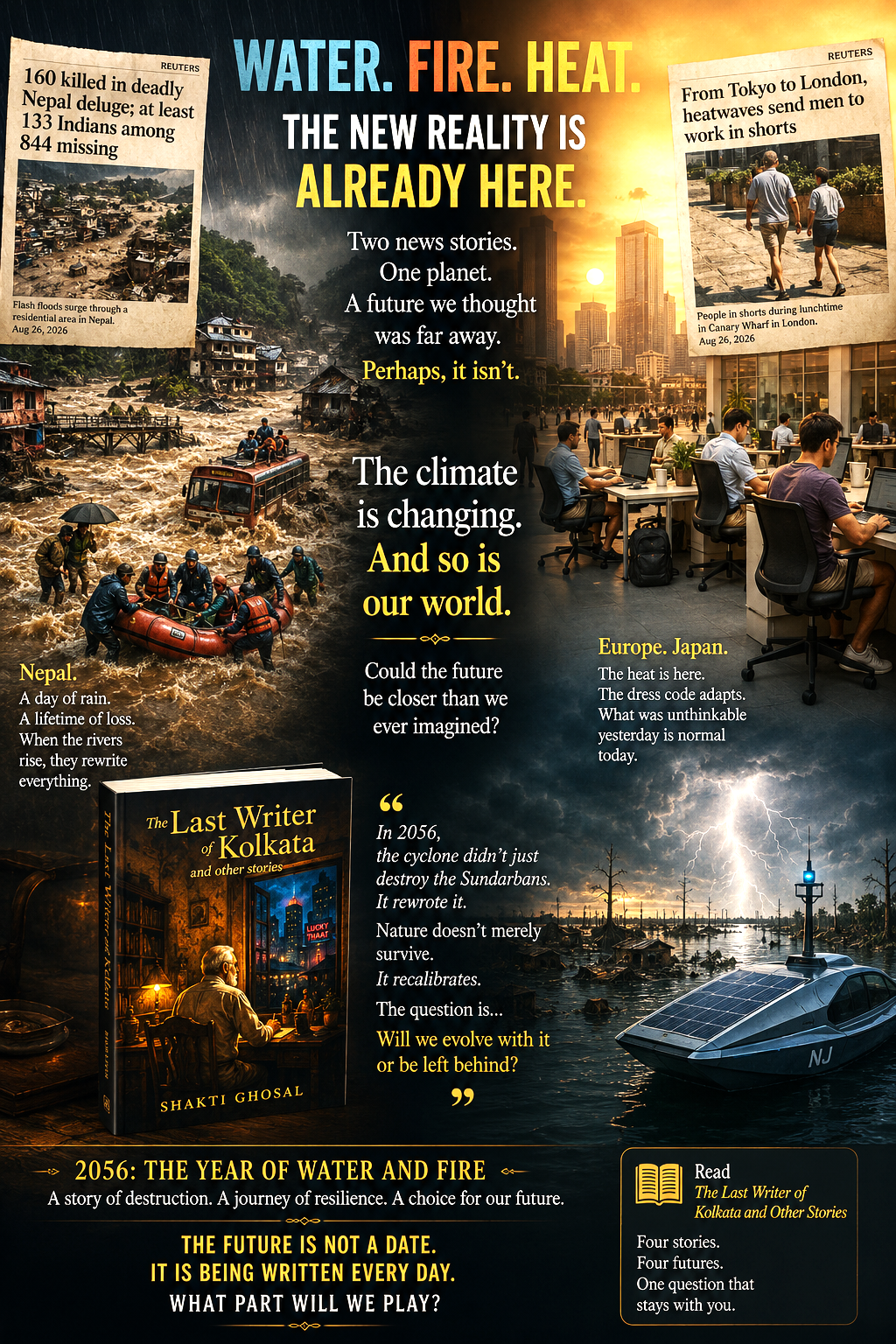
Two newspaper stories caught my attention today.
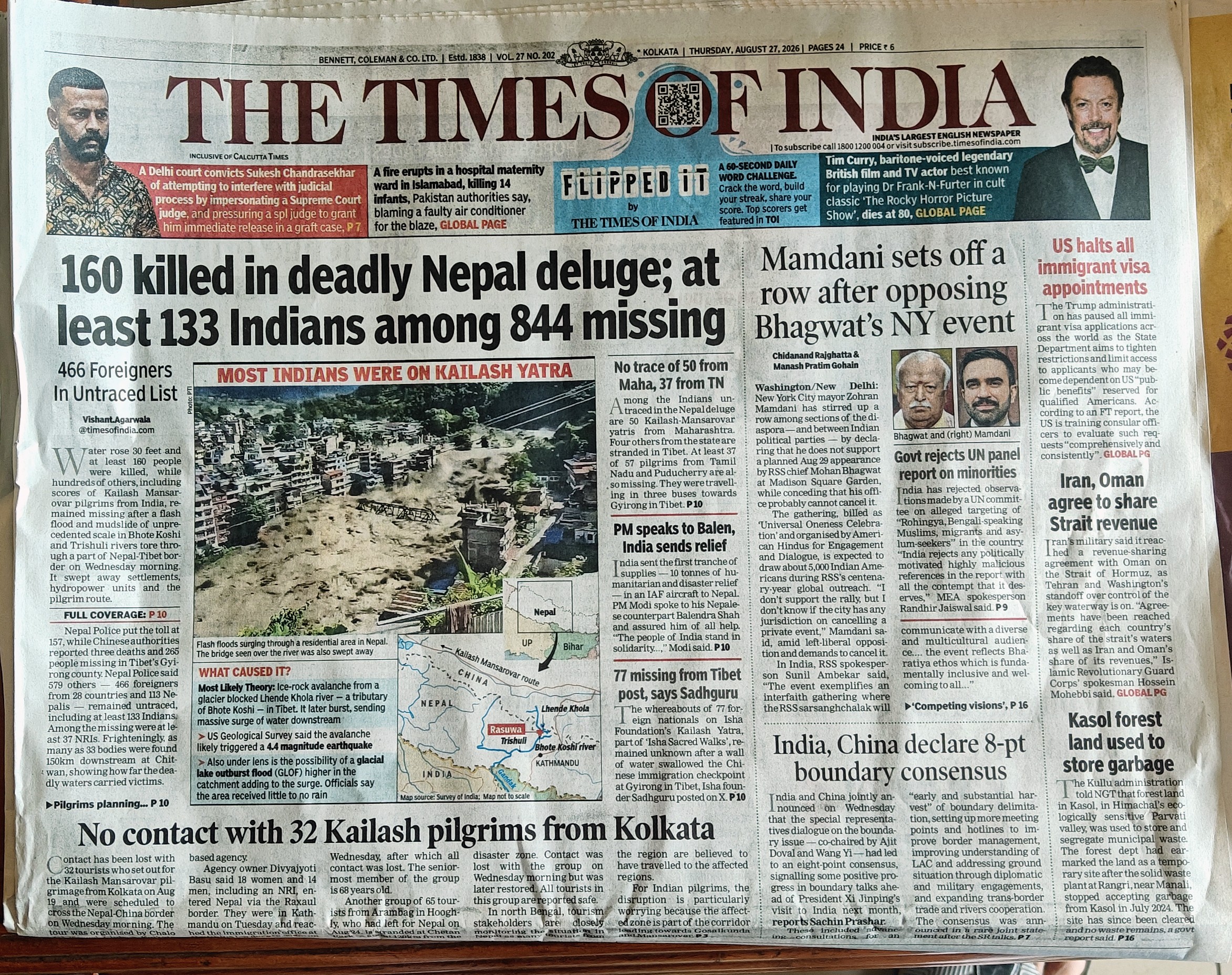
The first was from Nepal: devastating floods, homes swept away, lives lost, roads and bridges disappearing beneath an angry torrent of water.
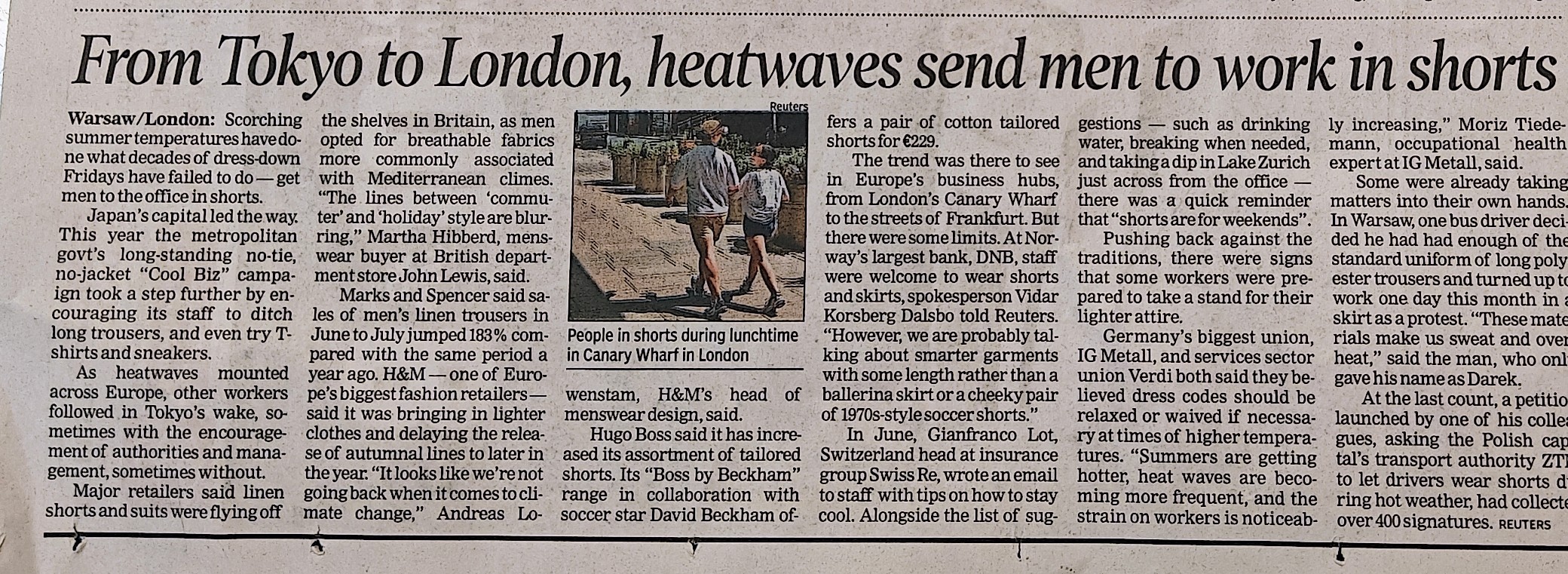
The second was almost deceptively ordinary. Across parts of Europe and Japan, persistent heatwaves are becoming so severe that something once unthinkable is changing: formal office wear is giving way to shorts, T-shirts and sneakers. What was once considered casual is becoming necessary simply to cope with the heat.
At first, the two stories seem to have little in common. One is about water. The other is about heat. But perhaps they are telling us the same story. The climate is changing. And slowly, almost imperceptibly, the boundaries of what we consider “normal” are changing with it.
When I wrote 2056: The Year of Water and Fire, I deliberately placed the catastrophic events some thirty years into the future. Even while writing it, I wondered whether I was being too dramatic—or perhaps, paradoxically, not dramatic enough.
Today, I find myself wondering something else. Could the future I imagined be closer than I thought? We tend to imagine climate catastrophe as something spectacular and distant: a great cyclone, a flooded city, an apocalyptic landscape sometime in the middle of the century. But perhaps climate change does not announce itself that way. Perhaps it arrives quietly. A few more unbearable nights. A flood where there wasn’t one before. A river changing its course. A crop failing. A species disappearing. An office worker deciding that trousers are simply too hot to wear. And then, one day, much like that frog in the slowly heating water, we realise that something we considered extraordinary has quietly become normal.
That is what unsettles me most. The danger is not merely that the planet is becoming warmer or that extreme weather is becoming more destructive. It is that to survive, we need to gradually become accustomed to the extraordinary. We need to adapt our clothes, our buildings. And we need to adapt our working hours, our expectations. And perhaps, without realising it, we have begun to adapt our definition of what constitutes a crisis.
In 2056, I imagined a Sundarbans battered by rising waters and increasingly violent storms. Yet the story is not ultimately about destruction. It is about resilience—of people, of technology, and perhaps most importantly, of nature itself. But resilience should never become an excuse for complacency. The fact that human beings can adapt does not mean that we should keep testing the limits of that adaptation.
The future is not a date on a calendar. It is being assembled quietly, day by day, in the choices we make—and in the warnings we choose to notice. Perhaps the most frightening question is no longer “What will the world look like in 2056?” Perhaps it is: “How much of 2056 have we already begun to live?”
In musing….. Shakti Ghosal
#TheLastWriterOfKolkata #2056TheYearOfWaterAndFire #ClimateChange #GlobalWarming #ClimateCrisis #Sundarbans #FutureOfHumanity #SpeculativeFiction #ClimateFiction #ShaktiGhosal

 A New Beginning
Yes I would opt for not dramatic enough in your prediction. Simply because of what I witnessed where I’ve been these past five years.
From the high Desert of New Mexico where every summer the forest catches fire, often by lightning strikes. Back to Hawaii where it has been the wettest record we have ever experienced. Not complaining, we’ll take water over fire in moderate amounts. And I say that because of course you know we just had our first landfall hurricane in 150 years. I hope to never go through that again, but I’m also foolish to think that would be the case.
So yes, the climate is absolutely changing. I stopped swimming in the ocean which I used to do quite a bit and quite far out there, when it occurred to me that it was just too damn hot out there. Hot. In the deep ocean. Then when I would go out or come back to shore, I would look at dead coal everywhere. We have very little live coral left on these islands. A huge marker of global warming. People love to call this climate change because it sounds safer. I’ll keep calling global warming because that’s what it is.
🙏♥️
LikeLiked by 2 people
Dear Bela,
We could call the shift whatever we may wish to. The fact remains that the world, as we know it, seems to be changing faster and faster. Which would imply the need to refresh and reorient the way we live our lives. How many of us would be able to do that ? I remain unsure……
I remembver that haunting number sung by Merle Haggard so many decades ago : “Stop the World and let me down. I am tired of going round and round….” Except that, when it comes to Climate change, we have no means of getting off.
Shakti
LikeLiked by 2 people
And you have grandchildren and I do not. Which would make a much bigger difference in my thoughts about the future than I currently have. I’m not a nihilist by any means. But being a realist is enough. 🙏🌺🐋🌳🌏
LikeLiked by 1 person