Where Fire Meets Ferns: A Journey Through Rotorua, Murupara, and Taupo in New Zealand


oplus_8650752

Abstract :Volcanoes, Redwoods, Maori traditions, and turquoise waterfalls—our journey through Rotorua, Murupara, and Taupo was like walking through nature’s raw and sacred diary. From the haunting silence of a buried village to the fiery hiss of boiling mud pools, and the warmth of a traditional Maori Hangi—New Zealand never stops surprising. 🌋🌲🌊

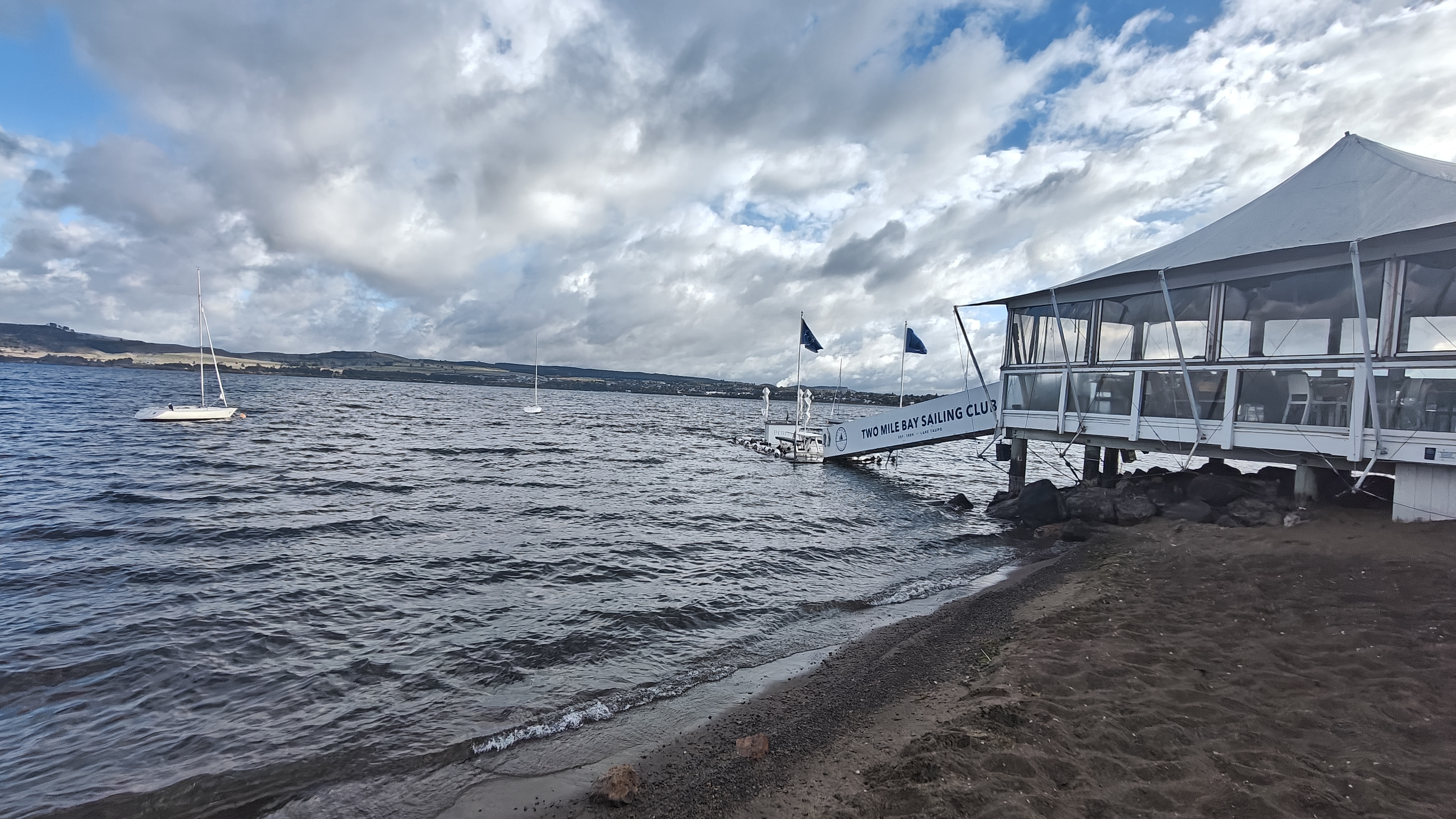
We skirted the edge of Lake Rotorua in hopeful anticipation, eyes squinting past the mist, searching for the silhouette of the legendary Mount Tarawera. But nature had other plans. Clouds draped the landscape like a reluctant curtain, denying us a view of the volcano that, in 1886, tore apart an entire region in a violent, unforgettable eruption.

Lake Rotorua

As we moved closer to the remnants of this catastrophe, we reached the Buried Village of Te Wairoa. It was haunting, almost sacred. Buildings lie preserved in ash, stories frozen in time, and silence whispered louder than words. Our guide painted a vivid picture of the night the earth roared—of ash raining down, of craters splitting open, and lives changed forever. According to the Buried Village site, it is “New Zealand’s most visited archaeological site, where stories of resilience and survival rise from the earth.” (Reference 1) And indeed, walking among the ruins, one feels that spirit deeply.

Buried village of Te Wairoa

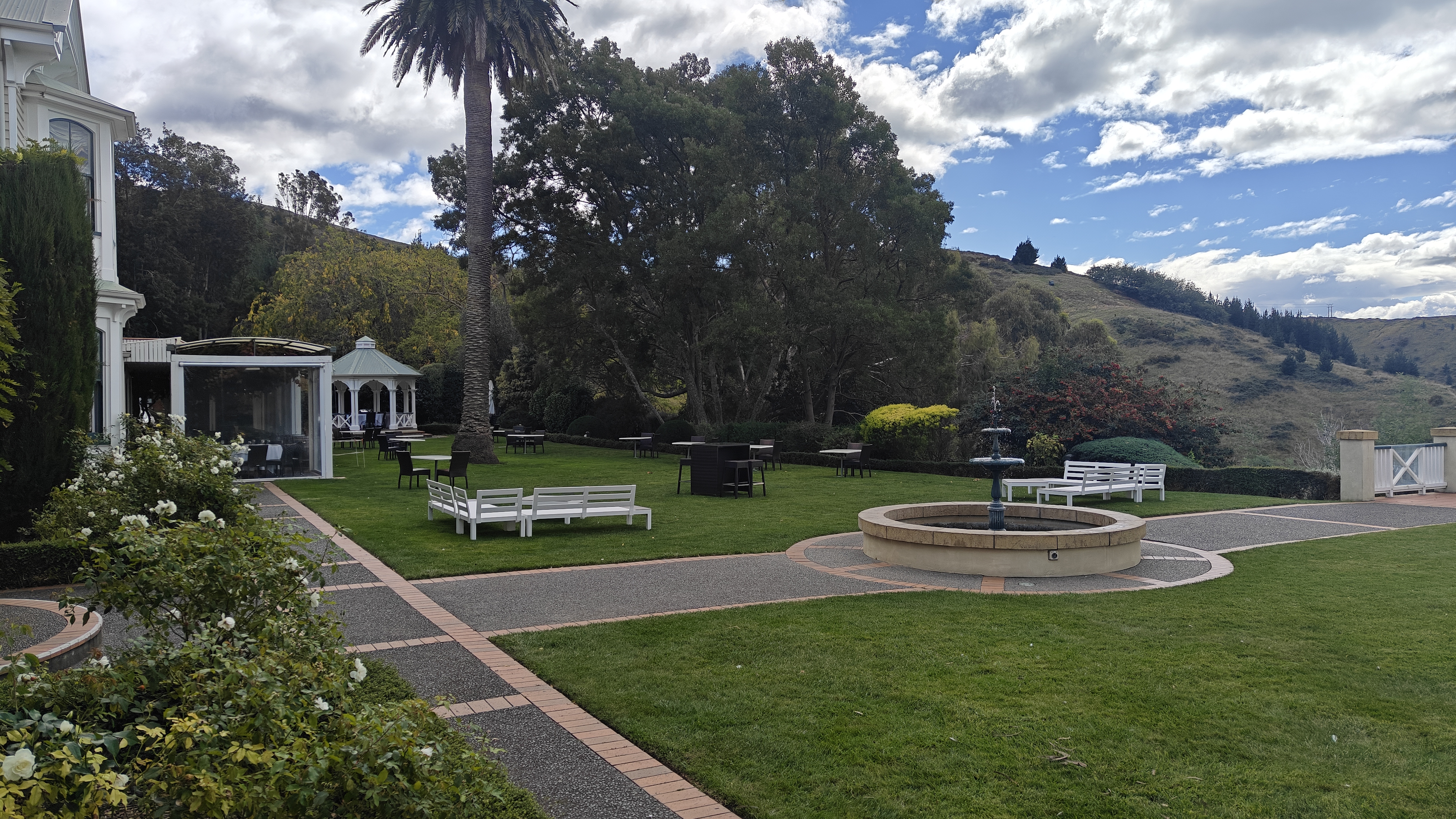
From volcanic scars, we sought the solace of trees—and what trees they were! The Whakarewarewa Forest, just outside Rotorua, offered a surreal contrast. We wandered under towering Redwoods—some over 100 years old—and marveled at the magnificence of Douglas Firs and the ethereal grace of silver ferns, New Zealand’s national icon. Walking in their shadow, one feels both infinitely small and impossibly privileged. As described by Whakarewarewa Village, this forest is home to “majestic trees from California alongside native species in a uniquely Kiwi blend,” and the harmony between old world and new world flora is breathtaking.

Those Redwoods of Whakarewarewa

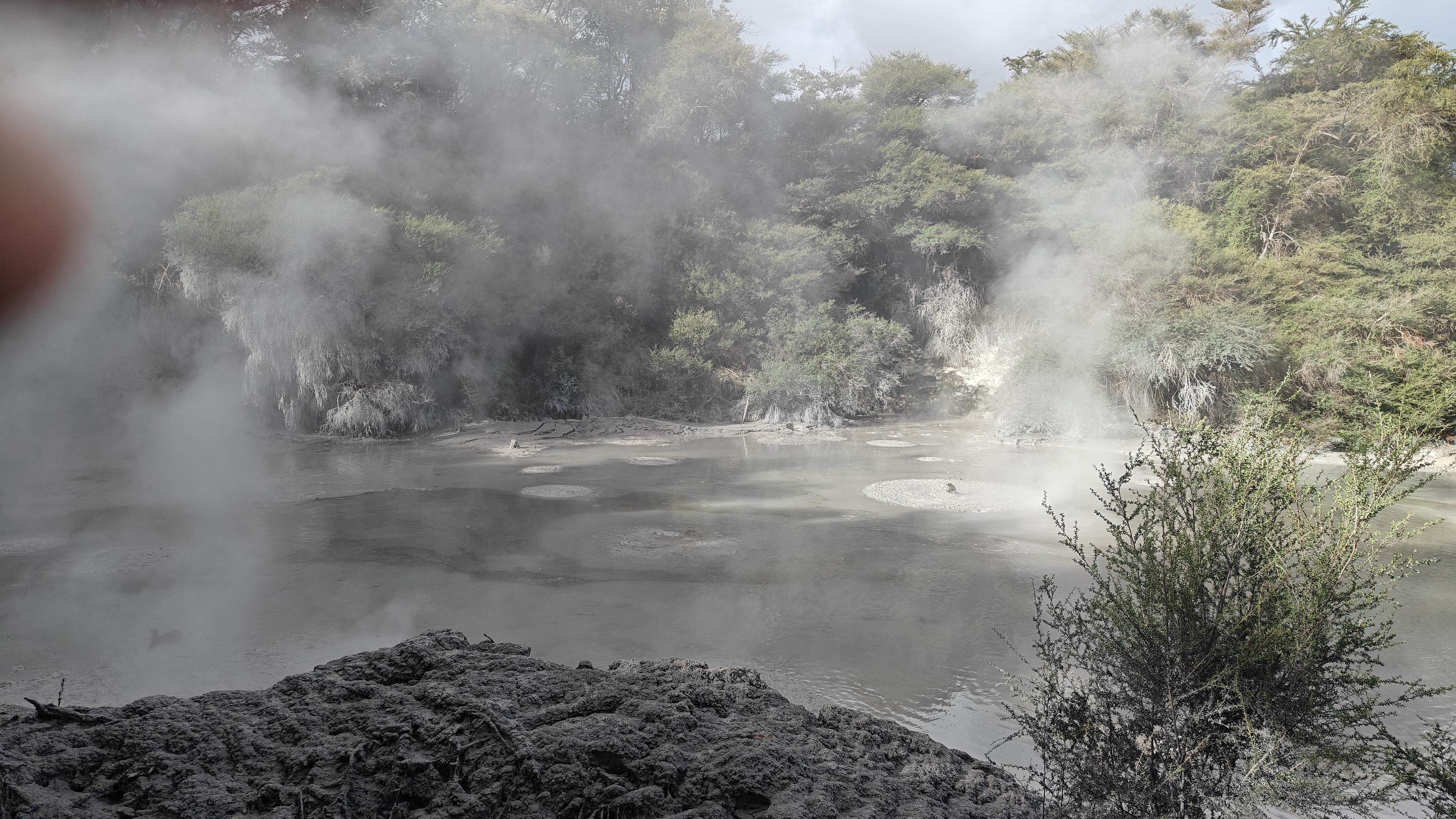
Yet Rotorua wasn’t done with its drama. The ground here breathes fire. Boiling mud pools gurgled around us, sending plumes of steam into the crisp morning air. Lakes hissed and steamed as though conversing with ancient gods. The smell of sulphur lingered, sharp and earthy. And yes, the unsettling thought did strike—what if another eruption lay dormant beneath our very feet?

Boiling mudpools of Rotorua

From geothermal energy to spiritual energy, we travelled onward to Lake Aniwhenua in Murupara. Here, the journey took a cultural turn. We were welcomed by the Māori people in a traditional ceremony that blended chants, fierce expressions, and deep respect. Though the language was unfamiliar, the sincerity needed no translation.

Maori temple

The highlight was witnessing the preparation of a traditional Hāngi meal—an earth-oven cooking method that has nourished Māori communities for centuries. Watching the fire-heated stones laid into a pit, food wrapped and buried under earth, felt remarkably similar to the tandoor cooking I’ve seen in North India. Different continents, similar soul food.

Hangi preparation

Later that afternoon at the Māori lodge, as the Hāngi was unveiled and its earthy aroma filled the air, it felt like we were not just eating a meal—we were partaking in a ceremony of memory, tradition, and togetherness. As the village itself puts it, “Whakarewarewa is more than just a village—it is a living legacy of Māori culture and community,” (Reference 2) and every moment we spent there reinforced that truth.

Traditional Maori meal

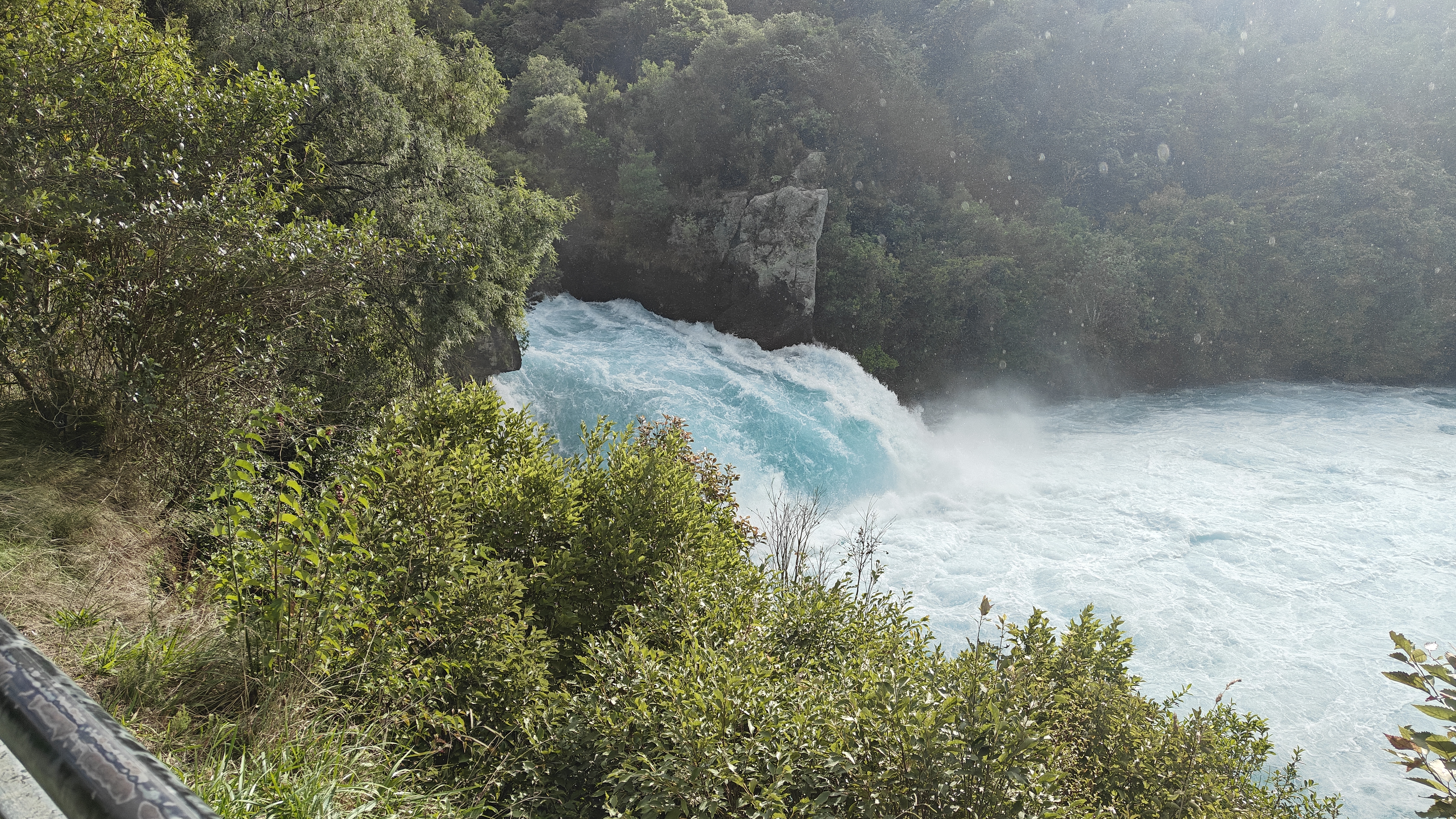
The final leg of this segment took us to Taupo, but not before a breathtaking interlude at the Huka Falls. The water there doesn’t just fall—it thunders. A hypnotic blue torrent squeezes through a narrow gorge before erupting into a frothy cascade. According to LoveTaupo.com, this “220,000 litres per second of crystal clear water” ( Reference 3)  surging through the Waikato River is one of New Zealand’s most visited natural attractions—and for good reason. It’s power and poetry in motion.

The blue torrents of Huka

As we stood watching the falls, droplets misting our faces, I realised New Zealand isn’t just a destination—it’s an emotion. It stirs awe and respect in equal measure. One moment it shows you the fury of nature, and the next, it cradles you in cultural warmth.

And so, this chapter of our journey closed—not with an exclamation, but a deep, quiet breath of gratitude.


References:

  1. The Buried Village of Te Wairoa – Rotorua’s Most Visited Archaeological Site
    https://buriedvillage.co.nz/
  2. Whakarewarewa – The Living Māori Village
    https://whakarewarewa.com/
  3. Huka Falls, Taupo – New Zealand’s Most Visited Natural Attraction
    https://www.lovetaupo.com/en/see-do/all/huka-falls/

In musing………….. Shakti Ghosal

Enchanted Darkness: Our Visit to the Glowworm Caves of Waitomo, New Zealand


Away in the lush hills of New Zealand’s North Island, the Waitomo Glowworm Caves offer a breathtaking, almost surreal experience. In this post, we share our unforgettable journey through the glowing underworld—highlighting the ethereal beauty, fascinating geology, and a boat ride that felt like drifting through the galaxy itself.

**

It’s not every day that you find yourself in total darkness, floating quietly through a cathedral of stars—underground. But that’s exactly what we experienced at the Waitomo Glowworm Caves, one of New Zealand’s most magical natural wonders.

Waitomo, a small town in the Waikato region, is famous for its network of limestone caves and the tiny bioluminescent creatures that live in them: Arachnocampa luminosa, the native New Zealand glowworm. We visited the brightest of these caves, one that has even played host to the legendary Sir David Attenborough during the filming of one of his BBC documentaries. That fact alone raised our expectations—and the cave delivered in spectacular fashion.

oplus_264192

As we entered the cave, we found ourselves in a world carved over millions of years. Stalactites and stalagmites stood like silent sentinels in a cool, damp chamber. Another part of the system featured truly astonishing limestone formations, some resembling frozen waterfalls, others like delicate curtains suspended in time.

But nothing prepared us for the glowworm grotto.

We stepped quietly onto a small boat, guided by a rope in pitch darkness. There were no torches, no artificial lights—just the sound of gentle water and the soft echo of a distant underground waterfall. Then, as our eyes adjusted, the ceiling of the cave revealed itself: a galaxy of living lights. Thousands upon thousands of glowworms dotted the darkness, shining blue-green like a perfectly clear night sky.

oplus_262144

We sat in awe, heads tilted back, silently gliding through this dreamlike world. The experience was not only visually stunning but oddly humbling. It reminded us of how much wonder still hides inside nature, waiting to be discovered by us.

The boat turned just before the waterfall; the roar of the falling water had become fully audible; then slowly made its way back. It was one of those rare moments where no one spoke, everyone too spellbound to interrupt the magic.

oplus_262144

The Waitomo caves are a powerful reminder of the slow, silent work of nature and the strange beauty of life in the dark. If you’re ever in New Zealand, this is a journey not to be missed.

For those interested in learning more, the official Waitomo Glowworm Caves website offers great insights, and showcases just how enchanting these creatures can be.

Final Tip: Book early and wear warm clothes—it gets chilly underground! Based on out own experience we would recommend you opt for a guided tour to hear more about the fascinating biology and geology of the region.

In Learning……                                                                  Shakti Ghosal

#waitomo, #visitnewzealand, #glowworm, #glowwormcaves, # DavidAttenborough

Visit to the Shire: Walking in the Footsteps of Hobbits


“Not all those who wander are lost” Bilbo Baggins

“The adventure begins at the edge of the Shire — welcome to Hobbiton!”

As long-time admirers of The Lord of the Rings and The Hobbit trilogies, visiting the real-life locations where these epic tales were brought to life had always been a dream. So, when we planned our trip to New Zealand, a visit to Hobbiton — the iconic Shire of Frodo and Bilbo Baggins — was a non-negotiable stop. We simply couldn’t leave Middle-earth behind without stepping into its most charming corner.

Hobbiton is nestled in the heart of Matamata, a region of lush pastures and gently rolling hills on New Zealand’s North Island. It was here, in the late 1990s, that director Peter Jackson conducted aerial surveys in search of the perfect location for the Shire. Legend has it that when his team spotted the Alexander family farm, it was love at first sight. The unspoiled beauty of the land — its sweeping meadows, mature trees, and bucolic charm — was exactly what Tolkien had described in his books.

“A view straight out of Tolkien’s imagination — rolling hills dotted with hobbit homes.”

Initially, the Alexanders weren’t too keen on turning part of their farm into a movie set. But with some persuasion (and an undisclosed agreement), they eventually agreed. And so, the world’s most beloved village of hobbits came into being. One delightful piece of trivia we learned during our visit was that Peter Jackson ran out of funds during the initial stages of development. To keep the project going, he approached the New Zealand government, who in turn had the New Zealand Army assist with the early groundwork — an unusual but heartwarming collaboration that helped build movie magic.

Our tour began with a tranquil ride in a golf cart through the countryside. As we crested a hill and caught our first glimpse of the Shire, a wave of excitement washed over us. There they were — the familiar round doors, grassy rooftops, and colorful gardens tucked into the hillsides. Every corner of Hobbiton was bursting with life and detail, from miniature wheelbarrows and rustic lanterns to tiny clotheslines with hobbit-sized laundry flapping in the breeze.

“Every round door tells a story — could this be a baker’s home or a gardener’s cottage?”

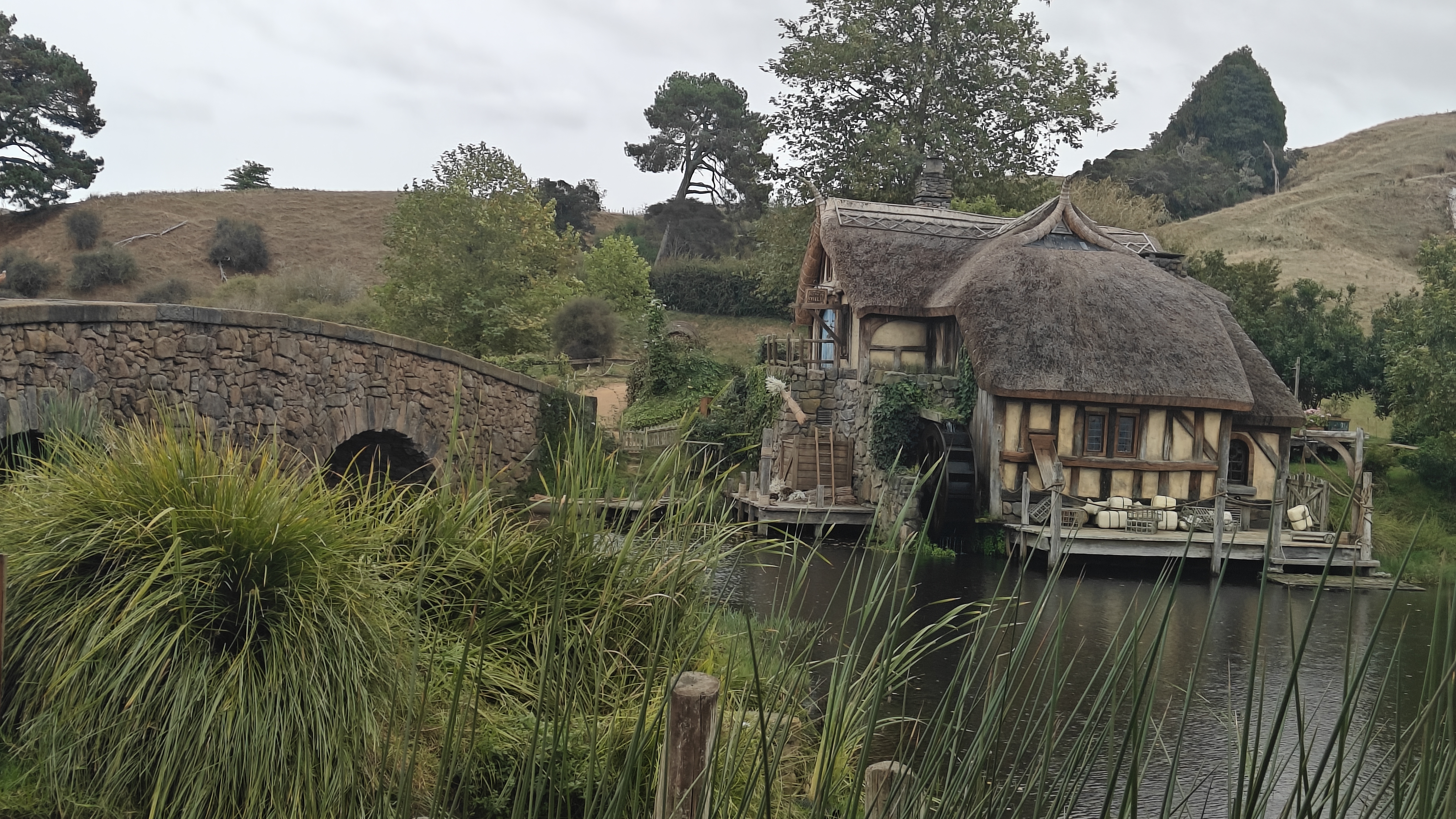
We explored the Shire with childlike wonder, moving from one hobbit hole to the next. Each home had its own character and charm — some for bakers, some for fishmongers, each with a story hinted at through props and signs. The stone bridge with its iconic double arches, the waterwheel gently turning by the mill, and the peaceful lake all brought scenes from the films vividly to mind.

“The iconic bridge where Gandalf once rode into the Shire — picture perfect.”

A true highlight was visiting the inside of Frodo Baggins’ house. Walking through the rooms, we could almost imagine him pacing about, deep in thought, the weight of the Ring heavy in his pocket.

“Stepping into Frodo’s world — the journey truly begins here.”

Although we couldn’t go inside Bilbo’s house, Bag End, just seeing it up close — with its iconic green door and lush garden — was magical in itself.

“Bag End in all its glory — the green door that launched an adventure.”

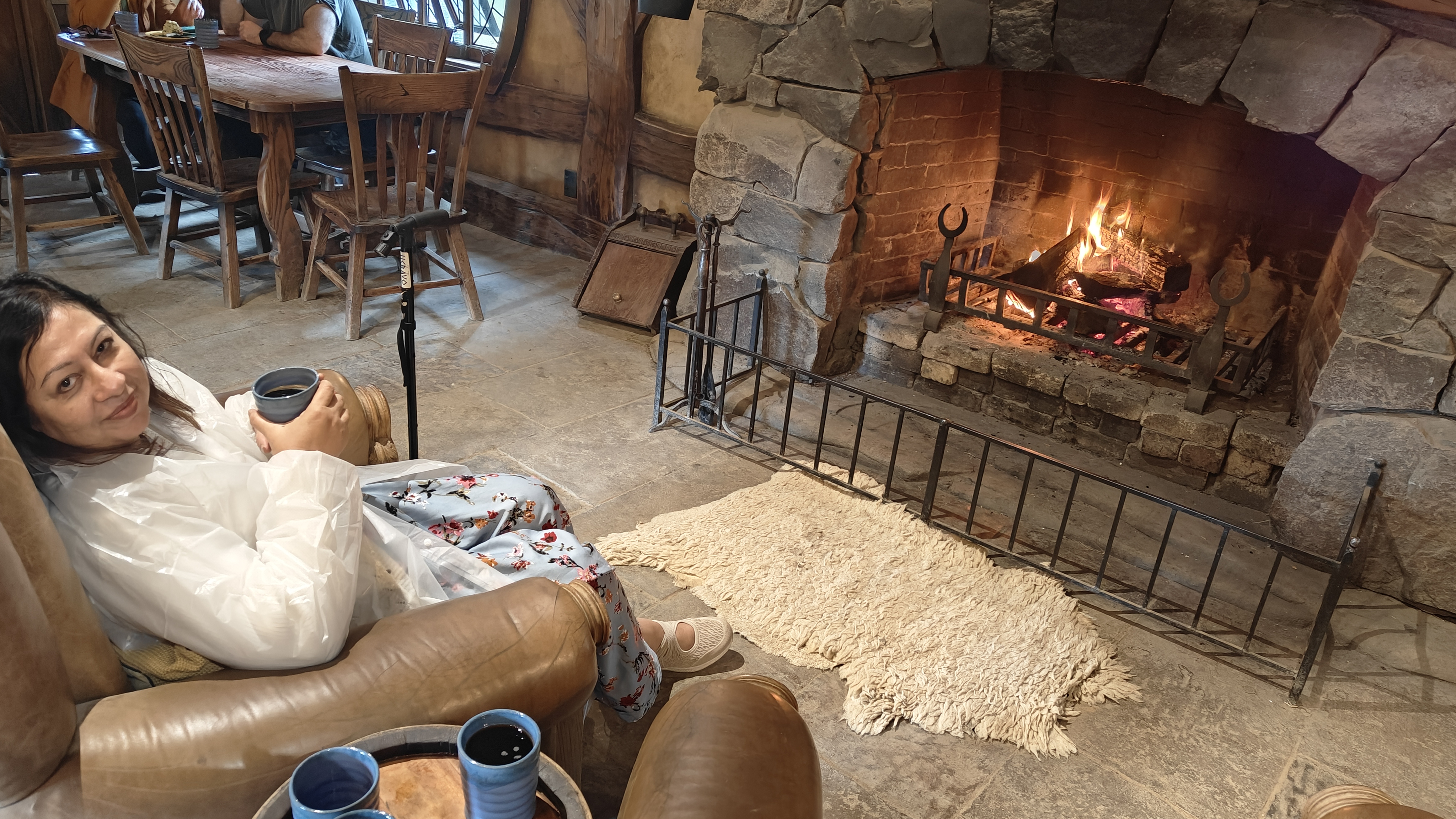
And then came the perfect ending: a visit to the Green Dragon Inn. Stepping inside, we were welcomed by a roaring fire, wooden beams, and the unmistakable coziness of a true hobbit gathering place. We ordered a round of their specially brewed ales and sat by the hearth, sipping slowly and soaking in the atmosphere. It truly felt like we had been transported into Tolkien’s world.

Raising a mug of Hobbit ale at the Green Dragon — a toast to the Shire!”

Our visit to Hobbiton was not just a tour — it was an experience, a nostalgic walk through a world that had enchanted us for years. If you’re ever in New Zealand, take the detour to Matamata. Whether you’re a die-hard fan or just someone who appreciates storytelling, nature, and craftsmanship, the Shire will leave you spellbound.

“One for the memory books — peace, beauty, and a touch of magic.”

In Musing……….. Shakti Ghosal

#Hobbitonmovieset, #thelordoftherings ,#shire, #Peterjackson,#Hobbit, #JRTolkien,#Frodobaggin, #greendragoninn,#Bibobaggin,#newzealandhighlight,#alexanderfarm,#matamata

Porto – A Blend of Harry Potter, Port Wine, and Fado Music


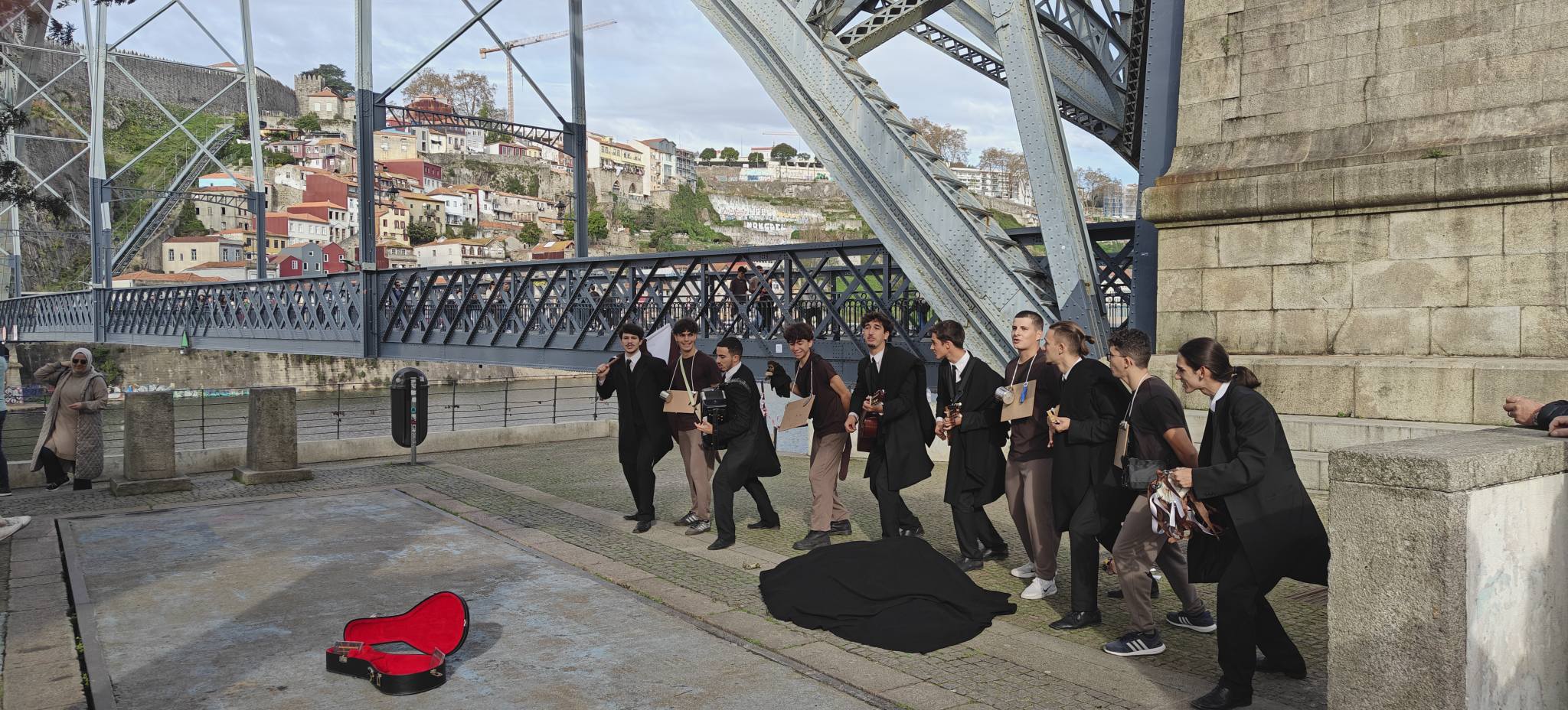
Porto greeted us like an old friend with a tale to tell. Perched on the cliffs of the Douro River, its charming houses, adorned with colorful azulejos, cascaded down towards the water, as if drawn by an invisible thread. Overhead, the majestic Dom Luís I Bridge, an iron marvel designed by a student of Gustave Eiffel, stretched across the river, connecting the historic heart of Porto to Vila Nova de Gaia.

With every step on its cobbled streets, we felt transported to a different era—one where history, literature, and music wove together in an enchanting dance. Had we unknowingly stepped into a storybook town? It certainly felt that way.

A walk through History

Porto’s origins date back to Roman times when it was known as Portus Cale—a name that would eventually shape the very identity of Portugal. The city has seen centuries of maritime explorations, witnessed the rise and fall of empires, and remained resilient through wars and revolutions. Yet, despite its rich past, Porto doesn’t merely live in history; it embraces the present with a dynamic energy that makes it one of Europe’s most captivating destinations.

Wandering through its labyrinth of streets, we stumbled upon grand baroque churches, lively squares, and hidden corners filled with stories. But among all its treasures, one place stood out—Livraria Lello, a bookshop that seemed to pulse with an almost magical energy.

Where Magic and Literature collide

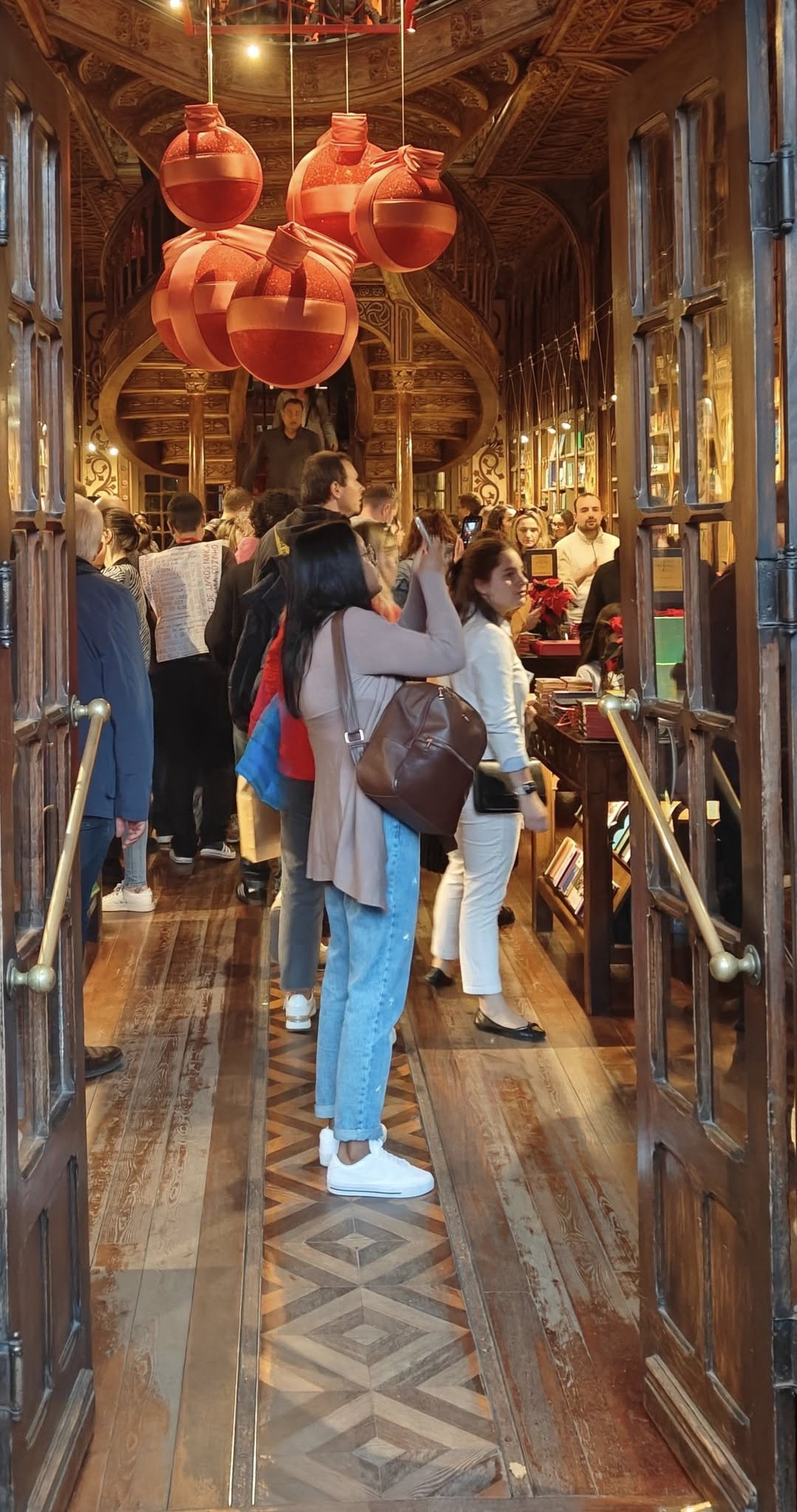
If there was ever a bookstore that felt like it belonged in the world of Harry Potter, Livraria Lello was it. The moment we stepped inside, we were mesmerized. The towering bookshelves, the elaborate wood carvings, and the intricate stained-glass ceiling bathed the room in a golden glow. But the real showstopper? The sweeping crimson staircase—elegant, almost alive, as if it had a mind of its own.

It was easy to see why J.K. Rowling, once an English teacher in Porto, found inspiration here. It is said that the Hogwarts moving staircases were born from this very place. As we traced our fingers along the wooden railings, it wasn’t hard to imagine young witches and wizards bustling about, spellbooks in hand.

Porto’s literary magic doesn’t stop there. Even beyond Rowling’s influence, the city has long been a haven for writers, poets, and dreamers. In many ways, its winding streets, misty evenings, and old-world charm make it the perfect setting for a fantastical tale.

A Sip of Tradition – The World of Port Wine

Leaving behind the world of books, we set off to indulge in another of Porto’s legendary offerings—Port wine. A short walk across the Dom Luís I Bridge took us to Vila Nova de Gaia, home to the centuries-old wine cellars that have made Porto famous.

The sweet, fortified wine that bears the city’s name has been produced here since the 17th century. We toured one of the many historic lodges, where enormous wooden barrels lined the dimly lit cellars, aging gracefully over time. The scent of oak, fruit, and a hint of spice filled the air as we sipped on rich ruby, tawny, and vintage varieties, each one telling a story of the Douro Valley’s sun-drenched vineyards.

The experience was more than just a tasting—it was a journey through time, where ancient traditions met modern refinement. With every sip, we felt a deeper connection to the land and the generations of winemakers who had perfected their craft.

Fado – The Soulful Sound of Portugal

As the sun began to set over Porto, painting the sky in hues of amber and violet, we found ourselves drawn to yet another defining element of Portuguese culture—Fado music.

Fado, meaning fate, is the heart and soul of Portugal’s musical heritage. Rooted in deep emotion, it tells stories of longing, nostalgia, and the bittersweet beauty of life. We entered a small, candlelit Fado house, where a singer, draped in black, took the stage alongside a guitarist.

As the first notes of the Portuguese guitar rang out, a hush fell over the room. Then came the voice—haunting, powerful, and filled with raw emotion. The lyrics spoke of sailors lost at sea, of distant lovers, of dreams that never came true. Though we didn’t understand every word, the melody transcended language, speaking directly to the heart.

It was a moment of pure magic—one that seemed to suspend time. When the final chord faded into silence, there was a collective sigh in the room, as if everyone had just awoken from a dream.

Porto, You have truly cast a Spell

As we strolled back along the riverbank, the twinkling lights reflecting on the Douro’s surface, we couldn’t help but feel enchanted. Porto had given us so much—history, magic, melody, and flavor—all wrapped in its unique charm.

It is a city that whispers tales of the past, yet sings with the vibrancy of the present. A city where Harry Potter’s magic lingers in the air, where every sip of wine is a tribute to centuries of tradition, and where the sound of Fado echoes through the night like a poet’s last verse.

Porto, you have truly cast a spell on us. Until we meet again!

#portugaltravel #traveldiaries2024 #portoportugal #portwinelover #fadonight #jkrowling #harrypotter #douroriver #domluisbridge

Tomar and the legend of the Knights Templar


Non nobis, Domine, non nobis, sed Nomini tuo da gloriam ( Latin). In English it translares to : Not to us, Lord, not to us, but to Thy name give the glory

Tomar in the heart of Portugal, is a town steeped in history, mystery, and legend. During our recent visit, it transported us back to the era of the Knights Templar, the Crusades, and the Church Order. 

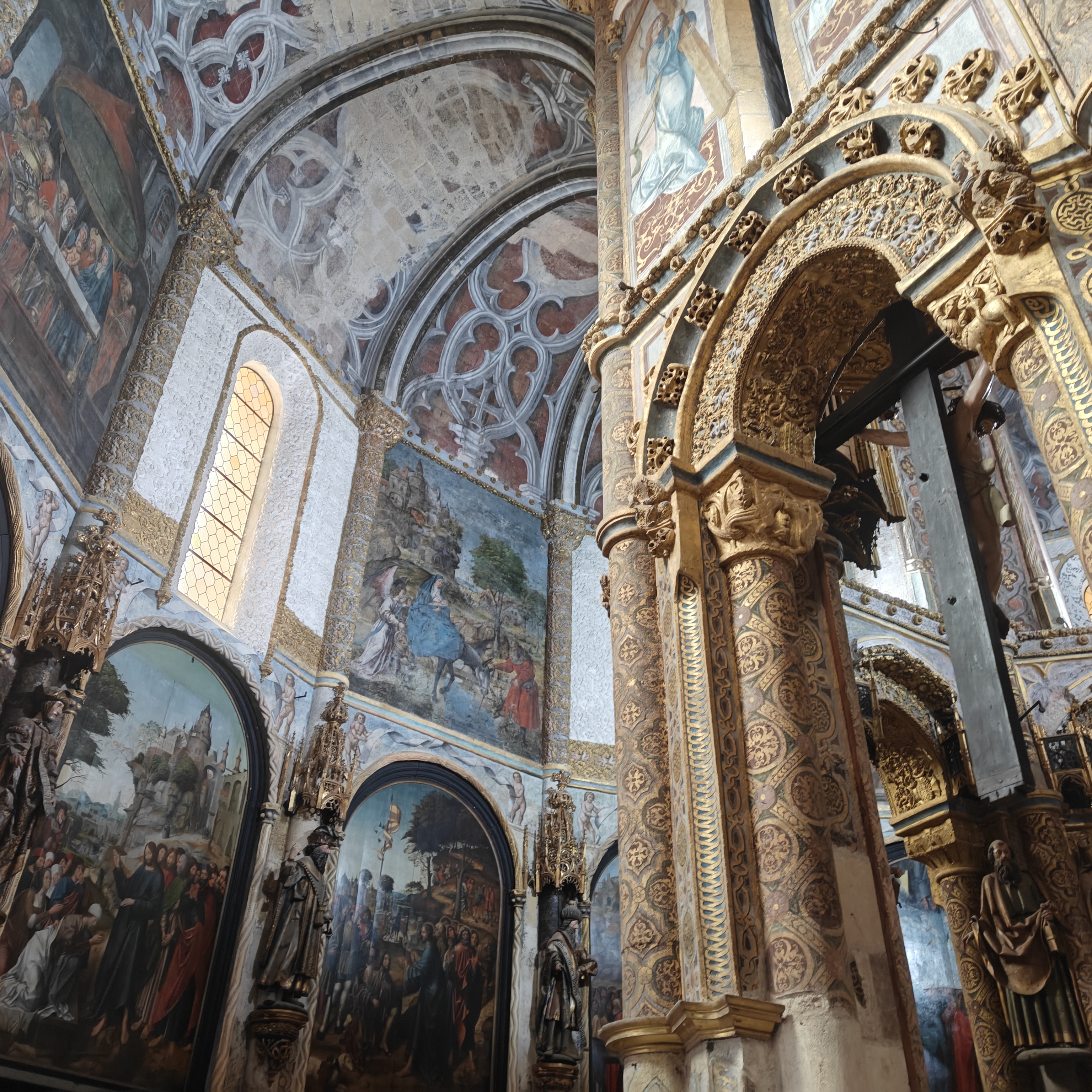
The Convent of Christ, a UNESCO World Heritage Site, is a masterpiece of medieval architecture. A Templar stronghold, it was both a church and a fortress with a unique blend of Romanesque, Gothic, and Renaissance styles.

We entered the Convent and as we walked through the corridors, we could almost see in our mind’s eye the knights riding in. As the legend goes, the knights would even pray while on horseback as they chose never to be caught off guard and remained ever ready to fight on behalf of the church. This was the reason for the spectacular Templar’s round church with its high archways being built in the heart of the convent.

oplus_262176

The Convent of Christ and its structure was inspired by the Church of the Holy Sepulchre in Jerusalem. The latter had been built at the traditional site of Jesus’ crucifixion and burial and thus it is no surprise that it was in this city that the legend of the Knights Templar started.

The Knights in their white mantles and a Red Cross emblazoned on the chest were arguably the best fighting units on the side of Christianity in the Crusades. For centuries they remained committed to defending Jerusalem as also offering safe passage to Christian pilgrims travelling to the Holy Land.

The Knight Templars achieved the zenith of their fame in the 12th century when in the Battle of Montgisard, six hundred odd knights beat the redoubtable Muslim general Saladin and his army numbering twenty-six thousand!

The other noteworthy aspect of the Templars Order was that it became the banker to Europe from a Papal sanction. Knights desirous of joining the order donated large amounts, nobles going to Crusades would place their wealth and businesses with the Templars for safe keeping. This huge aggrandizement of wealth though led to its eventual downfall. It is said that in the early fourteenth century, the French Monarch Philip IV, deeply indebted to the Templars and unable to pay back, started to arrest, torture, and execute the French knights.

After the dissolution of the Order, the Templars found refuge in Portugal under a new ‘Order of Christ.’ Our guide spoke of the secret knowledge the order brought in and how that influenced Portugal’s Age of Discoveries, including Vasco da Gama’s travel to India. Ostensibly, much of the so called ‘secret knowledge’ of the Templars had been acquired from Arabs during their travels to Jerusalem and beyond.

For us, Tomar wasn’t just about history; it was more about the Knights Templars’ valour and enduring legacy. Their closely guarded secrets included that of the Holy Grail which forms the basis of Dan Brown’s famed thriller ‘The Da Vinci Code’. In the book, the Knights Templar order is portrayed as the guardians of vital information relating to Christianity spanning over one millennia.

In learning…….                                                 Shakti Ghosal

#tomarvisit #traveldiaries2024 #davincicode #knightstemplar #DanBrown #portugaltravel #conventofchrist #crusades

 Bethlehem and its Star


Bethlehem, a narrative woven with care,

From missionaries’ prayers to steel’s fiery glare.

Through seasons of change, the city stands tall,

A testament to history, embraced by all.

On an invitation from a close friend, we decided to take a weekend trip to Bethlehem in the state of Pennsylvania. The road travel was a pleasurable one on the I-78 highway and it took just under one and a half hours even though there was a drizzle.

We exited the highway to find ourself in a quaint town with its residential suburb. Directions by the Google map was impeccable and we were soon at my friend’s place nursing a glass of wine and some welcoming starters in front of a brightly decorated Christmas tree.

The conversation soon veered to the fascinating aspect of how the New World has used so many names from the Old World for its own towns and places. So, it seems to have happened for Bethlehem. And therein hang a couple of tales.

Driving through Bethlehem town, one cannot fail to notice the Victorian architecture, presumably from colonial times. The historic part of the town looks just that, with gabled sidewalks and stairways going down to different levels. This dates back to the mid eighteenth century when Bethlehem was founded as a missionary community by a small group of Moravians. The location chosen was where two rivers join, the Monocacy and Lehigh. What is less known is that this was also the time when wars with the original Indian settlers were being fought in the region. In the book ‘Snow over Bethlehem’ chronicling events recorded in old Moravian diaries, author Katherine Milhous writes about a group of children taking refuge in the strong stone buildings of Bethlehem to escape from the ongoing Indian wars. As Christmas approaches, the town of Bethlehem and the children are saved from an Indian attack by a miraculous event.

In Bethlehem’s embrace, a tale unfolds,

A legacy scripted, in stories untold.

Moravian missionaries, with purpose divine,

Founded a haven, where faith did entwine.

During the American War of independence, in the latter part of the eighteenth century, many continental force veterans fled to Bethlehem as the British army advanced from the east. Amongst them was the French aristocrat Marquis De Lafayette who enjoyed a father-son relationship with Commander in Chief George Washington. The Marquis is arguably one of the most fascinating individuals in the pages of history. He was instrumental in trapping British General Lord Charles Cornwallis (future Governor General of India) and his troops in Yorktown which led to the British surrender and losing the war. Subsequently, during the French revolution, as the commander of the National Guard in Paris, the Marquis saved King Louis XVI and Queen Marie Antoinette from the fury of a crowd in Versailles and escorted them back to Paris. He subsequently supported the transfer of power from the aristocracy to the bourgeoisie. In remembrance, Lafayette was granted honorary citizenship of the US in 2002.


Bethlehem has a nice downtown and we drove through a nice medley of restaurants, storefronts and pleasingly architectured buildings. The centre of attraction, visible from a distance, were the five rusted blast furnaces of the erstwhile Bethlehem steel company. Now known as the steel stacks, they serve as a dramatic backdrop to a newly created art and entertainment district.

Bethlehem steel, a symbol of the American industrial revolution, came into being at the turn of the twentieth century. The steel plant supplied steel for many of the famed structures like the Empire state building, the Rockefeller centre and Chrysler Building on Manhattan to name a few. However, it achieved iconic status during the second world war when the corporation President promised Franklin D. Roosevelt, “Mr. President, we remain fully committed to your war effort and will build and handover one warship a day”. The company kept its promise and exceeded that by fifteen ships!

Smokestacks whispered tales of industry’s might,

Yet, in Bethlehem’s heart, shone a guiding light.

Amidst the clangour of progress, a spirit remained,

Of community, resilience, and dreams unrestrained.

Sadly, the company could not keep pace with evolving technologies and competition in the second half of the century and filed for bankruptcy a hundred years after it came into being. The steel stacks stand in mute testimony to a glorious industrial past.

Bethlehem is known as the Christmas City of US. As one drives through the suburbs and downtown, this becomes apparent with every building joining the festive mood with wondrous lighting and decorations. We decided to visit the Christkindlmarkt, the annual Christmas market. The market had been set-up in the steel stacks area and consisted of three massive tents full of traditional artisans displaying their craft, delicious food, knick-knacks and even ice sculptures. The German look and feel were overwhelming.

Even though a huge area had been designated for car parking, it was difficult to find a slot because of surging visitors.

As the embers of industry began to cool,

Bethlehem’s spirit endured, an eternal jewel.

From furnaces to festivals, the city transformed,

A Christmas market, where magic is performed.

My host mentioned about the star of Bethlehem in passing. I amusingly thought to myself, if Bethlehem is here, can the star be far behind. Sadly, we didn’t get the chance to spot the star of Bethlehem; we came to know that it is a cluster of LEDs installed at a place called the south mountain (we did not go there). Seems there has been a star on the south mountain since the 1930s.

As we drove back, the Star of Bethlehem continued to be in my thoughts. How the three Magi from the East were guided by the star to Jesus’ birthplace in Bethlehem. How on that wintry night, some shepherds were in the adjoining fields guarding their flocks of sheep. And the depth of the parallel between the sheep being taken to Bethlehem to be sacrificed on Sabbath (Friday) and years later, Jesus Christ being led to Bethlehem and crucified on Sabbath. Did the star of Bethlehem see it all?

In musing…….                                                               Shakti Ghosal

Acknowledgement: Snow over Bethlehem by Katherine Milhous. Publisher: Charles Scribner’s Sons; First Edition (January 1, 1945)

Long Island – It’s legend, it’s Lore, it’s Landscape


“Long Island, where every whisper of the wind carries the echoes of its legend, every tale spun weaves into its lore, and every horizon unveils the tapestry of its landscape.”

I had been fascinated with Long Island since the time I had read F. Scott Fitzerald’s ‘The Great Gatsby’. The place symbolised for me the American dream, the roaring economy, the hedonism and a fast evolving, couldn’t-care- less society of a hundred years ago. I recall this line about Jay Gatsby’s extravagant parties, “There was music from my neighbour’s house through the summer nights. In his blue gardens men and girls came and went like moths among the whisperings and the champagne and the stars”.

More recently, Long Island again came back to mind as I watched that disturbing apocalyptic movie ‘Leave the world behind’. The story played out in a luxurious Long Island home with menacing deer herds symbolising a world and its technology coming apart.

So recently, when we got the opportunity of a longish break to take a vacation on Long Island, I was excited.

We drove through Manhattan and the boroughs of Brooklyn and Queens on our way to Riverhead where we planned to stay. The place turned out to be a quaint town with some excellent Mexican eateries.

Riverhead is at the fork from where the East and the West fingers of the island branch out. Our room had a view onto a lake which had a surreal lustre under moonlight. As we relaxed in the evening, the conversation took a supernatural turn as it is wont to do at such times.

There is the tale of ‘Curse of The Lady of the lake’ which does the rounds in these parts. Legend has it that a Native American princess takes the life of one boy every year by drowning them in the lake, as she looks for her lost love. It is about a beautiful Indian princess who fell in love with a settler named Hugh Birdsall. Birdsall lived in a log hut and the princess was not permitted to meet him. For seven years she sent messages to him on bits of bark that floated underground from the lake to his hut. After seven years of waiting, she paddled out to the middle of the lake in her canoe. The next day the canoe carrying her dead body floated down to her lover. He leaped into the canoe and together they were swept out to sea.

Prior to the seventeenth century, Long Island had been inhabited by several Indian tribes before the European colonisers arrived. First it was the Dutch who started settling on the west side. They were soon followed by the English who initially came in on the east side but eventually took over the entire island. The English presence became so strong on the island that even during the American Revolution, while the British troops were losing ground to the American army elsewhere, they won the crucial Battle of Long Island and continued to hold sway on the island till the end of the war.

As an interesting aside, General George Washington, the Commander in Chief of the American continental army, having gained the upper hand over the British at Boston, moved his army to defend New York because of its strategic port. However, he was outmanoeuvred by the British when his troops were attacked from two sides and had to hastily retreat with his men back to Manhattan. Part of the victorious British troops was led by Charles Cornwallis. Years later though, General Cornwallis with the entire British troops surrendered to George Washington at Yorktown, marking the beginning of the end of British colonisation in America. He subsequently took over as Governor General of the Indian colony. The American war experience may have influenced Cornwallis in terms of his approach to governance in India and perhaps a desire to avoid the mistakes made in the American colonies.

As we travelled on the western finger towards the tip, the landscape transformed into vineyards and undulating woods. We took a Wine Tasting break at one of the Wineries near Peconic bay. We sat sipping some of the excellent Reserve Merlots, Chardonnays and Cabernet Sauvignons served with cheese and ham.

Looking out at the rolling vineyards and woods, we seemed to have indeed left the world behind. In our mind’s eye, we could see the herd of antlered deer looking back at us.

The next day we motored down on the east branch of Long Island. This is the part where the Rich and Famous have homes. The Hampton suburbs are dotted with colonial era and extravagant mansions. One is quite likely to come face to face with glamorous looking folks inside super markets and get tempted to pop the question, “Are you famous?” With luck, one might bump into Sarah Jessica Parker or Matthew Broderick!

Driving onwards through picture perfect suburbs, we finally reached Land’s End, the farthest point of Long Island jutting out into the Atlantic Ocean.

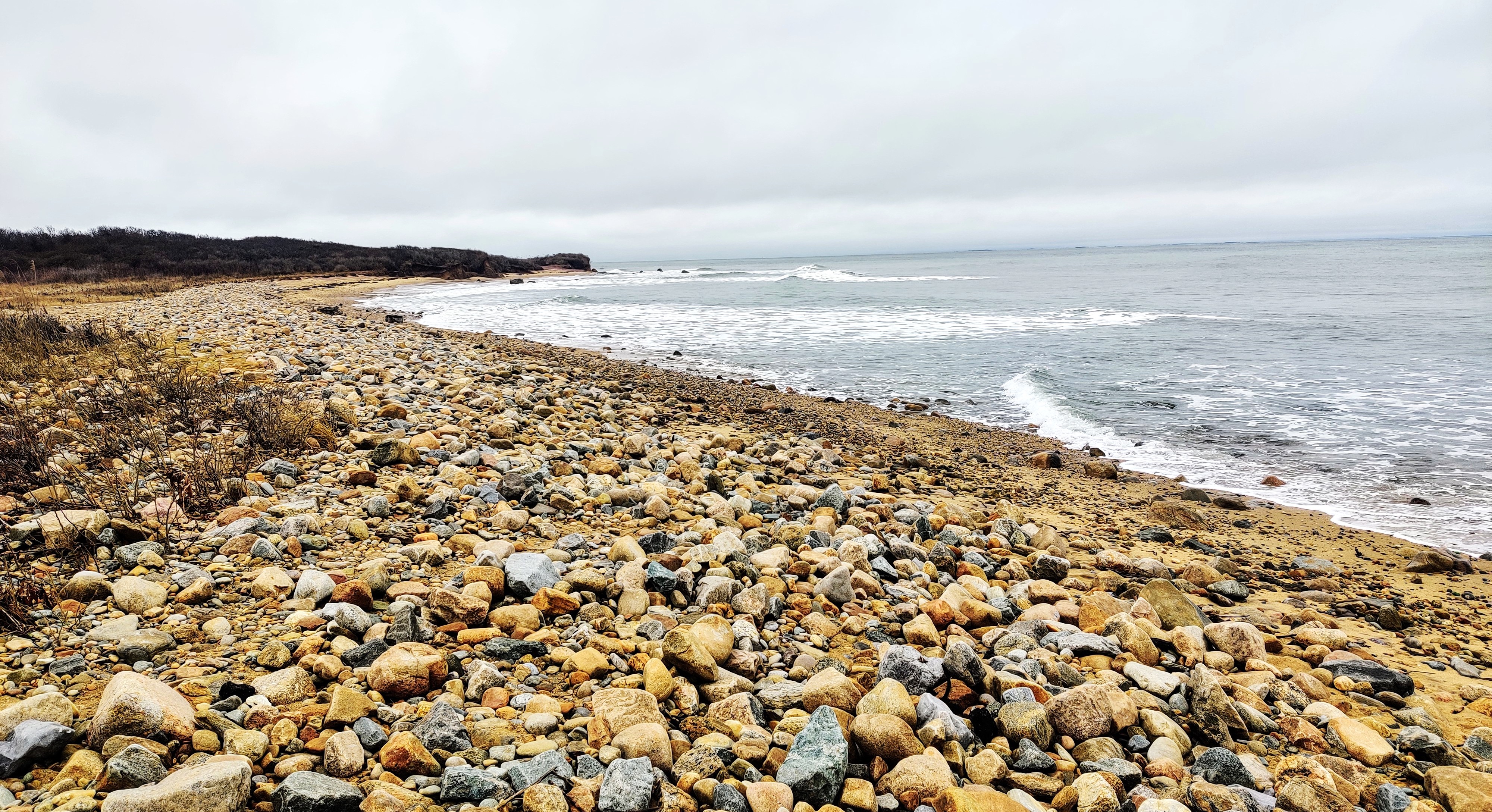
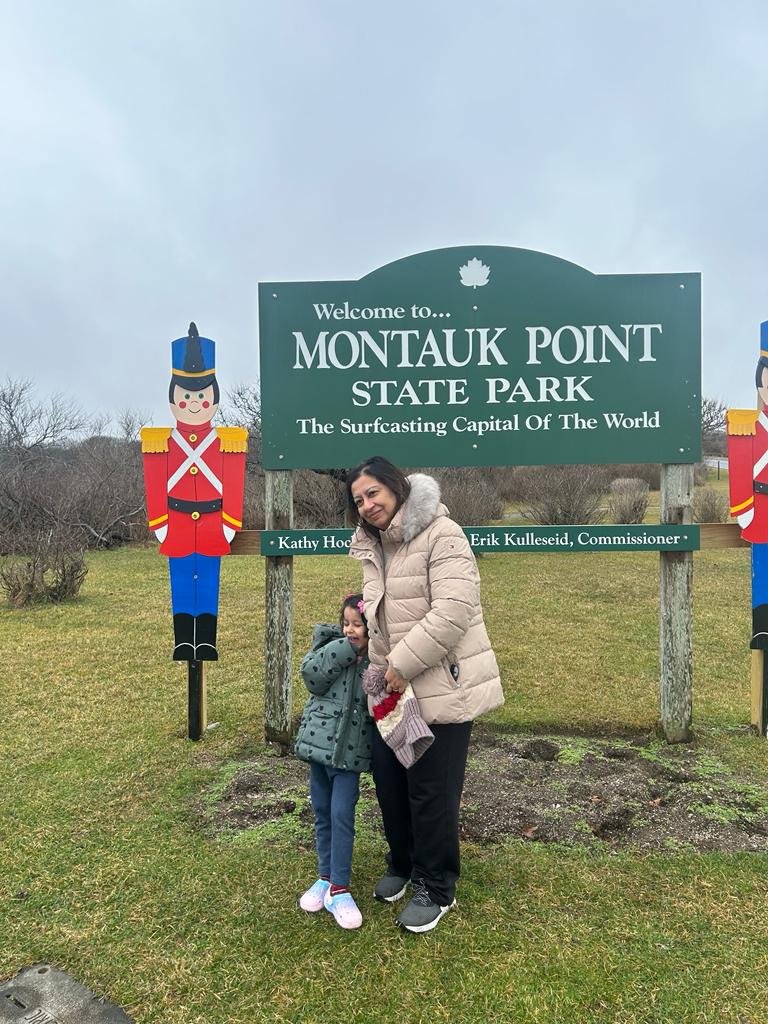
Montauk, named after the original Indian tribe which lived in these parts, has wonderful viewing points of the ocean apart from desolate beaches and the Montauk lighthouse. A veritable treat of a 360-degree view of the Atlantic awaited us.

Standing there, my thoughts went to The Great Gatsby’s East Egg and West Egg neighbourhoods and the lighthouse light which flashed across the bay.

Having explored Long Island and its two branches, it was time for us to get back. I was happy to have seen and experienced all that Long Island had to offer. Or so I thought!

Driving back, we noticed an exit to Amityville. The memory jangled.

The Amityville story became known across the globe with the publication of the book ‘The Amityville Horror- A True story’ half a century back, subsequently made into several movies over decades. The infamous house in Amityville is where an individual murdered six members of his family in their sleep. The Lutz family purchased and moved into the house a year later. That is when the terror began and the family had to literally run away in twenty-eight days. The Lutzs could never give details about what they faced in the house but alluded to evil spirits and demons. A priest who had been invited to bless the house was forced to leave by a deep voice telling him to ‘get out!’; later he developed high fever and blisters on his hand.

As we continued on our way back to New York city, Long Island held sway on me with the legend, lore and landscapes it had spawned.

In musing…….                                                                                Shakti Ghosal

PostBlock

Summary

VisibilityPublic

PublishToday at 4:37 am

URLesgeemusings.com/2024/01/22/long-island-its-legend-its-lore-its-landscape/Stick to the top of the blogPOST FORMATAsideAudioChatGalleryImageLinkQuoteStandardStatusVideoAUTHORShakti GhosalSwitch to draftMove to trash

Access

Excerpt

12 Revisions

Categories

SEARCH CATEGORIESPersonalPlacesShakti GhosalTravelAuthorThe Chronicler of the HooghlyAwarenessBookClimate changeCoachingContestCrucible experienceCustomsDevelopmentDisruptionPandemicenvironmentFictionHistorical FictionHistoryLeadershipLeadership IncubationRelational IntelligenceLife experienceManagementEconomicspage turnerperformancePhilosophyRitualsTransformationTrendsWorld eventAdd New Category

Tags

ADD NEW TAG

Amittyville (1 of 16)Amittyville

Amityville Horror (2 of 16)Amityville Horror

Atlantic Ocean (3 of 16)Atlantic Ocean

battle if Long Island (4 of 16)battle if Long Island

F Scott Fitzerald (5 of 16)F Scott Fitzerald

Hampton (6 of 16)Hampton

Hugh Birdsall (7 of 16)Hugh Birdsall

Leave the world behind (8 of 16)Leave the world behind

Long Island (9 of 16)Long Island

Lutz family (10 of 16)Lutz family

Montauk (11 of 16)Montauk

Montauk Point State Park (12 of 16)

The Old Man and the Lake


The reign of the dinosaurs had long ended. Snuffed out by an unlikely asteroid strike. A fifteen kilometers wide piece of Iridium laced rock had struck near present day Mexico, creating a ten times wide crater and unleashing lava, ashes, smoke and gigantic waves around the world.

Though the mass extinction event exterminated most of the flora and fauna on the planet, the continental drift and shifts continued unhampered for millions of years thereafter. The active planetary crust led to the Indian land mass smashing into the Eurasian land plate. The resulting crumpling and buckling at the collision point led to what came to be known as the Himalayas, a veritable abode of the Gods, the tallest mountain range in the world. An awesome creation standing testimony to Earth’s inner energies.

The permanent glaciers and ice formations led to glacial water bodies being formed. This is how the lake came into being. Situated at a height of 18,000 feet within the mighty Himalayan range, the lake acquired a mystical aura for all men and religions who passed by. The waters remained mostly frozen due to the height and the overwhelming presence of the Dongmar glacier which nestled it. Thirsty men and animals could not quench their thirst. And so it came to pass that a Guru was passing by when he too felt the mystical aura of the lake. He put his hand in the lake and Lo and behold! The water stopped freezing and became available for all to quench their thirst. This subduing of the Dongmar glacier’s frozen might by the Guru gave the lake the name of Gurudongmar. The second highest lake in the world with water that no longer froze.

**

The Man was indeed getting on in years.

 As a child, he had been precocious and so had been nicknamed. ‘Buro’, an old man. He was now precisely that, replete with the mindset of the elderly. Over the years, he had acquired a liking  for travelling and seeing the world. Age had dimmed the eyes somewhat, but not that inner passion to set forth and discover new places.

When the Man first heard about the wondrous lake of Gurudongmar, his heart urged him to travel. His brain though was more circumspect; it counselled, “My dear chap, are you crazy? You suffer from vertigo. What might happen when you go up all those torturously winding roads?” His friends too cautioned; they related dire tales of folks collapsing from lack of oxygen in a no-Man’s land with medical facilities hard to come by.

“But when a Man makes up his mind, he is not made for defeat. He can lose out, even destroyed, but not defeated.”

The tug of war between thoughts continued. But the die had been cast, the travel plans stood finalised. Came the day of travel and the Man set forth armed with some basic medications, a quiet resolve and  some raucous misgivings. A flight, several car rides through mountainous roads into the Himalayan kingdom and the day of reckoning arrived.

“This was not the time to think of what was not there. It was the time to think of what one could do with what was there.”

Six in the morning and after nursing a cup of hot tea, the Man set forth for his rendezvous with the lake.


The slow wafting mist seemed in perfect harmony with the biting chill outside the moving car.

Passing through the last army check post, the vehicle climbed to the Kala Pathar, black stone viewpoint. 

The fresh snow from the previous night lay in gay abandon. The white mist drifted upwards, a curtain rising up from the snow flakes and into the low hanging clouds.

As the old man stood watching the shifting views of the  Kala Pathar  blackness through the whiteness of the entwining  gaps in the mist, it seemed like a ballet being performed. Was it the Universe sending him a message of hope?

“Every day is a new day. It is better to think it would be lucky. So when luck does come, one would be ready.”

The climb towards the lake had begun. It was not on roads cut out on the mountainsides which the man had been used to.  It was on a rising terrain with no roads or markings to provide a direction. It was all down to the driver and the vehicle, their combined experience and strength to negotiate the path.

And then, all of a sudden, the heavens opened up. Sunbeams splayed and sliced all around. The climb had now reached above the level of the clouds and mist, a surreal moment. The old man nibbled on slivers of ginger; he had been advised so by some friends. A final swerving climb over barren rocks and the vehicle stopped on a mound from where the lake could be seen.

The stillness of the blue waters seemed to beckon. ‘Come, partake of my mysticism.’ The sun shone in all its splendour. Was it trying to discover that mystical aura with all those reflections? At the far end of the waters, part shrouded by rising mists, towered the snow laden glacier. As the old man stood transfixed by the wondrous surroundings, the tug of thoughts took over. Was this the place where divinity was born?  What made the pristine barrenness so unworldly? Was it the glacier with its whiteness, or the water with its blueness?

A needle pricked the cheek. Then some more. Shaken out of his stupor, the man looked around. The hitherto gentle breeze had gained in strength. Crested by a whirlwind, tiny pebbles and dust particles chased each other in an ethereal dance. As the needles borne by the  wind swayed through the onlookers, a soft murmur of protest could be heard. The old man slowly turned and moved back towards the waiting vehicle.

In Learning……..                                                                                         Shakti Ghosal

Disclosure: The Old Man in the post is the author himself.

Acknowledgement : ‘The Old Man and the Sea’ by Ernest Hemingway

When a Jail speaks to you


“No one truly knows a nation until one has been inside its jails. A nation should not be judged by how it treats its highest citizens but its lowest ones.” – Nelson Mandela

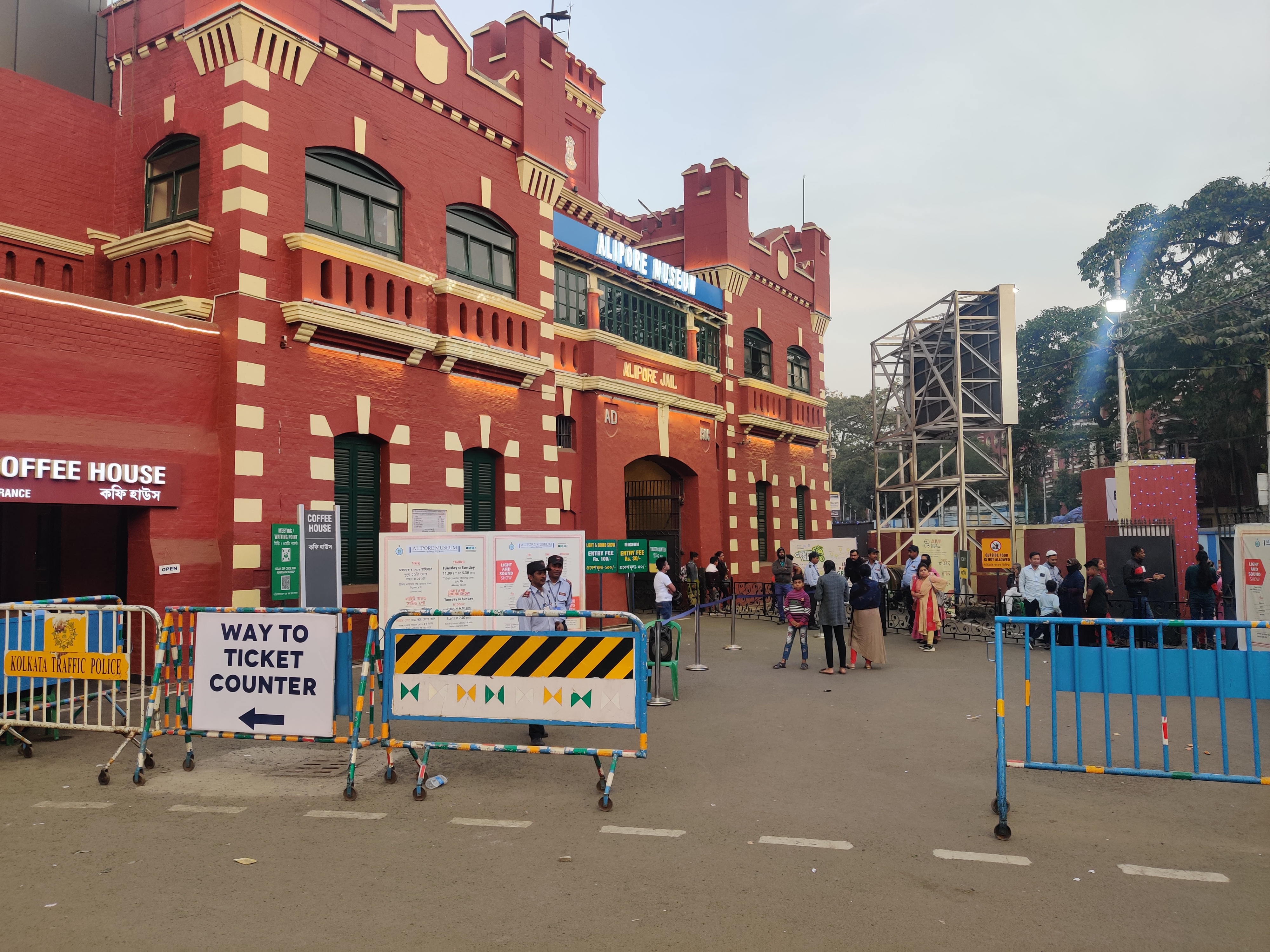
Alipore Jail in Kolkata has recently been converted into a museum and we made a visit. I found the place refreshingly well laid out with directional signs to the various highlights.

Though not well known, there are actually two Alipore Jails. The first Alipore jail, later called the Presidency jail, was built more than two hundred years back. The newer one, which continued to be known as the Alipore Jail, was built close to the earlier one in the early twentieth century. Known as a ‘correctional home’, it was used by the British to hold political prisoners.

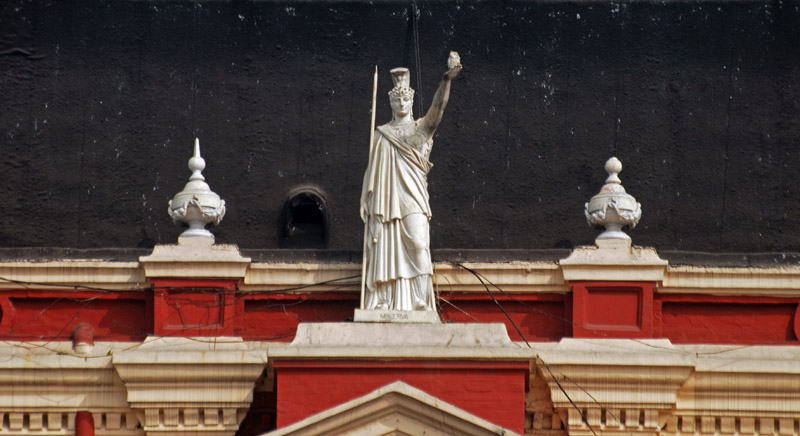
A few miles away from Alipore jail is Dalhousie Square. Named after Governor General Lord Dalhousie, who held office in the mid-nineteenth century, it was and continues to be the administrative and Business epicenter of Kolkata. Standing majestically at the center is the Writer’s Building with its French renaissance style architecture, Roman facade and rooftop statues.

Dalhousie Square is today known as Benoy Badal Dinesh (BBD in short) Bagh and therein hangs a tale of an interesting connect it has with Alipore Jail.

It was 1930. With the Indian freedom struggle at its peak, Alipore Jail was bursting at its seams with political prisoners. Colonel N. S. Simpson, the Inspector General of Police, had become the epitome of brutality when it came to dealing with political prisoners. Seeing himself as an able administrator, Simpson had devised an efficient and brutal system to force the prison inmates to reveal their political ideologies and ‘terrorism’ plans.  Merciless beatings while hung from a tree, putting chilli powder on the genitals etc. were commonplace.

Three Bengali revolutionaries Benoy, Dinesh and Badal, aged twenty-two, nineteen and eighteen, chanced to come together. Members of the Bengal Volunteers, a group set up by Netaji Subhas Chandra Bose a couple of years earlier, they had found their life’s calling in revolutionary activities. The threesome, having heard horror stories about Colonel Simpson’s notoriety, decided to take the fight to the British administrator.

To gain access to the Writer’s building the three youngsters entered Writer’s building wearing immaculate western attire. Asking to meet Colonel Simpson, they shot him dead point blank. BBD Bagh today stands testimony to the courage of this threesome.

***

As I stood looking at the Alipore jail gallows, I heard a sound and turned around to see an old tree standing forlornly in the courtyard. The rustling leaves seemed to be whispering to me about the killings and the merciless beatings it had been witness to. Did I hear Dinesh shout ‘Vande Mataram’ as he was being taken to the gallows?

Dusk fell and I watched the red-bricked Jail walls come alive and take on the colour of blood. The coloured lasers of the ongoing Light and Sound show pranced to and fro. A multitude of voices ebbed and flowed, from various directions.

Netaji Subhas Bose protesting against brutal assaults on other inmates, just before he was knocked unconscious from a head blow.

Subhas Bose inviting Deshbandhu Chittaranjan Das to a frugal meal that he had painstakingly cooked himself.

Young Indira ‘Priyadarshini’ Gandhi meeting her father Jawaharlal Nehru ( first Prime Minister of independent India) when he was incarcerated in a cell for participating in the civil disobedience movement.

Dr. Bidhan Chandra Roy ( a future Chief Minister of the state of West Bengal), himself serving a sentence, treating sick and injured prisoners in the jail hospital.

The whisperings of the guards on watch tower duty.

The tales that the jail was relating to me were of innumerable shades. Of sacrifice and suppression. Of idealism and brutality.

Night had fallen when I stepped out of the Alipore Jail complex to return home. 

As I got into the cab, I mused on the dichotomy of the Western civilizational ethos about freedom and bondage. Did that ethos emanate from a deep-down racial distrust of ‘non-western’ people and their purported non-adherence to western civility and norms which had justified Europe’s colonization ( it was never termed conquest!) of almost all of the planet?

 When it came to India, The British parliament and administration had gone to great pains to justify its ‘colonial intervention’ in the name of the rule of law, human rights and upliftment of the natives. An image of a benign Raj was fostered, a righteous mask was worn through setting up parliamentary commissions and inquiries every time there were reported cases of extortion and torture. The British would always take the moral high ground claiming ignorance of torture and beatings indulged in by the indigenous havildars and policemen a category which was illiterate, poorly paid and only too happy to curry favours with the British Sahebs.

In 1854, the Madras torture commission, which had been set up to investigate allegations of torture in the police department, had scathingly observed:

The police establishment has become the bane and pest of society, the terror of the community, and the origin of half the misery and discontent that exist among the subjects of Government. Corruption and bribery reign paramount throughout the whole establishment; violence, torture, and cruelty are their chief instruments for detecting crime, implicating innocence, or extorting money. Robberies are daily and nightly committed, and not unfrequently with their connivance; certain suspicious characters are taken up and conveyed to some secluded spot far out of reach of witnesses; every species of cruelty is exercised upon them; if guilty, the crime is invariably confessed, and stolen property discovered; but a tempting bribe soon release[s] them from custody….’

A hundred and seventy years on, does the above sound eerily familiar? As I sat thinking of all this in the cab, the irony of the situation did not escape me. The British have long gone, our tryst with destiny is now three-quarters of a century old. But our governance and law-enforcing structures seem to perpetuate those very aspects which our forefathers had fought against.  

Would the shifting of the jail facilities away from British structures like the Alipore Jail finally allow for fresh thoughts and mindsets to set in? I wondered.

The museum boasts an excellent coffee shop which we thoroughly enjoyed. A visit is recommended.

In Musing…….                                                                                 Shakti Ghosal

Acknowledgement : “Very wicked children”: “Indian torture” and the Madras Torture Commission report of 1855: by Anuj Bhuwaniam Replicated from Sur – Revista Internacional de Direitos Humanos, São Paulo, vol.6, n.10, pp. 6-27, 2009