Connectedness – My takeaway from Avatar


“….and unless we touch others, we’re out of touch with life.”
– Oliver Wendall Holmes, American physician & poet. 19th Century

6e91d48bad32277a5f6b56ca4e94bbdd81b17975def448dd3f73f4b6

Most of us remember the James Cameron directed 2009 epic Avatar as a technically brilliant Sci Fi extravaganza. But what fascinated me about the story was the vast neural connectivity between every living organism on that beautiful world of Pandora. A network which allowed the humanoid species called Na’vi to not only connect to every other flora and fauna on the planet but to an evolved and higher planetary consciousness called Eywa. Eywa apparently is all about deep connection , bonding and balance, termed in Na’vi language as tsaheylu, and this alone becomes responsible for the defeat of the otherwise technologically superior and better armed human army.

Sometime back I had mused on the influence of internet and social media connectivity and the shift it is bringing to our society in ‘A World of Tweeple’. A shift that is moving large swathes of humanity from traditional groupings of ethnicity, community and religion to individual ‘Me- Self’ connectivities that satisfy emotional and social needs. My crystal ball gazing showed up two paths. One leading to a frightening Matrix like future where wired to central intelligences, we access information at will in return for our innermost thoughts and beliefs on display for others to examine. The other path holding the promise of our individualism being empowered by the power of networks to achieve a utopian future.
20090921_social_connections
What is it about these visions of connectivity that fascinate so? Does such connectedness somehow, somewhere, signify an aspect of yearning, an area where we see a lack? I dwell upon this. I see myself connected to every life form through that double helix structure called DNA. I see my connections in the symbiotic relationship of the air, food and water that I take in. And I also see my connections in my social needs to bond and belong.

So what exactly is lacking?

I decide to do a reality check. What is it that makes us prefer Facebook friends to real ones? Could this be because deep down we remain diffident and uncertain about our ability to ‘connect with our hearts’, so essential to blossom a real friendship? Could this be because Facebook and such social media technologies allow us to calibrate and control how much, when and where we choose to share? Something which real friendships and connections could never tolerate. Could this be the reason that as technology gives us the means ‘to connect’ more and more, we see increasing evidence of disempowering disconnect all around? As we try and escape by shifting our connectivity to gadgets and technologies than to each other……….

I once again come round to the thinking that we have indeed become obsessed with a “Me- Self” mindset. And have chosen to forget all that had our forefathers had learnt to reach this stage of societal development. Aspect of being there for each other. Aspects of trust and empathy. The need to reboot our ‘operating system’ back to “Us –Selves” from the recently acquired “Me- Self”

So I come back to the question about what could we do to steer onto the alternative path promising that utopian future?

In a recent graduation address, Nipun Mehta, the 32 year old founder of CharityFocus.org and a recipient of the Jefferson Award for Public Service, speaks of three keys that helped him to return to a place of connection.

• Key number one ‘To Give’: Contrary to what the corporate world teaches, Nipun started with the hypothesis, “Maybe Greed is good but Generosity is better”. His experience with several projects has shown that (in his own words) ‘People consistently underestimate generosity, but human beings are internally wired to give.”

• Key number two ‘To Receive’: In Nipun’s words, “With any act of unconditional service, no matter how small, our biochemistry changes, our mind quietens, and we feel a sense of gratefulness. This inner transformation fundamentally shifts the direction of our lives.” It is in giving that we receive.

• Key number three ‘To Dance’: Contrary to what most people do, Nipun says that we should never try and track what is being given or received. Instead we need to let go and tune into the rhythm. The real reward of the give and take lies not in the value of what is being exchanged but the connection which flows underneath.

To Nipun Mehta’s three keys, I wish to add a fourth one.

• Key number four ‘To be Conscious’: As conscious beings, we are uniquely endowed with awareness and imagination. Aspects which allow us to connect to the Universe. As we do this, using vehicles like Science, Art and Religion, we are able to gain the unique understanding of the “spirit” that permeates and connects all things. Much like the connectivity in Avatar, it is this spiritual consciousness that becomes our ultimate connection to everything in the universe.

zen-of-connectedness-hands-frame

So, are we ready to give, to receive, to dance and to be conscious……… and to connect as we move through our lives?

“The cosmos is within us. We are made of star-stuff. We are a way for the universe to know itself.”
― Carl Sagan, 1990.

In Learning…………………… Shakti Ghosal

Acknowledgement: Miserable & Magical: A Graduation Speech for Paradoxical Times– by Nipun Mehta, May 27, 2013.

The Mask


I recall that delightful Jim Carrey starrer ‘The Mask’ of almost two decades back. In the movie, merely putting on the magical mask would at once transform the otherwise meek and submissive Stanley Ipkiss (Jim Carrey) into a brash, uninhibited and intractable guy with super-hero powers. Predictably the Mask was able to achieve all that his alter ego Ipkiss could only dream of.

The Mask

What if we could lay our hands on such a magical mask and make all our dreams come true?

As I think of this, I realise that I too have a mask which I wear. Where did this mask come from? I think back into my past to find an answer. Growing up, in school and at home, I was ‘taught’ to smoothen the jagged, impulsive edges of who I was, to conform to all that surrounded me. I quickly ‘learnt’ to keep my jaggedness and impulses under wraps for fear of being branded a rebel. This need to conform, to show up the way others wanted me to, brought the first layers of my mask.

At work, I remain conditioned to use the authority vested in me by my job title. Over the years I have ‘learnt’ to show up in set ways to demand respect and results from others. Day in, day out, this need to show up as someone larger than who I am, a know-all superior guy, seemingly in control, has made up more layers of my mask.

I see that the mask has served me to achieve outcomes. But as it has served, it has also hardened to become an intrinsic part of who I am. So intrinsic that today it is the mask which mostly ‘runs the show’, not the authentic me. I have become the Mask. That imposter strutting on the world stage, relegating the authentic me into the dark recesses.

What is it that compels me to wear the mask? What is it that makes me hide behind it thus? I see this emanating from my need to wield power, control outcomes, what I want to do. So I hide behind my mask, forgetting who I want to be. Yes, my “what I want to do’ has taken precedence over “who I want to be.”

Seeming and being

A voice asks. “You have had your way, done what you wanted to. Have your dreams come true?”
Pondering over this question, I can only whisper, “Not really…… I still search for that elusive pot of happiness and fulfillment.”
“What could be the way forward?” I ask.
‘What if you could redeem your true self from the role you have got conditioned to play? What if you could forget what you want to do? What if you could just be who you want to be?” says the departing voice.

But what would this take?

Am I prepared to embrace openness and be vulnerable?
Can I be non-judgemental?
Am I prepared to let go of my fear of rejection?
Am I willing to surrender?

Like Ipkiss, I decide to let go of the mask. As I negotiate this rarely trodden path to mask-freedom, I luxuriate in the myriad human connections, their love and sharing that approach the authentic me. I see now what a great trade-off this has been.

***

“Chronicler shook his head and Bast gave a frustrated sigh.”How about plays? Have you seen The Ghost and the Goosegirl or The Ha’penny King?

Chronicler frowned. “Is that the one where the king sells his crown to an orphan boy?”

Bast nodded. “And the boy becomes a better king than the original. The goosegirl dresses like a countess and everyone is stunned by her grace and charm.” He hesitated, struggling to find the words he wanted. “You see, there’s a fundamental connection between seeming and being. Every Fae child knows this, but you mortals never seem to see. We understand how dangerous a mask can be. We all become what we pretend to be.”

Extracted from ‘The Name of the Wind” from the Kingkiller Chronicle series by Patrick Rothfuss, 2007

In learning……………… Shakti Ghosal

Who would I be without my story?


“You are what exists before all stories. You are what remains when the story is understood.”
Byron Katie, American speaker & author of “The Work”

I muse about this Coaching question asked me.

So what is my story? As I think of this, I see its tentacles going into the past.

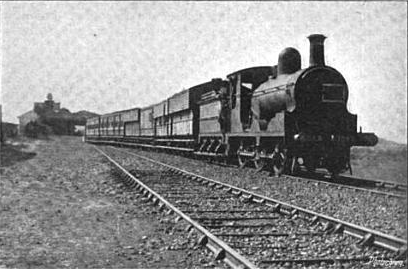
The year is 1911. A lowly placed accounts clerk of the British Accounts Service in India boards the Kalka Mail train from Calcutta with his family. He is shifting home to Delhi in accordance with the British colonial Government’s decision to shift the administrative capital of the Indian subcontinent there. He is following his work, the only thing he knows that sustains him and his family. He is my grandfather.

East_Indian_Railway_Mail

Fast forward fifty years and it is my father in the midst of a career in the Indian Audit and Accounts service. Now settled in Delhi, the capital of independent India. Content with a middle class lifestyle. So grooved in his office work that he feels insecure to take up an exciting consular opportunity in the US. He regrets it citing family constraints.

Fast forward another fifty years and it is I sitting at the desk in my office wondering what next. Having been on a sometimes exciting, sometimes lacklustre roller coaster ride through diverse business areas for three decades, I can claim fair knowledge of the nuts and bolts of corporate working. But like my grandfather and father, I see my work primarily as the means to provide a comfortable life to me and my family.

My story. The story in which working at an office desk equates to life comfort and sustenance. The story which I accept as me. And as I accept, I see it gaining power and dictating what I do. I see it protecting me in a ‘safe box’. As it allows me to peep through my perception coloured lenses and read meaning about the world at large. But as it protects, do I also see it confining and preventing me from setting forth, taking risks and achieving my true potential?

What is it that has embedded this ‘office work’ DNA in me thus? What is it that has made it such an integral part of my story? As I muse, I sense that in my office work DNA resides a gene harking back to the industrial revolution. A gene that through generations has altered my value system. And made me shift towards valuing business growth, productivity and profits over beauty, compassion, love and community ties. Over generations, the gene has also lured me away from simplicity and frugality and towards materialism. An attachment to materialistic possessions which has fuelled insecurity. And has manifested in my life through frantic work schedules, technology tying me down 24X7, scarcely any time to “stop by the woods” or “wander lonely as a cloud”.

So, who would I be without my story? Who would I be if I could shed the above DNA and gene? Would I have that glorious opportunity to start from a place where I am no longer confined and am free to define and implement what I think is important? What do I see?

I see myself slowing down, without the pressures of societal expectations of wealth and ownership. As I take personal responsibility to do that which is meaningful, creative and liberating to me.

I see myself effortlessly crossing those artificial barriers created by economic, social and racial compulsions.

I see in me the birth of a great willingness to learn. From all corners of the world. Unfettered and unhampered by beliefs of my education and experience.

Like the return of the Jedi, I see in me the comeback of the human heart. As I acknowledge intrinsic qualities like Empathy, Faith, Creativity and Interconnectedness and bring them centre stage.

I see how work would look like for me. Passion…. Art…… the pulse of the environment.

photo-0613

Who would I be without my stories?
Like a tree
Without the rustle of the leaves
Winter mind
Kind
Aligned
To the Inside
Inside the inside
A space so wide
It has no centre
Because it is centre

From Caitlin Frost’s Web log

In learning………………… Shakti Ghosal

The Other Side of Sadness


Don’t cry when the sun is gone, because the tears won’t let you see the stars. 
Violata Parra, Chilean folklorist, early 20th century.

Met Death last month.

I asked, “What brings you here?”
He said, “My job.”
“But don’t you think it’s a bit too early.”
“Well maybe, but who cares.”
“I do.”
“Who are you?”
“A wife, a mother.”
He curled his lip and sneered, “Is that all you are?”
“Uh…. Yes, that’s all I want to be.”
“I’ll give you a new identity.”
“And what is that?”
“…. A rebel.”
“But who do I rebel against? You?”
“Yes.”
“But I’ll never win.”
“Trust me, you’ll never lose either.”

And he left, his job done.

Facebook entry of a young wife recently widowed.

OLYMPUS DIGITAL CAMERA

A close relative died young last month. He lost the war to leukemia, leaving behind a young wife and a five year old daughter. The daughter still goes around asking and searching for her Dad. She believes he has gone away on a long journey.

Having watched him through birth, childhood and adulthood, I find my own emotions swing between a connection severing anguish and a “out of mind, out of sight” normalcy. Sometimes when I see myself normalising thus, guilt returns in waves. Am I a betrayer, is my self-centeredness making me forget a loved one? Or could it be that as I reach out to others in my normalcy, I initiate my inner healing?

I read the Facebook entry again. Is there some coping mechanism here too? Is it a way to confront and face the very intimate and intense feelings the widow holds? Could this creative piece of writing be a vent through which she in fact is acknowledging Death?

My thoughts shift to that path breaking book, The Other Side of Sadness authored by George A. Bonanno. Dr. Bonanno refutes the widely held belief that a surviving family member needs to necessarily go through several stages of Denial, Anger, Bargaining and Hurt before he or she can reach the healing stage of Acceptance. The good doctor contends that the person in grief would in fact find a surprising inner storehouse of resiliency that would take him or her to the shores of Normalcy. He further maintains that “the natural sadness that actually follows a death is not a thick soup of tears and depression but a fluctuation that is nothing short of spectacular, the prevalence of joy during these times can in fact be striking.”

4340270_f520

As I muse on Dr. Bonanno’s thesis, I begin to see that while there can be no common pathway through grief nor a pre-determined structure for the grieving process, we may indeed share common responses. The Facebook entry for the widow and my periods of normalcy could just be the catharsis the doctor has written about. With this thought my emotional pendulum swings again. I understand the need to acknowledge my present emotion of normalcy just as I feel the urge to shout out to my widowed relative.

“Feel what you feel without embarrassment. It’s okay to be angry, to yell, to cry. It’s equally okay to laugh, to find your joy and let go when you are ready.”
In learning………..                                                                            Shakti Ghosal

Acknowledgement: The Other Side of Sadness: What the new Science of Bereavement tells us about Life after Loss by George A. Bonanno Ph.D, September 2009.

Connecticut, Delhi and HO’OPONONO……..


What we feel and think and are is to a great extent determined by the state of our ductless glands and viscera. ~Aldous Huxley, English author, 20th century

Over the last month the media streams have remained clogged with two events. First,the horrific massacre of school children and teachers in Connecticut, USA. Second, the barbaric rape and “murder” of an Indian medical student in Delhi.

ConnecticutSchoolShooting110059--525x270

delhi_gangrape_protest_new_pti

As part of an increasingly aware and connected society, we remain quick to rationalise into the underlying reasons and ascribe blame. The flickering screens become full with debates and sermons as questions and suggestions fly thick and fast.

Why does the U.S. Government not take up with the National Rifle Association and amend the gun ownership laws?
• What makes the Indian police so insensitive and ill equipped to take care of women safety on the roads?
• If, as it now emerges, gunman Adam Lanza displayed worrisome and awkward behaviour, why did his mother not do something about it?
• What was the trigger for the gang of rapists to have conducted themselves in such a brutal and violent manner?

…and so on, the list goes on and on.

Delhi rape

We may sit in judgement and hold holier than thou perceptions. As we take time out to show our solidarity with the cause and impatience and distrust with the ‘powers that be’. Or we may choose to get involved with our hearts, indulge in emotional outpourings and feel we are doing our bit. Either way we do not take responsibility for what happened.

But could it be that as we come across such evil and darkness in the world, there lies a seed of responsibility within us? When we accept the status quo of injustice on the plea that this is how it has been? When we prefer to remain an onlooker to a crime perpetrated on someone else? When we spend our energy to protect our own cocoon only? When we expect the Government and the police to follow standards of morality and behaviour higher than our own?

My thoughts flit to Joe Vitale and his book “Zero Limits”. About therapist Dr.Hew Len and his handling of a ward of criminally insane patients. Dr. Len never saw patients but only reviewed their files. As he looked at the files, he would work on himself by repeating the following universal mantras.
• I am sorry.
• Please forgive me.
• I thank you
• I love you.

And as he worked and improved himself, the patients started to improve and heal!

Dr. Hew Len was following the concept of HO’OPONONO, a Hawaiian word dealing with “extreme responsibility” which requires the person to take total responsibility of his life including all people and situations coming into it. A ‘tough to swallow’ and bizarre concept on first sight!

hooponopono-hula-rye-optimiced

But as I muse on the need to take responsibility of anything that shows up in our life, absolutely everything, I start seeing a continuum. Between extreme responsibility and that of reconciliation and forgiveness. I also come face to face with my Karma in that I must be willing to experience myself what I have allowed to happen to others, either by my inaction or inability.

And today in this new millennium, as we sit on the explosive powder keg of increasing disparity, isolation of the ‘left behinds’ in fast changing societies and values and technology driven, rapid creation of awareness and beliefs, could HO’OPONONO show us the way forward?

In learning……… Shakti Ghosal

Acknowledgement: Zero Limits: The Secret Hawaiian System for Wealth, Health, Peace, and More by Joe Vitale & Ihaleakala Hew Len, Dec. 2008.

When your home leaves you….


What do you say when you leave your home for work and come back to find it gone? What do you say when all that you have lovingly acquired over the years lie broken and anguished in the space-time continuum which was once your home?

***

It was the summer of 2006. My wife and I were hunting for a new home. So when we came across 1C- V2 at Muscat Oasis Residences, it was love at first sight. Built into the curvature of the complex, 1C- V2 was a duplex apartment allowing comfortable living space coupled with great poolside and mountain views. So it came about that as we moved into a spanking new home, 1C-V2 also embraced us, resplendent in its new furnishings and trappings. Come weekends and party time and 1C-V2 would be all welcoming as it waited for the guests, with its lights and shadows.

***

Six years passed. The Togor sapling my wife planted grew into a perennially flowering tree, swaying and peeping into our upper floor bedroom. Our daughters left home for college. The nest became empty. But our bond with 1C-V2 only strengthened. As we returned from work in the evenings, it was always there waiting for us with its serenity and comfort.

***

August 11th 2012. I leave home for work. At 9 am I get a call from neighbour that there had been an explosion at our residential complex. Rushing back, I come to face to face with something resembling a disaster movie set. Fire brigade lights. Crowd of on-lookers. Police and civil defence personnel frantically putting up no entry tapes and signs. Curtains and bedsheets fluttering out of gaping holes where French windows and doors used to be. I hear a distant voice asking me if someone was inside. I look around to see the guy standing next to me. Was something wrong with my hearing? Slowly but deliberately I cross the no-entry signs and move into the restricted zone. Paying no heed to the security guy telling me the building was unsafe, I step into the dark, dusty and glass strewn space which was our home.

***

I sit on a broken suitcase watching the two workmen clearing the debris with shovels.  Sanchita, my wife, frantically sifts through to try and recover some important documents which are missing. We are aware that two of the main columns had been compromised and 1C-V2 might need to be pulled down. With the end walls gone and the apartment open from both sides, a soothing breeze blows through.

“Sorry.”

I remain with my thoughts.

“I am sorry.” That voice wafts in again.

I look around but can scarcely determine the source.

“Who’s this?” I murmur.

“I am 1C-V2 or rather it’s spirit.”

“Do homes have spirits? I thought that was only in fairy tales.” I gasp.

“Yes they do. Who else brings the endless reservoir of  peace and comfort into homes?”

I ponder over this.

“I am here to say I am sorry. I tried my best to save this place for you but failed. You were the first and only family I had. I loved to be with you. Now with all of you gone, I need to leave too…..”

“One last question. Why me, why us?” I ask plaintively.

“The question you may wish to ponder is Why not you?” comes the voice.

I get  up with a start to find that I had dozed off. The breeze had in the meantime died down.

“Madam is this file important to you?” calls out one of the workmen. Sanchita is thrilled to recover some of her important documents.

***

We slowly walk away, my wife and I. I pondering over the last question, Why not me, she clutching her file.. We look back to see the flower laden Togor branch waving in front of the space where our window used to be. I wonder who it is saying sayonara to, our home or us?

***

Post Script: Investigations have concluded that the explosion was due to leakage of piped LPG gas in an apartment adjoining ours. The accident led to the tragic death of one tenant and serious injuries to another.

Success…… Vision or Delusion?


“When your life flashes before your eyes, make sure you’ve got plenty to watch, be it vision or delusion.”

Anonymous


 Success is such an empowering word. We think of it and we think of…. Happiness….Self esteem….Superiority…..  facets which enthuse, inspire, pump the adrenalin. Success seems to be   what we live for. What our parents and teachers always exhorted us to do. Scholastically, materialistically, competitively. Success brings forth visions of wealth, power, intelligence and with these the ability to control the outcome of events. All those external trappings. What the world judges us by.

But as I think of success, I also see within it the other paradigm. Of increased self awareness and self development. Of a positive intention and an alignment with a higher purpose. Of that mysterious inner process which ensures personal integrity and a commitment to values. The aspect of success as exemplified by Mahatma Gandhi when he said, “I must first be the change that I want to see in the world.” Success thus gets linked, not to the external world, but to an inner compass, an inside out initiative.

Which brings me to Vision and Delusion, those two aspects of our mind. We are conditioned to see these as the Good and the Bad on the same spectrum. We see great positivity in Vision but perceive delusion as something to be shed. So as vision becomes that which drives, delusion is that which keeps us lazy. Vision has logic and reasoning supporting it while delusion is immersed in randomness. If we go by this perception, we tend to associate Success with vision and not with delusion. But is this association valid?

 My daughter has this linkage to success. She needs to wear an old watch with a jaded pink band whenever she is writing examinations. She remains convinced that wearing this watch has something to do with her succeeding. The thinking is, “I wore this watch. I succeeded. My success is because I wore the watch.” The watch deludes her into self confidence and purpose; its absence leads to nervousness and lack of focus.

A work colleague of mine has this high belief in his own capability.  Every time he jumps into a fresh project, he deludes himself to over-estimate his own contribution and gives no credence to the positive role of other people or circumstances. So while he gets accoladed as an achiever, I notice him getting increasingly delusional from the success. Do I see shades of Hitler and Saddam Hussein who, in their time, were similarly deluded about their own great power and ability to control events?

Coming to my own self, I can see the several beliefs that have contributed to what success I have seen. Beliefs pertaining to people, situations and work. The other day, when a business associate was proposing a new process, I noticed an instinctive resistance building up within me. I heard myself countering that our prevailing processes brought success in the past so why change. Later when I thought about my negative reaction, I wondered if I had got trapped in my own success delusion, refusing to move with change.

The above provide glimpses of how success gets linked to the outside. But what about success that comes from within?

When we look inwards for that inner success, I believe this requires a balance between mental, emotional and spiritual dimensions. Success here gets closely aligned to our core values. It is this alignment which allows a clear vision of the future. Of innovative action and a sense of direction. Mahatma Gandhi had such a vision when he undertook the novel path of non-violence to gain India its independence from its colonial masters. Decades later, this also became the power of Martin Luther King’s “I have a dream” speech.

So I come back to the question, “What does success mean to us, a vision or a delusion?”

I believe true success would need to embody both external and inner facets of our existence. Which would mean that both delusion and vision would play a role.  If delusion panders to our emotions, makes us feel optimistic and helps us to aim higher, vision allows us to dream the future and inspires action with imagination and insight. So as our success remains a product of both sides of the Vision- Delusion polarity, the kind of success each one of us achieves depends on the mix of vision and delusion we have created within ourselves.

Could this be the reason for the thin line we often notice between a visionary and a delusionary? Could this have been the reason for the visionary brilliance of Nobel laureate John Nash as he grappled with his schizophrenic delusions, so eloquently portrayed in the film Beautiful Mind?

My Bad is stronger than my Good.


“I’m an accumulation of every single thing I’ve done, good and bad.”

                                           David Millar, Scottish Road racing cyclist champion


Morals preach at me, “Love thy neighbour…… Do Good unto others…” I stand brainwashed to believe that Paradise beckons as I align my thoughts and actions to the goodness of my values.

Millennia of Religion and philosophy have depicted human life as that eternal conflict between the Good and Bad. The Goodness of Creation and Harmony ranged against the Badness of Destruction and Chaos. As I look down from the metaphysical level, I recall ‘Good’ and ‘Bad’ amongst the earliest words I learnt as a child. All my fairy tales and comic books dealt with the likes of Krishna vs. Kanksh, Superman vs. Lex Lothar et al. I go through life and see my ‘Bad ‘instincts of jealousy and fear battle against the ‘Good’ strivings of my intentions and fulfillment.

I surf the news channels and notice how much thoroughly ‘Bad’ and negative information is investigated and followed through as compared to ‘Good’ and positive developments. Almost as if we are waiting to imbibe and carry away all the bad impressions and stereotypes. Could it be that we get attracted and these are quicker to form within us?

My colleague wins a lottery and feels elated. The euphoria however scarcely lasts for a couple of days and I can sense that the feel good level quickly returns to what it had been before the lottery win. The same person however gets into a prolonged bout of unhappiness and blame game when he incurs a loss in the stock market, a fraction of what he had won.

I remain witness to how a loving relationship between my friend and his spouse so easily degenerates into a break-up from a single anger-driven destructive action. Several positive overtures and communications fail to heal the rupture.

As I drive on the crowded roads, I become enraged from a single case of rash driving. As I leave the scene fuming, I scarcely notice the multitude of folks who give way and allow me to pass. My emotions can scarcely be quelled, be it by such good behaviour or kindness. The ‘bad’ memory remains vivid and I continue to rant about it on the dinner table, hours later.

As I go through life, do I see a Bad Good asymmetry? A negative bias towards Bad. Be it in the reports in media and in everyday events as above…

I look inwards and sense that I too am more motivated to avoid bad self perceptions than to pursue good ones. I muse and wonder why this is so. Could this be because ‘Bad’ signals that I need to change? And does my ‘Bad’ intuitively push me to adapt and change myself in line with a situation or environment? So does ‘Bad’ condition me to become more flexible and adaptive to an ever-changing world? Is this why my Bad is stronger and thus more relevant than my Good?

What is out of harmony and how do I restore it?


But what is happiness except the simple harmony between a man and the life he leads?

                                                    Albert Camus, French philosopher, early 20th century
 

Harmony. The word itself brings forth visions that soothe and caress. Of wafting melodies. Of the gurgling of a mountain spring. Of the swaying of flowers in the wind. Of a synchronicity of notes and music.

What is my harmony? It is intrinsic to who I am. What I feel, what I think, what I say and what I do. It is a ballet of all these aspects of mine. When I am in harmony, these pieces fit and the alignment between my inner and outer self comes into being.

As I reflect on ‘What is out of harmony and how do I restore it?’ I realise this holds the power to set the ultimate goal for my inner self. As I try to align my inner self with my outer behaviour into a harmonic resonance.

Am I in harmony? I shine the light of this question inwards and seek. Where is the disconnect in the way I feel, think, speak or behave? Yes, at times I do feel out of sorts- frustrated or confused. At other times I feel upset or overwhelmed. I see this happening mostly in my relationships- at work, at home or amongst friends. I see the disharmony between what I feel and think and the way I am conditioned to act and speak. These are clearly not on the same page. I notice that what comes in the way is my ego. That ego which is always putting up a façade and trying to project a different image of “ME- SELF” than what I really am inside.

But my ego has its usefulness. It creates a resistance, sometimes aggressive, sometimes passive, sometimes positive and at other times negative to any perceived attack on my self. And I do find this resistance gives me stability.  Stability about “Who I am”, “Who I want to be.” And at other times “Who I do not want to be.” As I further think of this, I realise that I am also offering some kind of stability to the attacker as he tries to push, pull or grab some aspect of me. The attacker expects and needs my resistance for his attack to work. I seek to be part of the conflict and this makes me feel emotionally powerful. I justify to myself that I need to maintain my ego because otherwise the attacker would see the weak real me.

I time travel into the nineties. Fresh into a new job, I was having an awful time with this guy from the corporate office. I felt powerless in front of his overbearing and bossy attitude. An attitude which made me feel like a scapegoat every time we interacted. Then one day the volcano burst- an outburst from the usual reticent me. And it was too late to pick up the pieces. Years later, I came to realise that the corporate guy had similar qualities to a school teacher in my childhood. This teacher used to bruise my confidence (ego) by always judging and criticising me in a discriminatory manner. My reaction in the workplace came from the perception that my ego faced a similar hurtful situation. I had played the script of offering resistance to my attacker to perfection.

But does my past justify how I need to react in the future? Or is this my excuse to maintain disharmony in my life?

  • What thoughts and beliefs do I engage in that create disharmony in my life?
  • Does disharmony in me cause conflict with others at  work, at home or at play?
  • Do I tend to blame others for my disharmony?
  • What if I let my ego down? What could happen?
  • What if the other guy sees the real me?

As I ask myself these questions, I start gaining clarity. I see them as issues to be dealt with rather than excuses.

I realise that to restore my harmony, I would need to offer no resistance, or as little as possible, to attacks on my ego. This is initially a frightening prospect with my deep rooted fear of getting hurt taking control over me. But I delve deeper…..

When the other person decides to attack me / my ego, he is breaking the harmony of our joint universe.  If I choose to offer no resistance, I move to a place of harmony as I leave my attacker out of harmony in his relationship with our universe. I believe that as he is left alone without any resistance from me to give him stability, nature would restore harmony in him. Without my ego for him to attack, he would have to stop.

I see now that harmony empowers the highest level of Self Management in me. As it supports me to act from a place of integrity; a place where there is no fakeness or self-deception. Harmony allows me to be at peace within my own skin. But I also notice that to achieve harmony, I need to begin with my values. What’s really, really important to me?

Ultimately, to answer the question, “What is out of harmony and how do I restore it?” I need to first answer, “Am I living my values?”

In learning……………..                                                                           Shakti Ghosal

The Transience of our Permanence


They say when you get a lover
You begin to lose a friend.
That the end of the beginning is the beginning of the end.
They say the moment that you’re born is when you start to die.
And the first time that we said hello began our last goodbye.

                                            Roger Whittaker in The First Hello The Last Goodbye, 1976.

Have you wondered why most fairy tales end with the lines, “…..and then they lived happily ever after.”

Somewhere these words leave a warm feeling inside of permanence and stability. As we go through life, we like to moor ourselves to our family, our home and our possessions. We see permanence and derive comfort from the known just as we feel discomfort in transience and avoid the unknown.

But we are born and live through a world always in transience. And buffeted by the changes, we also keep changing. I remember the lines made famous by Bob Dylan in the sixties.

Then you better start swimmin’ or you’ll sink like a stone
For the times they are a-changin’.”

Yes, we better start swimming and we do swim. But we do this because we are somehow conditioned to maintain the permanence of our situation and not because we are conscious of   “times they are a – changin’.” So while our rational mind does notice the kaleidoscopy of transience happening all round us including our own self, our emotional core tries to hold onto the solidity of our perceived permanence.

I wonder about this as I ask myself, “Why do we long for this permanence when we know we are in transience?” Does the answer lie in religion? For religion does seem to offer sedateness amidst the noise and striving surrounding us. Religion tells us that permanence lies in loving God and loving one another. But love is a feeling. So does religion signify permanence of our feelings as it speaks of the transience of our physical selves?

                     “That nothing walks with aimless feet;

                      That not one life shall be destroy’d,

                      Or cast as rubbish to the void

                     When God hath made the pile complete”

                                           Lord Alfred Tennyson in “In Memoriam A.H.H.

Throughout history, our quest for a stable mooring has created philosophies which have debated about human consciousness and its permanence. At the individual level, this has been termed as our “soul” and that oft asked question, “Does our soul persist when our bodies fall?” has remained unanswered. I believe the reason we hold onto this philosophy is because it helps us reconcile the dread of the ‘physical death’ transience of our bodies by hooking onto this faith in the permanence of our conscious ‘souls’.

Was it this obsession with permanence which made the Egyptian pharaohs build pyramids five millennia back? Is it the same mindset that makes us store photos, videos and momentoes even today? Almost as if we need to keep our memories hostage in the inanimate world to reassure us of our permanence. This attitude of permanence has led us to develop a ‘content storage’ mindset. When asked, we quip back, “I am in a hurry…… things are moving fast….. I would always come back to savour these memories later.”

So how do we reframe our perspective from this mere ‘content storage’ to a higher ‘content experience’ mindset? I believe we can do this as we focus on pure experiencing with less and less obsession with storing. We then move into a state of heightened mindfulness. Where we let go of permanence and immerse in the flows of transience.

I think again of this transience- permanence polarity and I start noticing symmetry.

As I get up in the morning and look out, I derive this intense comfort from the permanence of the palm trees surrounding the pool and the curved pathway moving away on both sides. This has remained changeless since many years. But looking out of the window, I also see a pair of pigeons nesting and laying eggs and delight at the transience of this.

A memory I have held dear and which offers a soothing balm during stressful times, is of me sitting on the banks of a clear running stream, my legs resting on an immersed stone. While the running water may be seen in transience around the permanence of the stone, for me it is the timeless rushing (permanence?) of the stream as it erodes the stone (transience?) into smoothness, that leads to a deep inner peace.

As I reflect, I realise that these symmetries of transience and permanence are the moments when I gain the expanded consciousness of my here and now.