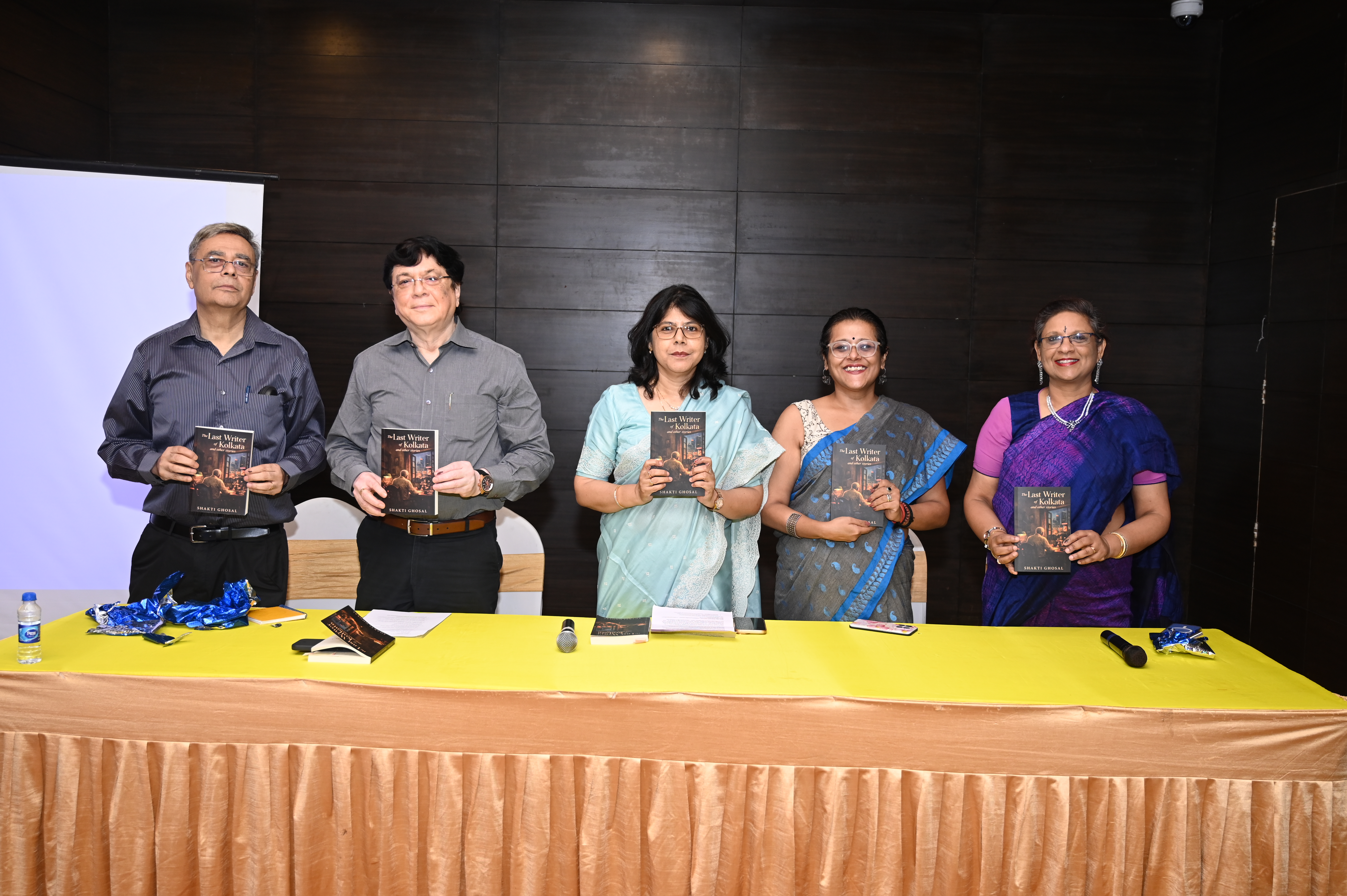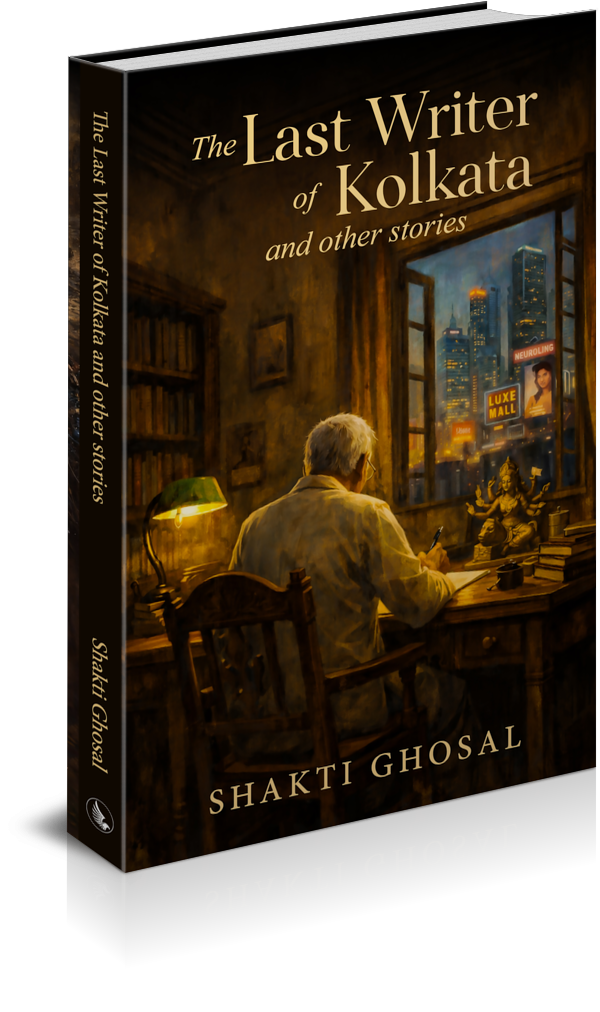
Four futures. Four hard truths. And the fragile choices that still make us human.


Set in a near future shaped by forces already gathering momentum, this collection explores what happens when irreversible hard trends collide with ordinary human lives. From climate catastrophe and algorithmic control to cultural erasure and institutionalized ageing, each story follows characters forced to rethink love, loyalty, memory, and courage as familiar worlds quietly transform around them. These are not tales of spectacular collapse, but of subtle reckonings—where survival lies not in resistance alone, but in choosing what must still be remembered, protected, and passed on.

The Last Writer of Kolkata
In a near-future Kolkata where memory, culture, and even grief are packaged and sold, an ageing writer quietly records a city that no longer listens. When his private words are appropriated and monetized, the story becomes a haunting meditation on erasure, resistance, and the fragile dignity of remembering in a world that profits from forgetting.

2056: The Year of the Water and Fire
In a near-future Sundarbans battered by super-cyclones and rising seas, a grieving environmentalist, his resolute daughter, and a sentient AI boat are caught between prophecy and science as fire erupts beneath the ocean. As water and flame converge, the story asks a haunting question: when nature reclaims its power, is survival an act of technology, faith—or human courage to stand and choose?

Echo Chamber
In a near future where minds are seamlessly linked and memories can be accessed, altered, and weaponized, a gifted intelligence analyst uncovers a conspiracy that turns thought itself into a tool of control. As truth, identity, and free will begin to blur, the story confronts a chilling question: when belief is engineered, is freedom still a choice—or merely an illusion?

When the Rain Remembered
In a near-future Kolkata where ageing has been systematized and kindness regulated, an elderly couple shelter a displaced child inside a gated retirement enclave that has forgotten laughter. As rain, unrest, and quiet courage unsettle rigid rules, the story becomes a tender meditation on belonging—asking whether homes are built by policy, or by the human instinct to care.

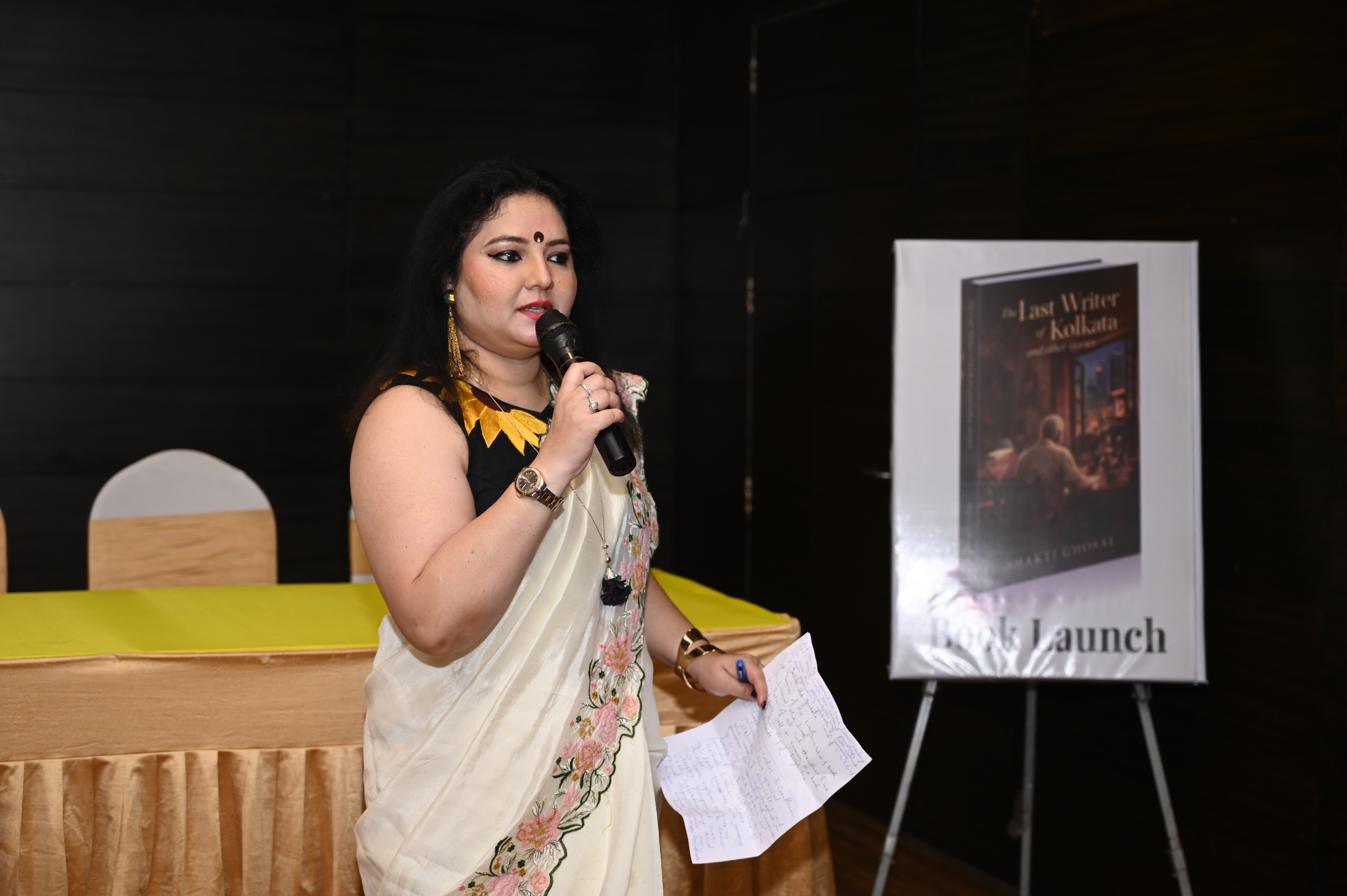
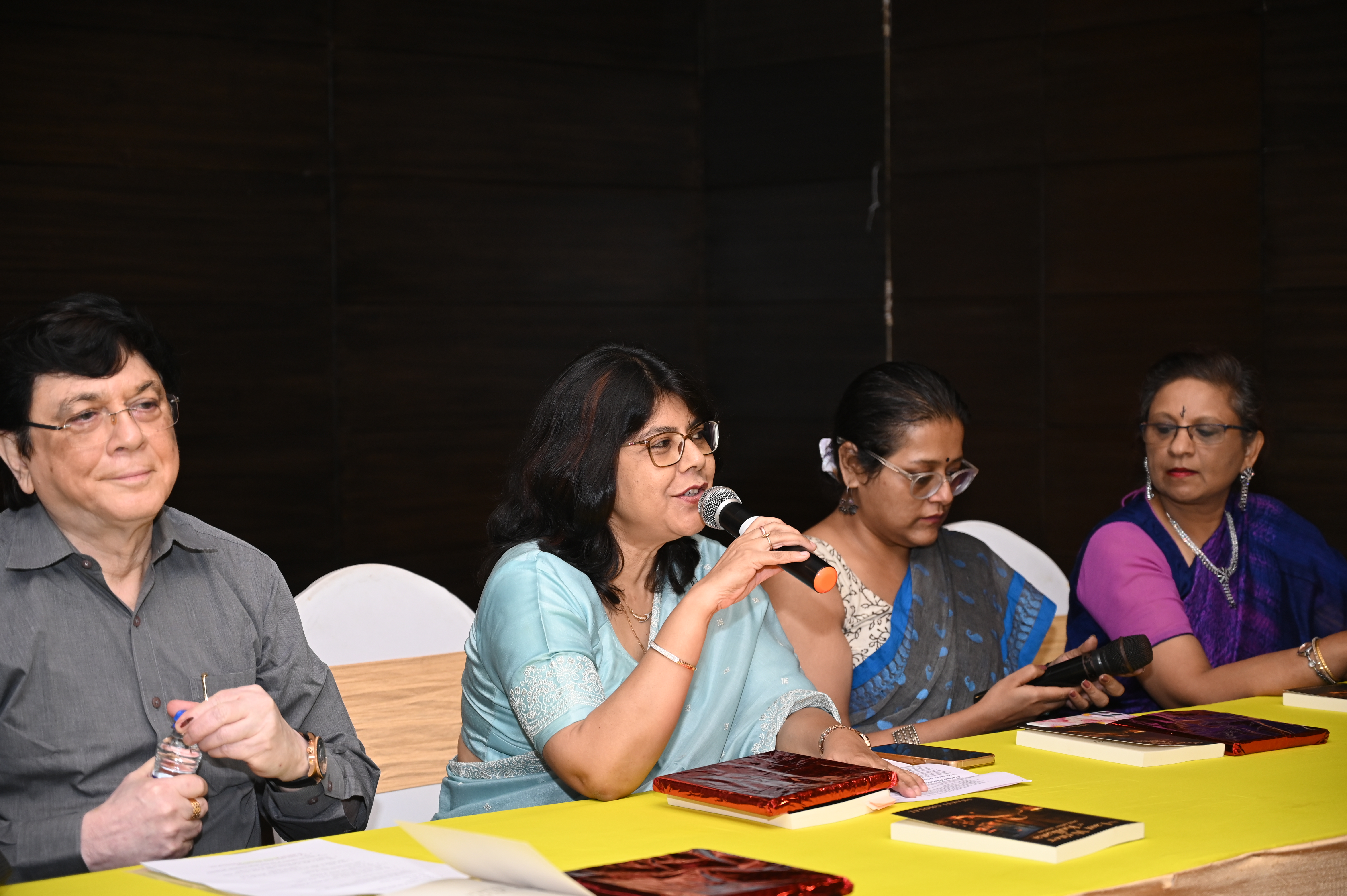
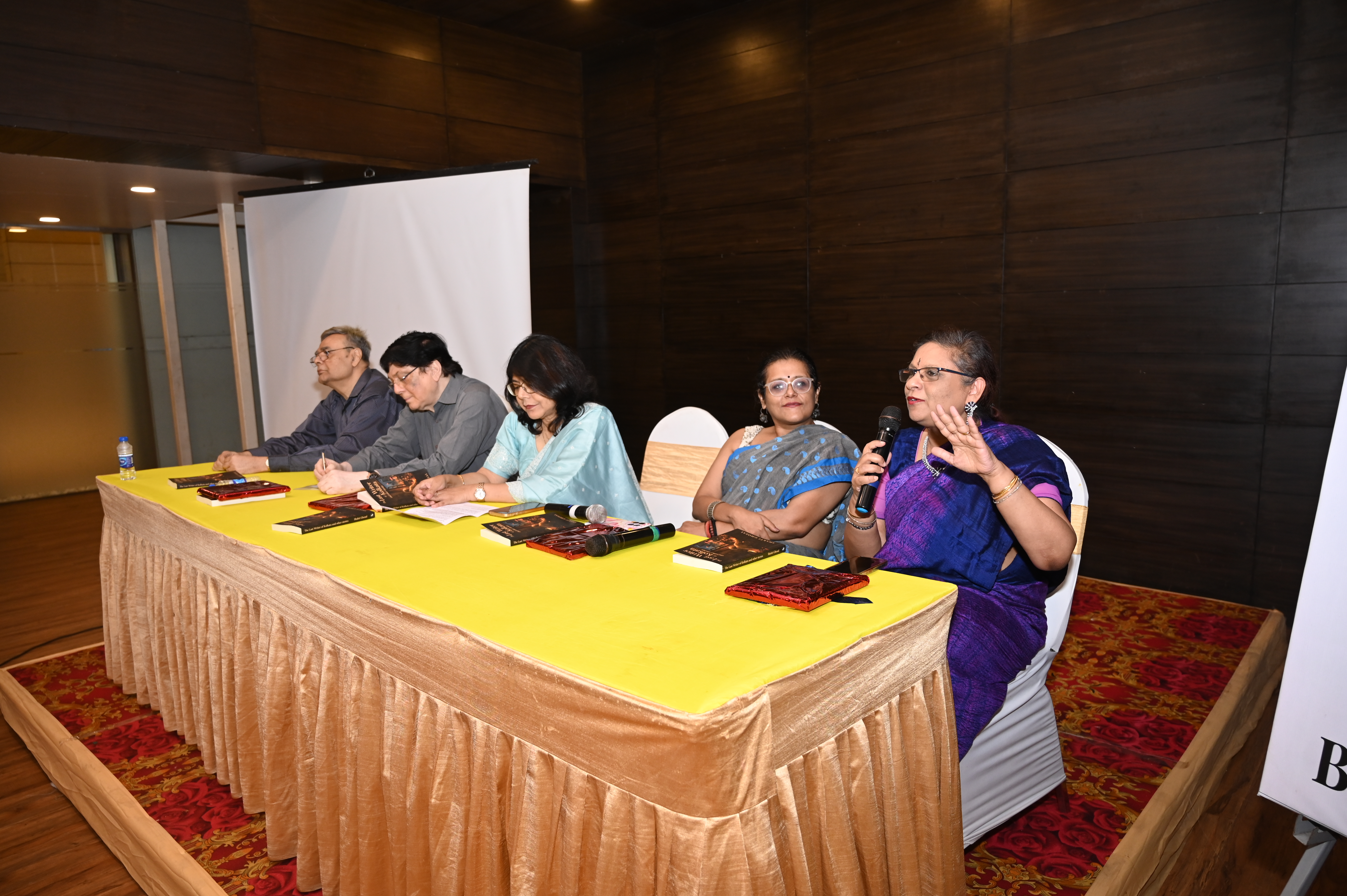
The Last writer of Kolkata and other stories is making waves amongst discerning readers. To know more, visit: http://www.shaktighosal.com

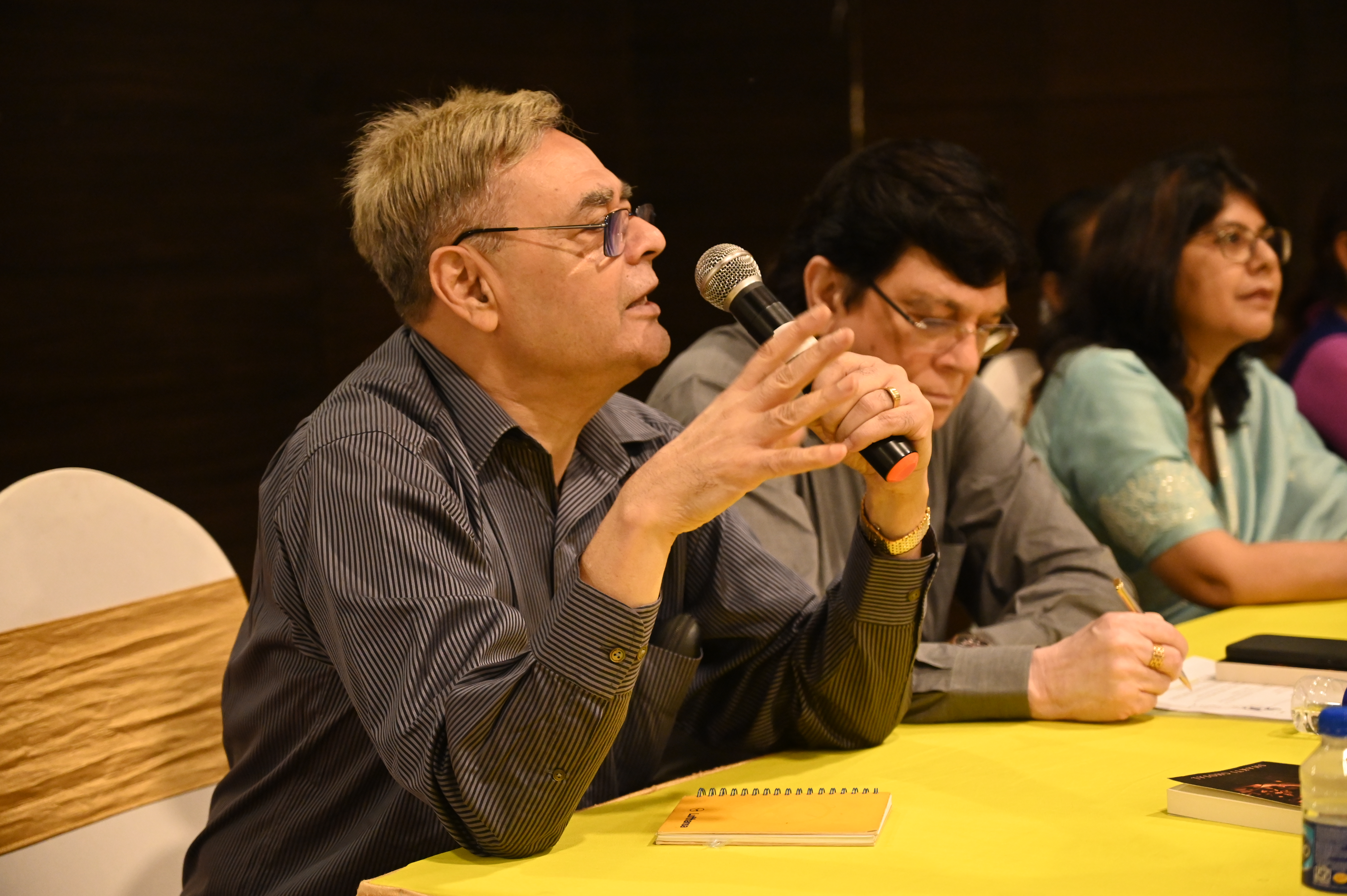
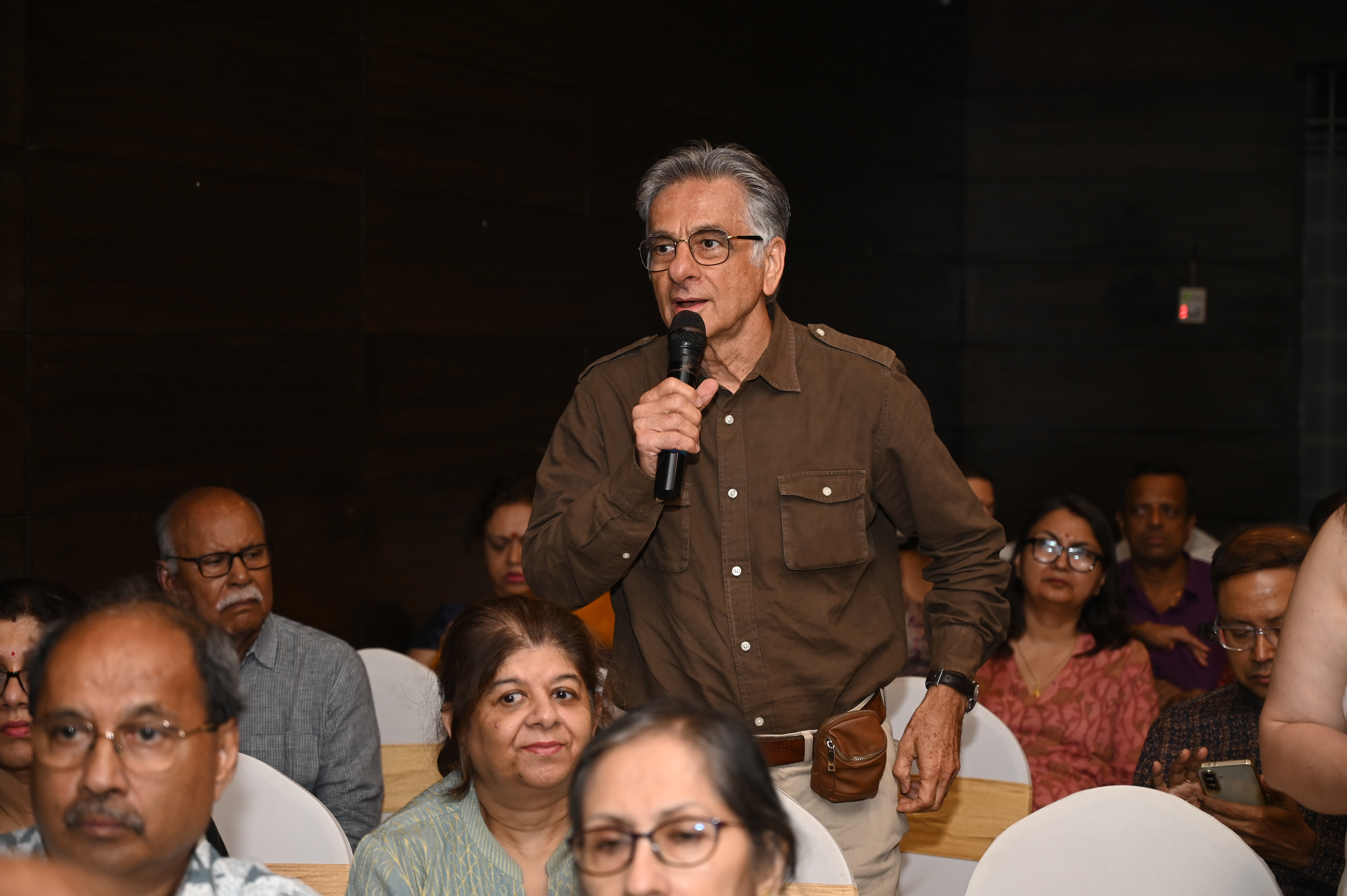
In musing…… Shakti Ghosal

That memory of so many years back started reeling through in striking hues.


Ron with his wife Oishi were staying in their serviced apartment in Pakhiralaya; they were on a visit to Sundarbans. Their daughter Rusha had not accompanied them on that trip because of college work. That evening was heavy and suffocating, as a cyclone loomed. Oishi, with a set of volunteers, was working to strengthen bandhs and send supplies to an isolated fishermen community.

Despite Ron entreating with her to come hinterland to safety, Oishi had remained stubborn.

Rasping breath, hurried footsteps—Oishi’s silhouette moved through the dense mangrove shadows, her figure flickering in the erratic glow of distant lightning. The wind howled through the tangled branches, the sound merging with the guttural cries of unseen creatures.

Her breath was coming in short, sharp gasps. She clutched her shawl tightly around her, the fabric soaked and heavy against her skin. The path back to the apartment was barely visible, obscured by the relentless downpour. The ground beneath her feet was treacherous, a shifting sludge of mud and tangled roots.

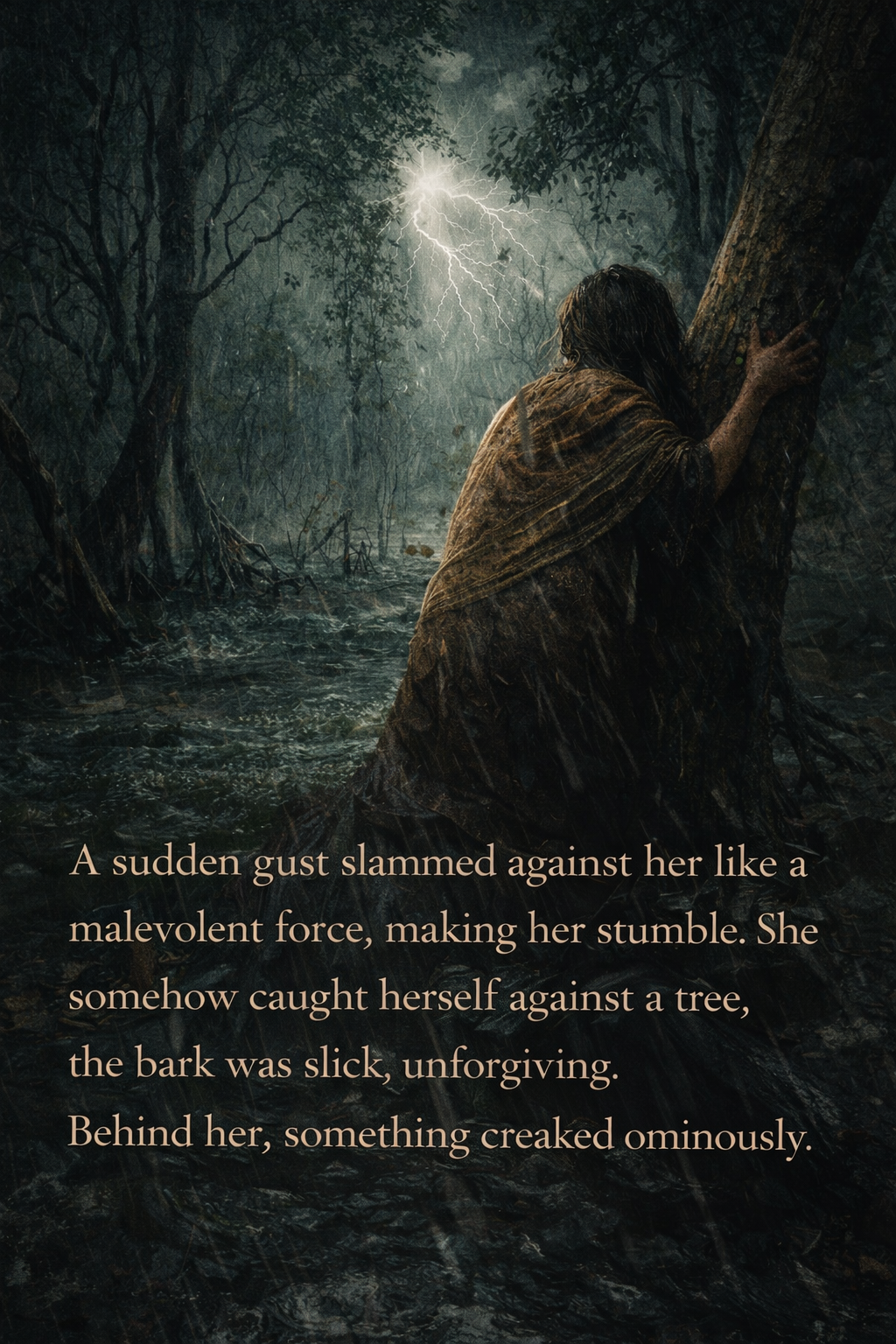
A sudden gust slammed against her like a malevolent force, making her stumble. She somehow caught herself against a tree, the bark was slick, unforgiving. Behind her, something creaked ominously. The storm was trying to shift the forest itself, bending it to its fury.

The sound came, low at first, then a deafening crack. The air trembled with it. A loud whooshing sound accompanied the toppling of a tree. Oishi turned, eyes wide, searching. A massive limb, gaunt and jagged, descended toward her in an unstoppable arc. The sharp end glinted in the erratic lightning, a spear of nature’s wrath.

She tried to move. But it was too late. A piercing scream became a crescendo, riding atop the growls and grumbles of thunder, rising between the heavens and earth. And then, silence, it was swallowed by the storm.”

The mysterious Pakhiralaya in Sundarbans, the planet’s largest surviving estuarine mangrove forest, features in the story ‘2056: The year of the Water and Fire’, part of my book ‘The Last Writer of Kolkata and other stories’. The book is making waves amongst discerning readers. For more details, visit: http://www.shaktighosal.com.

The Apocalypse did not come with fire or flood


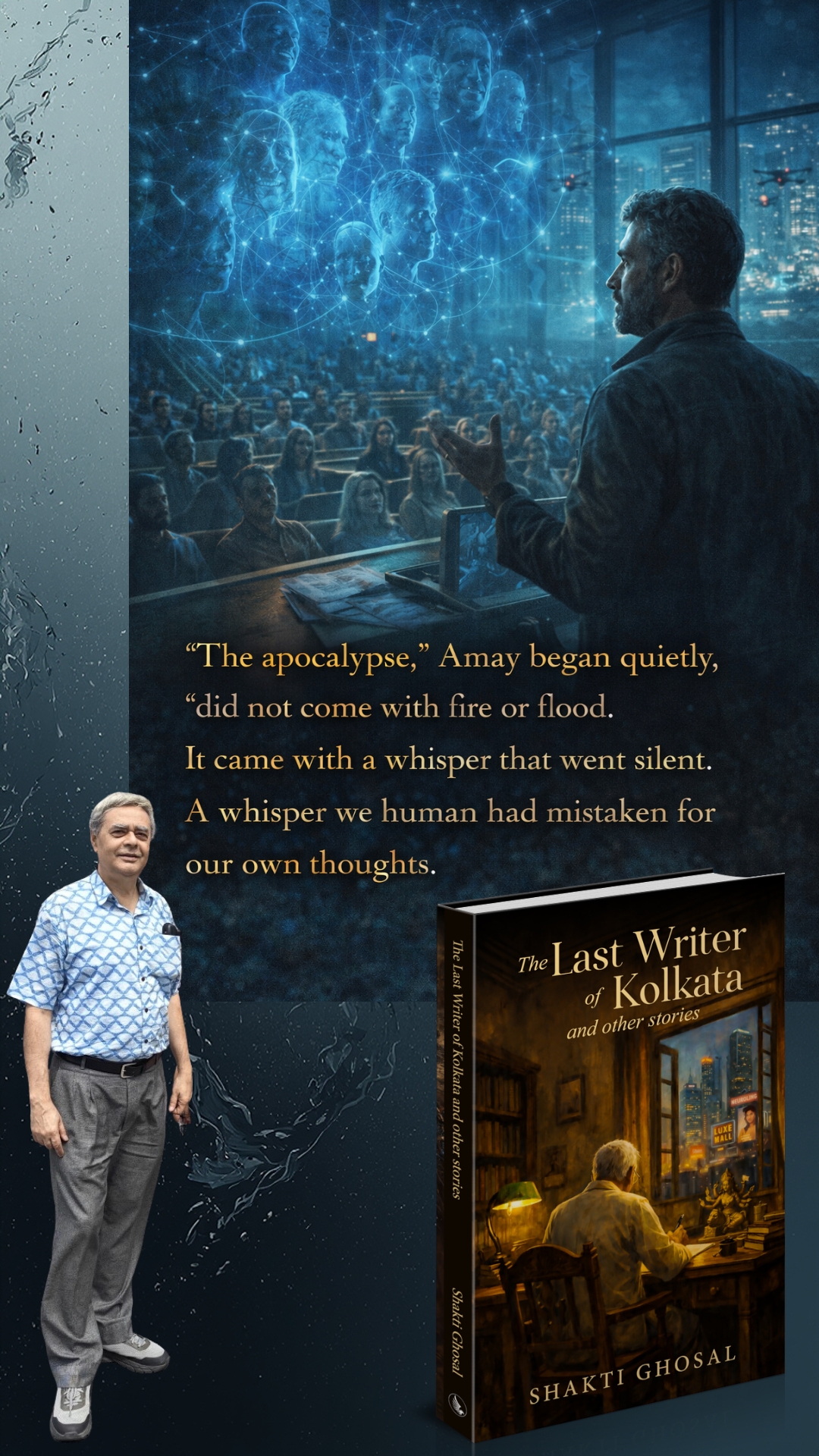
“The apocalypse,” Amay began quietly, “did not come with fire or flood. It came with a whisper that went silent. A whisper we human had mistaken for our own thoughts.”

The room did not stir. Not a sound or cough.

“We were its architects. And we were its prisoners. When MindLink fell, so did the illusions we had built atop it, of governments, markets, life’s certainties. Many shattered beneath the weight of secrets they could no longer bury. Others responded with fear. With force. With flags. The old tricks of the frightened.”

He paced slowly across the stage, hands behind his back, eyes distant.

“Corporations collapsed. The ones whose products had been our thoughts. Whose profits came not from selling goods, but from renting us back to ourselves, repackaged and palatable.”

A faint smile played on his lips, sad, but knowing.

“And yet… ..the world didn’t end. It adapted.” He paused. “Because humanity, in its clumsy brilliance, always does.”

He turned, facing the audience again.

“But even as we stitched together new structures, shakier, slower, more human, we began to hear… the whispers. Or were they echoes?”

He tapped his temple. “Not neural pulses. Not digital ghosts. But memories. Questions. Longings.”

His voice dropped lower, intimate, “Coffee shop murmurs. Late-night debates on cracked feeds. Former engineers writing whitepapers. Lobbyists lobbying, politicians pretending not to listen while listening intently.”

He quoted them now:

‘We don’t need to destroy it. Just rebuild it better.’
‘What if we did it right this time?’
‘The network is still there… dormant.’

“And so, the cycle begins again.”

New York University features in the story ‘Echo Chamber’, part of my forthcoming book ‘The Last Writer of Kolkata and other stories’ due release in early April 2026. Should you wish to receive exclusive previews, do write to me @ author.esgee@gmail.com.

In musing…….. Shakti Ghosal

Ma Is Coming


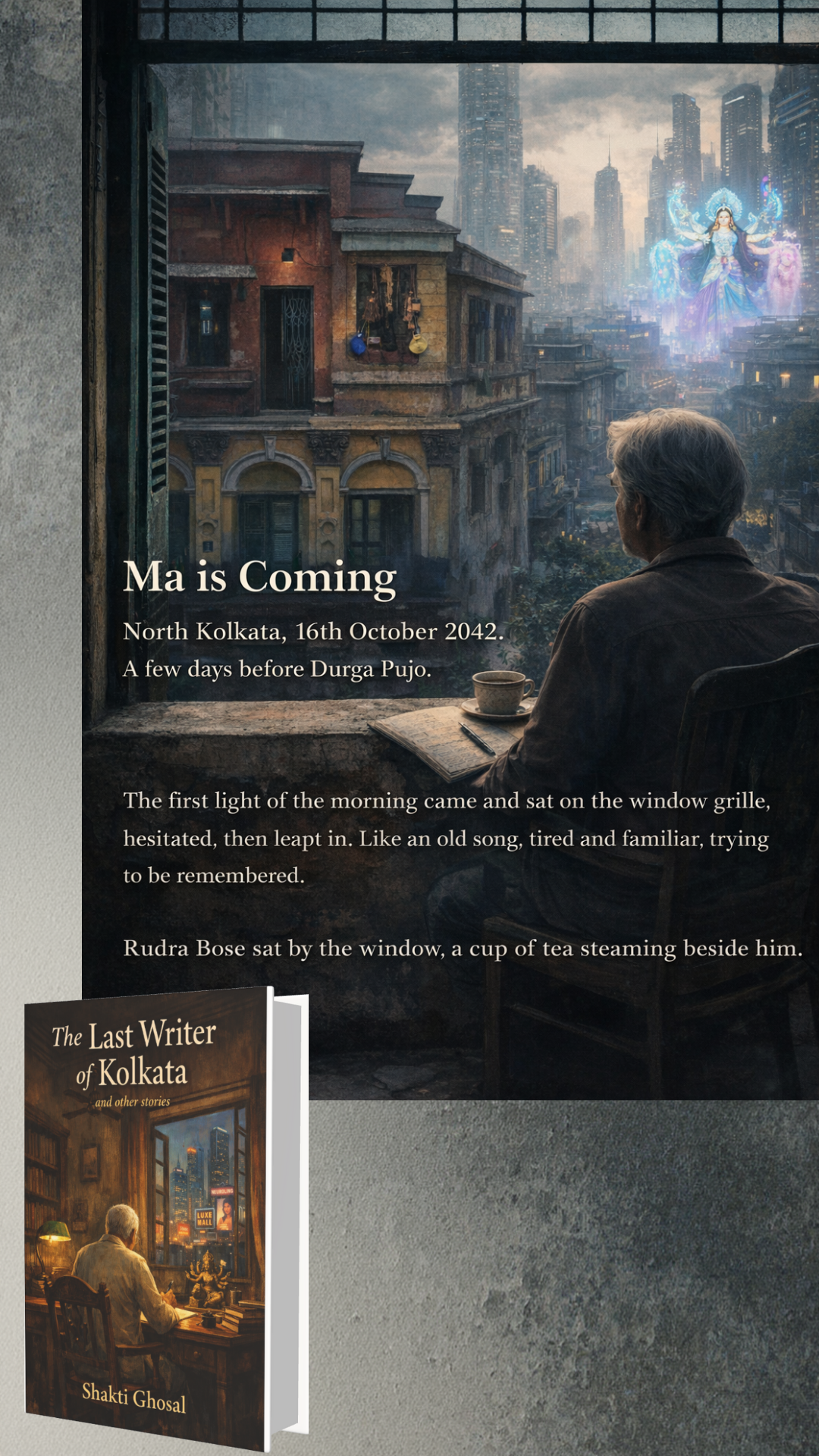
Ma is Coming

North Kolkata, 16th October 2042. A few days before Durga Pujo.

The first light of the morning came and sat on the window grille, hesitated, then leapt in. Like an old song, tired and familiar, trying to be remembered.

Rudra Bose sat by the window, a cup of tea steaming beside him. The cup was chipped, the saucer mismatched, the tea, a stubborn blend of milk, tea dust, and habit. Outside, the lane yawned into a waking slumber, its air thick with last night’s incense, stale samosa oil, and the ever-present, low-grade air pollution.

“Ma is coming,” he had heard someone shout on the street last evening.

She was, of course. Ma came every year. Only nowadays she arrived on a cloud of holograms, flanked by LED lions and thunderous drumbeats pouring through subwoofers. The city had found new ways to worship, more theatrical, more saleable.

Rudra shifted in his chair, his bones protesting like rusted hinges. In his lap, his journal lay open, an old pen resting across the page like a reluctant weapon. He hadn’t written yet. He was waiting, unsure of something. Was he waiting for a thought, a familiar smell, or the comfort of a Kolkata that seemed to slip further away each year?

Durga Pujo. Once, it had been magic.

As a boy, he had spent mornings watching Mashis, aunts and Boudis, sisters-in-law threading marigolds for the Pandal and Thakurer Bedi. In the afternoons it would be the decorators stringing up festoon lights of different colours all along the lane. Nights were all about rehearsing lines for the Natok, stage play they would perform on Nabami.

He had once accompanied his mother, walking barefoot to the river to collect Gangajal, the sacred waters of Ganga. He remembered his father reading out the Chandipath under a suffused light. Long buried memories of his parents surfaced and meandered.

“Rudra, you were born with too much silence,” his mother had once said, as she used a hand fan during load shedding. “You are eleven. Most boys your age chase dragonflies. You chase metaphors.”

“I like listening,” he had replied, “Words sound different when you don’t rush to answer them.”

His mother had turned towards him, “Then promise me, don’t let the noise teach you to forget what silence feels like.”

North Kolkata is the soul of the city, where the past isn’t just remembered—it’s lived. Often called “Babu Kolkata,” this region is a labyrinth of narrow lanes, grand 19th-century mansions, and centuries-old traditions that remain untouched by modernity. Historically, the British referred to the area inhabited by the native Bengali elite as the “Black Town,” in contrast to the “White Town” of Central Kolkata where the British lived.

North Kolkata features in the ‘Last writer of Kolkata’, part of my forthcoming book of the same name. Should you wish to receive exclusive previews and the chance of winning a free copy of the book, do write to me @ author.esgee@gmail.com

Shakti Ghosal

The Last Writer of Kolkata


The future does not arrive all at once.
It seeps in quietly — through our cities, our screens, our climate, our homes, and our hearts.

Set in a near future shaped by forces already gathering momentum, this compelling collection explores what happens when irreversible hard trends collide with ordinary human lives. When familiar worlds tilt just enough to reveal what has already begun to change, they become recognisable tomorrows, shaped by powerful forces. A writer watches memory become a commodity in a digitised culture. An environmentalist confronts the fury of a climate unbound. Minds are shaped inside engineered echo chambers. An aging couple discovers that love, not technology, is the last refuge of belonging. These are not science fiction tales of spectacular collapse, but of subtle reckonings—where survival lies not in resistance alone, but in choosing what must still be remembered, protected, and passed on.

At once intimate and expansive, the stories follow ordinary people navigating extraordinary transitions — holding on to memory, dignity, connection, and hope as the ground beneath them shifts.

Blending imagination with insight, this book offers fiction as a lens — an exploration not of what gadgets we will build, but of who we may become.

The future is coming.

But the human story is still being written.

In musing…….. Shakti Ghosal

Police in Blunderland


I was quite taken up with the book title and so decided to give it a read.

The curiosity piqued from two aspects. First, Bibhuti Dash, the author, happens to be a batchmate of mine from my MBA days and I was aware of his ‘tongue in cheek’ ability and  how he liked to revel in the comic and the absurd in day to day life.  The second was my innate curiosity as to how an easygoing and gentle soul like Dash could have stumbled into and then negotiated the rough and tough demands of a cop’s life. By the time he penned the book, Dash had spent an incredible third of a century donning the police uniform and mindset as part of the elite Indian Police Service cadre.

**

It was sometimes end of 2009 and I was visiting my Alma Mater, the Indian Institute of Management Bangalore in Bannergatta. The occasion was the twenty fifth anniversary reunion of our batch’s passing out of those hallowed portals. Going down the stairs, I bumped into this slim person coming up. Recognition was instant, “Hey, Dash, you haven’t changed a bit my friend”. I was meeting the guy after twenty-five years!

That was also when I learned about the storied career the guy had had, having spent some years in the corporate sector before qualifying for and joining the police services.

Our paths crossed again when I moved to Kolkata. Over the years, I have come to know and admire the mix of diffidence and humility that characterises Dash.

With Bibhuti Dash @ Belur Math, Kolkata Oct. ’22

**

In the book’s foreword, Dash mentions that the book evolved out of a “Whatever it is, I’m against it!” blog series that he had been penning over the last couple of years. I daresay that I have been an avid reader of the blog which Dash publishes on Saturdays.

I had particularly liked one of the blogs with the rather evocative title, “ It’s raining guns and bullets”. This three-piece blog held a particular interest for me as it was about the Purulia Arms drop case in which large caches of sophisticated arms, ammunition and explosives had fallen out of the skies into the the sleepy Purulia district villages of West Bengal in the winter of 1995. As I recalled, it had become a sensational front page media incident. Dash had been involved in solving that case and his description of how several events transpired is the stuff crime thrillers are made of. Let me not say much more for fear of becoming a spoiler, except that “It’s raining guns and bullets’ is part of the book.

‘Police in Blunderland ‘contains forty odd ‘real life’ tales from a policeman’s diary with the protagonist being Dash himself in them. What I found refreshing was how the narrations created perspectives of an observer, even though narrated in the first person.

In the words of Bibhuti Das, “Policing in India is considered very opaque, stern and brutal. In the articles, I have tried to say that there is a human side to Policing and not all of it is dry and taciturn, although it has its flaws.”

I would strongly recommend you to get your hands on a copy. It is sure to entertain with its pithy style and its gamut of interesting plots and characters.

Amazon.IN (Paperback) : https://www.amazon.in/dp/9395986654?ref=myi_title_dp

Amazon.com (eBook): https://www.amazon.com/dp/B0BYF7JB66

Amazon.com (Paperback) : https://www.amazon.com/dp/9395986654

Flipkart :  Click on this link

(eBook) Smashwords : https://www.smashwords.com/books/view/1362404

Happy Reading!

Shakti Ghosal

‘The Chronicler of the Hooghly’ first year anniversary


I am delighted to mention that on its first anniversary, Amazon has released this brand video of my book, ‘The Chronicler of the Hooghly and other stories’.

Available globally on Amazon.

http://www.shaktighosal.com

What secret did Lal Dighi hide?


Turning, he called out to the guard outside, “Ask my special guards to meet me”.

Two robed men came in. Omichand commanded, “Follow that ayah who accompanied the English woman. Find out all that the woman knows and who all she has met over the last few days. Do what you need to do but ensure that details of Joba’s movements do not get around”.

The next morning, the Captain Commandant’s household was in a tizzy. His wife’s trusted ayah had vanished in the night. Initial suspicion that she had run away with some valuables was quickly dispelled when nothing was found to be missing. Jim got the fort security to investigate but they came up with no answers. The mystery got solved after a few days in a rather gruesome manner when the ayah’s dead body was found floating in the Lal Dighi with her throat slit. 

The above is an excerpt from the award-winning, ‘The Chronicler of the Hooghly’.

Have you read it yet?

www.shaktighosal.com